CM Himanta Cites Muslim Merit Seats, Defends Madrasa Closure

Synopsis
Assam CM Himanta Biswa Sarma on 4 July 2026 defended his government's madrasa closures, asserting that 20 per cent of Assam's medical seats are now held by Muslim students on merit — framing the policy as inclusion through mainstream education, not appeasement.
Key Takeaways
Assam CM Himanta Biswa Sarma posted on 4 July 2026 defending the state's closure of madrasas as consistent with minority welfare.
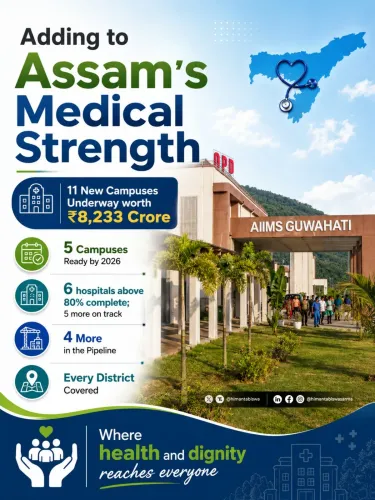
He cited 20 per cent of Assam medical college seats being occupied by Muslim students as evidence of merit-based inclusion.
The government's stated mantra — 'Justice to all, appeasement to none' — has guided BJP governance messaging since 2014 .
Assam began converting or closing state-run madrasas in 2021–22 , replacing them with mainstream schools.
The 20% medical seat figure has not yet been independently verified from official admission records.
Official medical merit lists and further madrasa conversion orders will be key indicators to watch.
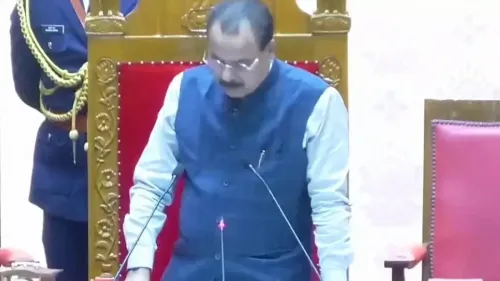
Assam Chief Minister Himanta Biswa Sarma on Saturday, 4 July 2026, invoked his government's governance philosophy — 'Justice to all, appeasement to none' — while defending the state's closure of madrasas and asserting that Muslim students now occupy 20 per cent of medical college seats in Assam on merit. The remarks, made via a video post on X, come amid ongoing debates over minority welfare and education policy in the state.
Context
Sarma posted in a mix of Hindi and English, stating: 'Justice to all, appeasement to none — yeh hamari sarkar ka mantra hai' ('Justice to all, appeasement to none — this is our government's mantra'). He acknowledged that the government had shut down madrasas but argued this did not translate into neglect of minority communities. 'Today, 20% of medical seats are being filled by our Muslim community, and they have earned these seats through merit, not appeasement,' he said.
The statement is a direct rebuttal to critics who have argued that the madrasa closures disproportionately harm Muslim students by disrupting their educational continuity.
Policy Backdrop
The Assam government began shutting down and converting state-run madrasas into mainstream schools in 2021–22, framing the move as a push for a modern, uniform curriculum. Hundreds of such institutions were either closed or restructured to follow the standard state-board syllabus, affecting thousands of students and teachers.
The slogan 'Justice to all, appeasement to none' has been a central plank of BJP governance messaging since 2014, used to frame minority-related policies at both the state and national level. Sarma, who has been Chief Minister since May 2021, has consistently positioned the Assam model as one that integrates minorities into mainstream institutions rather than sustaining parallel systems.
Stakeholders and Impact
Muslim students and madrasa teachers remain the most directly affected groups. Supporters of the policy argue that mainstreaming education opens professional pathways — such as medical admissions — that were previously less accessible to students from madrasa backgrounds. Critics, however, contend that abrupt closures severed cultural and religious education without adequate transition support.
The claim regarding medical seats, if borne out by official admission data, would be a significant data point in the broader argument about whether merit-based systems can deliver equitable outcomes for minorities without religion-specific institutional support.
What's Next
Attention will now turn to the publication of Assam's official medical college admission merit lists, which could either corroborate or complicate Sarma's claim. Any further government notifications on madrasa conversions or revisions to minority scholarship frameworks will also be closely watched by education advocates and opposition parties.
The statement is likely to sharpen political debate in Assam ahead of future electoral cycles, with the ruling party seeking to reframe the madrasa closure narrative around outcomes rather than institutional loss.
Point of View
Using a concrete outcome metric — medical seat share — to shift the debate from institutional loss to professional mobility. The 'merit, not appeasement' framing is a recurring rhetorical device that allows the BJP to simultaneously defend a controversial policy and claim credit for minority advancement. Whether the 20 per cent figure holds up to scrutiny will determine how durable this argument proves in Assam's politically charged minority discourse. The statement fits a broader pattern across BJP-ruled states of replacing religion-specific educational structures with mainstream ones while asserting that outcomes, not institutions, are the true measure of equity.
NationPress
4 Jul 2026
Frequently Asked Questions
Why did Assam close madrasas?
The Assam government began closing or converting state-run madrasas into mainstream schools from 2021–22, citing the need for a modern, uniform curriculum. Chief Minister Himanta Biswa Sarma has argued the move integrates minority students into professional pathways rather than keeping them in parallel educational systems.
What did Himanta Biswa Sarma say about Muslim students in medical colleges?
On 4 July 2026, Sarma claimed that 20 per cent of Assam's medical college seats are currently occupied by Muslim students, and that these seats were earned on merit rather than through any reservation or appeasement policy.
Is the 20% Muslim medical seat claim verified?
The exact figure cited by CM Sarma has not yet been independently verified from official Assam medical admission records. Publication of official merit lists would be needed to confirm or contest the statistic.
What does 'justice to all, appeasement to none' mean in Assam politics?
The phrase is a core BJP governance slogan used since 2014 to argue that minority welfare should flow through universal, merit-based systems rather than religion-specific concessions or institutions. Sarma has applied it to justify policies including madrasa closures.
How many madrasas were closed in Assam?
The Assam government converted or shut down hundreds of state-run madrasas beginning in 2021–22. Precise current closure figures are subject to ongoing government notifications and have not been confirmed in the latest official count.