CM Himanta credits Modi for Assam's infrastructure leap on I-Day
Synopsis
On Independence Day 2026, Assam CM Himanta Biswa Sarma praised PM Modi's development vision for Assam, citing highways, the Kaziranga Elevated Corridor, semiconductor ambitions, and underwater tunnels as markers of a transformed Northeast under the Viksit Bharat framework.
Key Takeaways
Assam CM Himanta Biswa Sarma posted an Independence Day tribute on 15 August 2026 crediting PM Narendra Modi for Assam's infrastructure transformation.
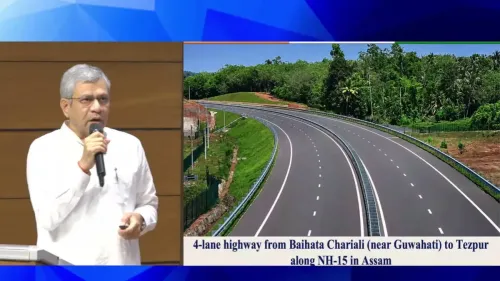
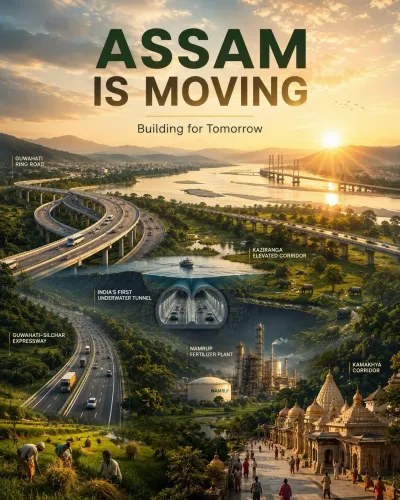
Projects cited include national highways, the Kaziranga Elevated Corridor , underwater tunnels, and semiconductor manufacturing units.
The Kaziranga Elevated Corridor is designed to cut vehicle-wildlife collisions near one of India's most protected national parks.
Semiconductor ambitions reference the India Semiconductor Mission approved in 2021 , signalling Assam's push into high-value manufacturing.
All projects fall under the policy framework of the Act East Policy (2014), Bharatmala Pariyojana (2015), and the Viksit Bharat 2047 roadmap.
Specific completion timelines for semiconductor facilities, tunnels, and the elevated corridor remain unconfirmed.
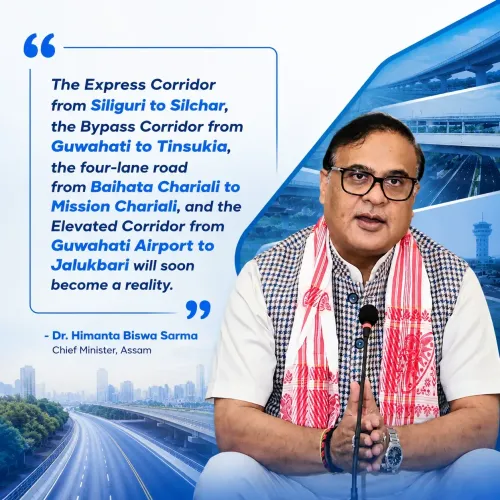
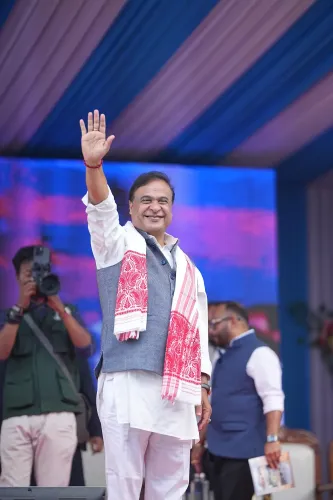
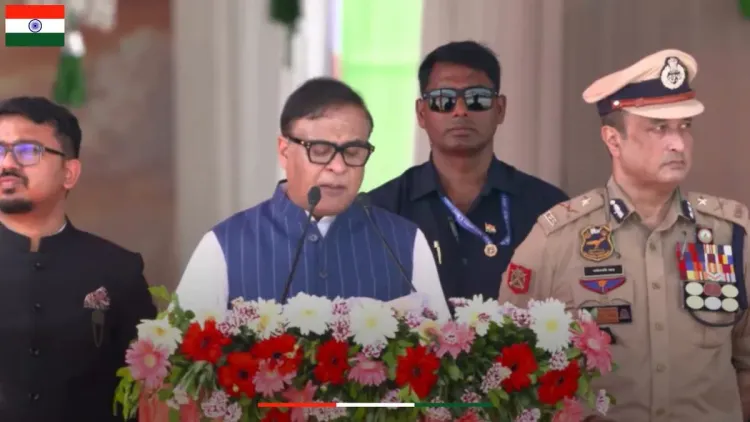
On India's 79th Independence Day, Assam Chief Minister Himanta Biswa Sarma laid out a sweeping catalogue of what he called Prime Minister Narendra Modi's transformative vision for the state — from national highways and semiconductor manufacturing to underwater tunnels and the landmark Kaziranga Elevated Corridor.
Sarma's post, shared on 15 August 2026, framed Modi's development blueprint as an 'A for Assam' moment — a phrase signalling that the northeastern state has moved from the margins of national planning to the centre of it. The tribute arrives on a day designed for exactly this kind of stock-taking: how far has the nation — and its most historically underserved regions — actually come?
From road-building to chip-making: what the vision covers
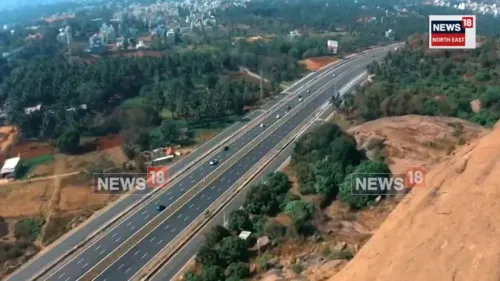
The infrastructure arc Sarma describes spans two very different eras of nation-building. Highways and elevated corridors belong to the older, physical grammar of connectivity — the kind that cuts travel time, opens markets, and pulls remote communities into the economic mainstream. Assam has been a direct beneficiary of the Bharatmala Pariyojana, launched in 2015, which earmarked multiple national highway corridors through the Northeast. The Kaziranga Elevated Corridor is the most locally resonant of these projects. Designed to reduce fatal collisions between vehicles and the wildlife of Kaziranga National Park — home to the world's largest population of one-horned rhinoceroses — it represents an attempt to reconcile development with conservation. That balance has long been the central tension in planning for this ecologically sensitive region. Semiconductors are a different story entirely. The India Semiconductor Mission, approved in 2021, marked New Delhi's ambition to enter the global chip supply chain. Sarma's mention of semiconductors alongside highways signals that Assam's development conversation has moved well beyond roads and bridges — into the high-value manufacturing territory that defines 21st-century industrial policy.The 'Act East' spine beneath the ambition
None of these projects exist in isolation. They sit on the policy spine of the Act East Policy, announced in 2014, which repositioned the Northeast as a gateway to Southeast Asia rather than a remote hinterland. That reframing — strategic, not merely sentimental — is what gave infrastructure investment in Assam a coherent rationale beyond welfare spending. The Viksit Bharat vision, Modi's roadmap for a developed India by 2047, provides the overarching frame. Sarma's invocation of 'Viksit Assam' as a subset of that national goal is deliberate: it ties the state's fortunes to a centenary promise, making local delivery a matter of national credibility. The underwater tunnel reference — while its specific completion status remains unconfirmed — points to the kind of engineering ambition that would have been unthinkable for Assam a decade ago. Whether as aspiration or achievement, its inclusion in the Independence Day message says something about how the political conversation around the Northeast has shifted. The real test, as budget cycles and project timelines unfold, is whether the semiconductor units and remaining corridor phases move from announcement to operation — and whether Assam's residents feel the difference on the ground.Point of View
Tracking the national party line ahead of future electoral cycles. The post also implicitly benchmarks Assam's progress against its own recent past, a comparison the ruling alliance is confident enough to invite publicly.
NationPress
15 Aug 2026
Frequently Asked Questions
What is the Kaziranga Elevated Corridor in Assam?
The Kaziranga Elevated Corridor is a road infrastructure project in Assam designed to reduce collisions between vehicles and wildlife near Kaziranga National Park, which hosts the world's largest population of one-horned rhinoceroses, while also improving highway connectivity through the region.
What did Assam CM Himanta Biswa Sarma say on Independence Day 2026?
On 15 August 2026, CM Himanta Biswa Sarma posted on X crediting PM Narendra Modi for envisioning an 'A for Assam' through projects ranging from highways and semiconductors to underwater tunnels and the Kaziranga Elevated Corridor, framing them as part of the Viksit Assam and Viksit Bharat goals.
What is the India Semiconductor Mission and how does it relate to Assam?
The India Semiconductor Mission, approved in 2021, is a national programme to attract semiconductor and electronics manufacturing investments across India, with the Northeast including Assam identified as a potential location for future units as part of the broader industrial push.
What is Viksit Bharat and what does it mean for Assam?
Viksit Bharat is PM Modi's vision for a fully developed India by 2047, the centenary of independence. Viksit Assam is the state-level articulation of that goal, tying Assam's infrastructure and economic targets to the national development roadmap.
What is the Act East Policy and why does it matter for Northeast India?
The Act East Policy, announced in 2014, repositioned India's northeastern states as strategic gateways to Southeast Asia rather than remote peripheries, providing the rationale for sustained central investment in highway, tunnel, and economic corridor projects across the region including Assam.