CM Himanta Flags Green Brick Plant in ULFA Stronghold Tinsukia
Synopsis
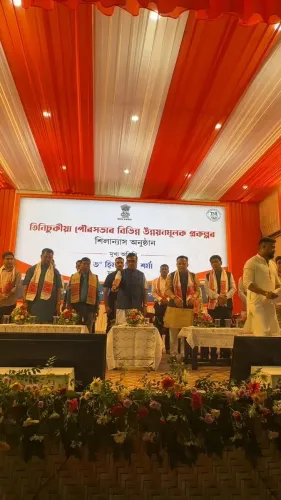
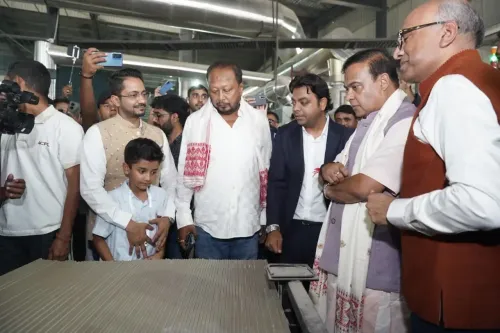
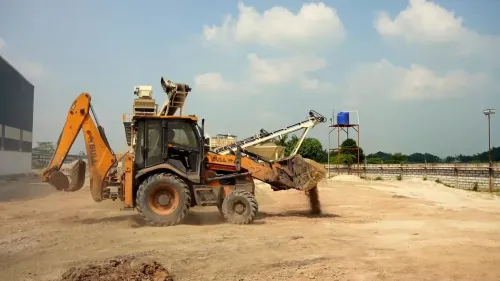
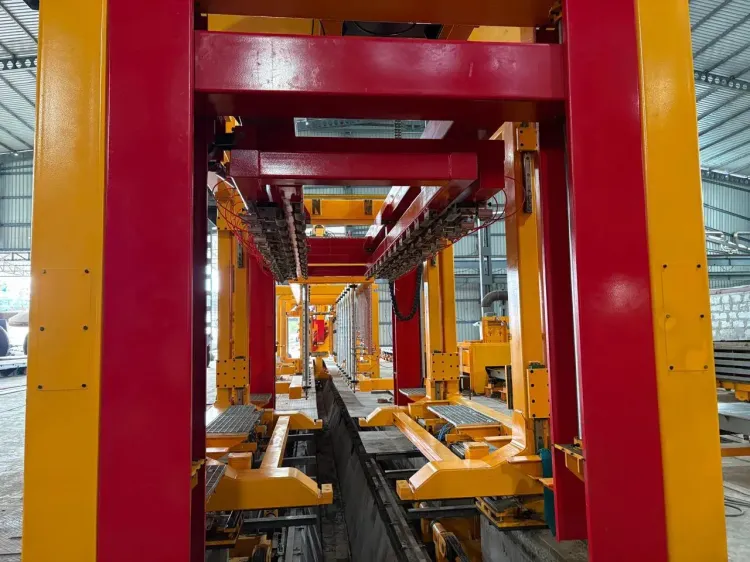
Assam CM Himanta Biswa Sarma has announced that Tinsukia — once a core ULFA insurgency zone — has attracted its biggest private investment in 15 years: a green brick plant using Brahmaputra silt capable of replacing an estimated 10 crore red bricks annually.
Key Takeaways
Tinsukia district , historically Assam's ULFA insurgency epicentre, has secured what CM Himanta Biswa Sarma calls its biggest private investment in 15 years .
The plant uses Brahmaputra river silt as raw material, positioning it as an eco-friendly alternative to conventional topsoil-based clay brick kilns.
Stated annual capacity: replacement of approximately 10 crore red bricks .
CM Sarma framed the announcement with the BJP political slogan 'Modi Kahin Nahi Jayega' , crediting Central leadership for sustained investment confidence in the Northeast.
The development fits a broader Northeast India pattern of using private industrial projects to consolidate economic gains in post-conflict districts.
Assam governments have consistently promoted silt- and fly-ash-based construction materials as sustainable alternatives to red brick kilns.
A district once defined by gun battles and separatist sieges is now being defined by something far quieter — the hum of a factory turning river silt into building blocks. Assam Chief Minister Himanta Biswa Sarma announced on Wednesday, 28 October 2026, that Tinsukia — the eastern Assam district that served as a nerve centre of ULFA insurgency for decades — has landed what he described as its biggest private investment in 15 years: a green brick manufacturing plant that uses Brahmaputra silt as its primary raw material.
Bullets to bricks: what the plant promises
According to CM Sarma's post, the facility has the capacity to replace approximately 10 crore red bricks per year — a significant figure in a state where conventional clay-brick kilns have long been accused of eating into fertile topsoil. By substituting river silt dredged from the Brahmaputra for topsoil clay, the plant positions itself at the intersection of two pressing priorities: sustainable construction and economic revival in a post-conflict zone.
Sarma closed his post with the Hindi phrase 'Modi Kahin Nahi Jayega' — roughly, 'Modi isn't going anywhere' — signalling the BJP's political framing: that Central leadership under Prime Minister Narendra Modi is the anchor of continued investment confidence in the Northeast.
Tinsukia's long shadow: from ULFA stronghold to investor destination
Tinsukia district spent much of the 1990s and 2000s as contested ground. The United Liberation Front of Asom (ULFA), Assam's most prominent armed separatist organisation, was deeply embedded in Upper Assam's economic and social fabric — particularly in the oil-rich and tea-estate belts around Tinsukia. Civilian killings, extortion of businesses, and attacks on security forces made private capital wary of the region for years.
The broader peace process — anchored by Central rehabilitation schemes and, earlier, the 1985 Assam Accord — gradually shifted the ground. A brick plant choosing Tinsukia today is, in symbolic terms, a private-sector vote of confidence that the security dividend has become an investment dividend.
Silt bricks and Assam's green building push
Successive Assam governments have promoted river-silt and fly-ash-based construction materials as cleaner alternatives to conventional red-brick kilns. The Brahmaputra's notorious siltation — a perennial flood-management headache — is recast here as an industrial feedstock. If the plant performs at its stated capacity, it removes a meaningful volume of conventional brick demand while addressing, in a small way, the silt burden on the river.
The broader pattern across Northeast India is consistent: industrial anchors in formerly insurgency-affected districts serve double duty as economic generators and as proof-of-normalcy narratives that attract further investment.
From bullets to bricks is more than a slogan — it is a benchmark. Tinsukia's next challenge is to make this one plant the first of many.
Point of View
A peace-dividend signal, and a BJP campaign data point ahead of any future electoral cycle. The choice of Tinsukia — loaded with ULFA-era memory — is not incidental; it maximises the contrast between the region's conflict past and its investment present. The silt-brick angle adds a sustainability dimension that appeals beyond traditional BJP constituencies to environmentally conscious urban voters. The slogan 'Modi Kahin Nahi Jayega' ties the local investment story directly to Central continuity, reinforcing the Northeast as a proof-of-concept for the BJP's governance brand.
NationPress
29 Oct 2026
Frequently Asked Questions
What is the new investment announced for Tinsukia by CM Himanta Biswa Sarma?
CM Himanta Biswa Sarma announced a green brick manufacturing plant in Tinsukia that uses Brahmaputra river silt as raw material, describing it as the district's biggest private investment in 15 years with a capacity to replace around 10 crore red bricks annually.
Why is Tinsukia significant in the context of Assam's insurgency?
Tinsukia was a core stronghold for ULFA — the United Liberation Front of Asom — during the height of the insurgency in the 1990s and 2000s, making private investment in the district historically rare and symbolically significant.
How does the Brahmaputra silt brick plant help Assam's environment?
By using silt dredged from the Brahmaputra instead of topsoil clay, the plant reduces the need for conventional red-brick kilns that degrade fertile agricultural land, aligning with Assam's broader push for sustainable construction materials.
What does 'Modi Kahin Nahi Jayega' mean and why did CM Sarma use it?
The Hindi phrase means 'Modi isn't going anywhere.' CM Sarma used it to credit the continued Central government leadership of Prime Minister Narendra Modi as the political anchor driving investor confidence in Northeast India.
What is ULFA and how does it relate to Tinsukia's development history?
ULFA, the United Liberation Front of Asom, was Assam's primary armed separatist group. Its presence in Tinsukia and Upper Assam for decades deterred private capital; the region's ongoing peace process and rehabilitation schemes have since opened it to industrial investment.