CM Himanta flags JK Lakshmi Cement plant for Dima Hasao
Synopsis
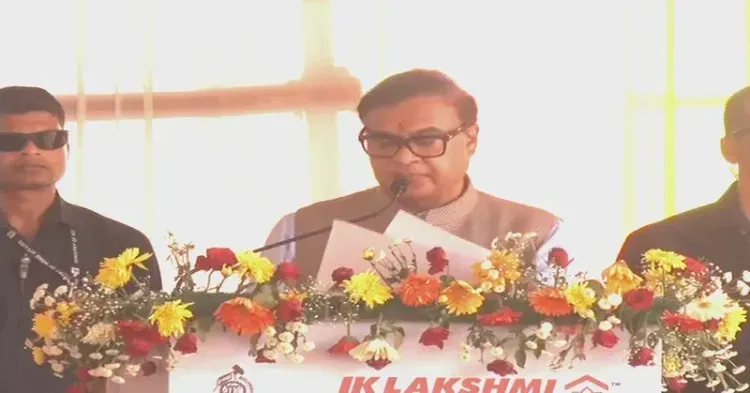
Assam Chief Minister Himanta Biswa Sarma announced a JK Lakshmi Cement plant in Umrangso, Dima Hasao on 30 October 2026, signalling fresh industrial investment in a limestone-rich hill district long targeted for manufacturing growth.
Key Takeaways
JK Lakshmi Cement , part of the Rajasthan-based JK Group , will set up a plant in Umrangso, Dima Hasao , Assam.
Dima Hasao holds significant limestone deposits, making it a natural location for cement manufacturing.
The announcement was made by Assam CM Himanta Biswa Sarma on 30 October 2026 .
The project fits Assam's long-standing policy of attracting cement and mineral-based industries to its hill districts to generate local employment.
Specific project timeline, capacity figures, and formal agreement details have not yet been disclosed publicly.
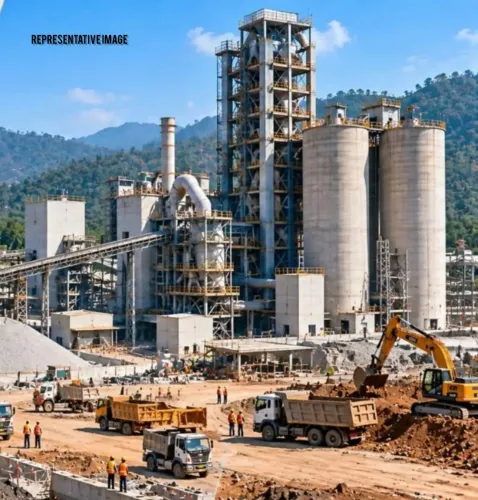
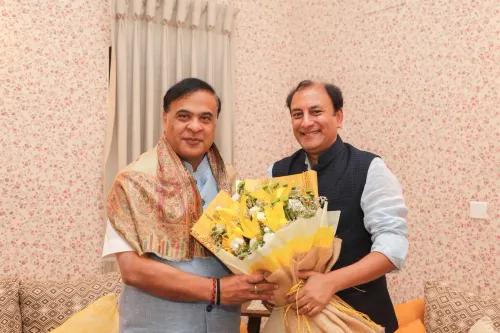
A new industrial footprint is taking shape in Assam's mineral-rich south, as Assam Chief Minister Himanta Biswa Sarma announced on Friday, 30 October 2026 that a JK Lakshmi Cement plant is set to come up in Umrangso, deep in the autonomous hill district of Dima Hasao.
Limestone country gets a manufacturing anchor
Dima Hasao sits on significant limestone deposits — the primary raw material for cement — making it a natural draw for cement manufacturers. Umrangso, the town named in the Chief Minister's post, lies within this mineral-rich belt and has historically been on planners' maps for exactly this kind of value-added industrial use. What has been missing, for years, is a firm commitment from a major national player. JK Lakshmi Cement, the Rajasthan-headquartered arm of the JK Group, brings precisely that — a manufacturer with an established footprint across India now extending its reach into the Northeast.
Assam's long push to industrialise its hill districts
The announcement is not an outlier — it is the latest move in a deliberate, multi-year strategy. Successive Assam governments have dangled incentives to draw cement units into hill districts, aiming to substitute imports from other Indian states with locally produced material while generating employment for communities in districts like Dima Hasao that have long lagged behind the Brahmaputra valley in industrial activity. CM Sarma, who has aggressively courted investors since taking office in 2021, has framed manufacturing investment in hill and remote districts as central to the state's economic rebalancing. A cement plant here would mean jobs, logistics activity, and a tax base — not just bags of cement.
What the JK Group name signals for the project
JK Lakshmi Cement is not a speculative start-up; it is an established national manufacturer with the capital, supply-chain experience, and regulatory track record to see large projects through. Its entry into Assam validates the state's pitch that the Northeast is open — and ready — for serious industrial investment. The specific timeline, installed capacity, and formal agreement details have not been disclosed, and ground-breaking dates are yet to be announced. But the signal itself — a named company, a named town — is a concrete step beyond a policy aspiration.
For a district that has seen more conflict headlines than industrial ones over the decades, a cement plant anchored to its own geology could mark a quietly consequential shift.
Point of View
Named-location commitment, which is a meaningful step in the Northeast investment playbook. For CM Sarma, industrialising historically underserved hill districts serves a dual purpose: economic development optics and a stabilising counter-narrative in a region where economic marginalisation has historically fuelled unrest. The entry of a credible national manufacturer like JK Lakshmi also de-risks the location for other investors watching from the sidelines. The real test will come when ground-breaking dates, capacity figures, and employment projections are released.
NationPress
30 Oct 2026
Frequently Asked Questions
Where will the JK Lakshmi Cement plant in Assam be located?
The plant will be located in Umrangso , a town in the Dima Hasao autonomous hill district of southern Assam.
Why is Dima Hasao chosen for a cement plant?
Dima Hasao has significant limestone deposits — the primary raw material for cement — making it geologically well-suited for cement manufacturing.
What is JK Lakshmi Cement and who owns it?
JK Lakshmi Cement is a Rajasthan-based cement manufacturer and part of the diversified JK Group , with plants operating across multiple Indian states.
When was this cement plant announced for Assam?
Assam Chief Minister Himanta Biswa Sarma announced the upcoming plant on 30 October 2026 via a post on X.
How does this fit Assam's industrial policy?
Assam has for years offered incentives to draw cement and mineral-based industries to its hill districts to reduce dependence on imports and generate local employment — this plant is the latest step in that strategy.