Giriraj Singh explores paddy-straw biodegradable pots for farming
Synopsis
Union Textiles Minister Giriraj Singh shared details of technologies converting paddy straw into biodegradable planting pots and advanced vegetable cultivation methods, framing agricultural innovation as central to both productivity and environmental protection.
Key Takeaways
Giriraj Singh , Union Minister of Textiles, highlighted biodegradable planting pots made from paddy straw as an agri-innovation on 30 October 2026 .
The technology converts post-harvest paddy straw — a key driver of stubble burning — into decomposable seedling containers that enrich soil on transplanting.
The central government's Crop Residue Management scheme , launched in 2018 , provides the existing policy framework for paddy-straw valorisation.
Biodegradable agro-products fall within the National Technical Textiles Mission , creating a logical cross-ministerial link for Singh's engagement.
Singh also received a briefing on new technologies for vegetable cultivation, reflecting an integrated approach to farm productivity and sustainability.
Analysts will watch for follow-up announcements on pilot projects, technology transfer, or scheme linkages with MSME or textiles programmes.
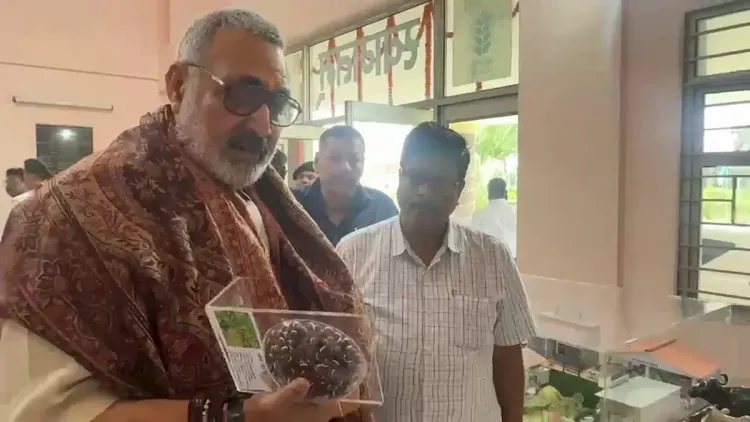
A humble heap of paddy straw — long the villain of North India's stubble-burning crisis — may be on its way to a second life in India's fields. Union Textiles Minister Giriraj Singh on Friday, 30 October 2026, shared that he had received a briefing on technologies turning paddy straw into biodegradable planting pots and on advanced techniques for vegetable cultivation, flagging the twin promise of higher farm productivity and environmental protection.
Posting in Hindi, Singh wrote: 'कृषि क्षेत्र में नवाचार, उत्पादकता बढ़ाने के साथ पर्यावरण संरक्षण के लिए भी महत्वपूर्ण हैं।' — 'Innovations in agriculture are important not only for boosting productivity but also for protecting the environment.' He added that he had gathered information on biodegradable planting pots made from paddy straw and on technologies developed for vegetable farming.From smoke to soil: what paddy-straw pots actually do
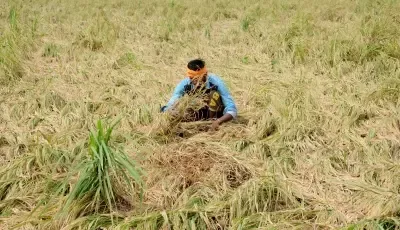
Every post-harvest season, millions of tonnes of paddy straw are set ablaze across Punjab, Haryana, and western Uttar Pradesh, sending a thick toxic haze over northern India. Biodegradable planting pots made from that same straw offer a circular solution: the waste becomes a seedling container that can be transplanted directly into the ground, decomposes naturally, and enriches the soil — eliminating both the fire and the plastic nursery tray in a single move.
The technology fits squarely within the broader push India has made since 2018, when the central government launched the Crop Residue Management (CRM) scheme to promote in-situ and ex-situ use of paddy straw and reduce stubble burning. That scheme has disbursed subsidies for machinery and piloted value-addition models, but scaling biodegradable agri-products into mainstream farm supply chains has remained a work in progress.
Why a Textiles Minister is in this conversation
At first glance, a Textiles Minister engaging with paddy-straw pots looks like a stretch. It is not. Natural-fibre processing, non-woven agro-textiles, and biodegradable packaging are live segments within India's technical textiles agenda — an area the Ministry of Textiles has actively promoted through its National Technical Textiles Mission. Paddy-straw-based moulded products overlap with agro-textile applications, making cross-ministerial interest logical and the potential for scheme linkages real.
Singh, a senior BJP leader and Lok Sabha MP from Begusarai, Bihar, also carries longstanding engagement with rural and agricultural constituents — lending a political as well as a policy dimension to his interest in farm-level innovation.
The vegetable cultivation angle
Singh's post also references technologies developed specifically for vegetable farming, though he did not detail them further. This is consistent with a wider national effort to improve yield, reduce input costs, and promote protected or precision cultivation for horticulture — a segment that has drawn increasing institutional attention given its role in managing food inflation and farmer income.
The dual focus — waste valorisation on one side, productivity tech on the other — signals an integrated view of agricultural innovation rather than a siloed environmental pitch. That framing, coming from a senior Union Minister, is itself a signal worth watching for follow-up announcements on pilot projects or technology transfer.
Point of View
Technical textiles promotion, and farm-waste circular economy. The framing from a Textiles Minister rather than an Agriculture Minister suggests the government is beginning to connect agro-textile applications to on-farm adoption, which could accelerate scale. Whether this briefing translates into a funded pilot or scheme linkage will be the real test of intent.
NationPress
30 Oct 2026
Frequently Asked Questions
What are biodegradable planting pots made from paddy straw?
They are seedling containers moulded from paddy straw — an agricultural by-product — that can be planted directly into the soil, decompose naturally, and eliminate the need for plastic nursery trays.
Why is the Textiles Minister talking about paddy straw and farming?
Paddy-straw-based moulded and non-woven products fall under agro-textiles, a segment promoted by the Ministry of Textiles through the National Technical Textiles Mission, making cross-ministerial interest in such innovations logical.
What is India's Crop Residue Management scheme?
Launched in 2018, the Crop Residue Management scheme subsidises machinery and value-addition models to promote in-situ and ex-situ use of paddy straw, primarily to reduce stubble burning in northern states.
How does paddy straw burning affect the environment?
Burning paddy straw releases large quantities of particulate matter and greenhouse gases, contributing significantly to the severe air pollution seen over northern India each post-harvest season.
What could follow from Giriraj Singh's briefing on paddy-straw pots?
Analysts are watching for follow-up announcements on pilot projects, government-backed technology transfer, or formal linkages with MSME or textiles schemes to scale biodegradable paddy-straw products commercially.