Giriraj Singh visits ICAR, reviews soil health and new crop varieties
Synopsis
Union Textiles Minister Giriraj Singh visited an ICAR institute on 30 October 2026, reviewing soil quality improvements, advanced farming techniques, and new crop varieties, praising the council's role in boosting farmer productivity and prosperity through scientific research.
Key Takeaways
Union Textiles Minister Giriraj Singh visited an ICAR institute on 30 October 2026 .
He reviewed advances in soil health improvement , modern agricultural technologies, and newly developed crop varieties .
Singh praised ICAR's contribution to enhancing farmer productivity and prosperity through scientific research and innovation.
ICAR is the apex body coordinating agricultural research under the Ministry of Agriculture and Farmers Welfare , with roots in India's Green Revolution of the 1960s.
The visit reflects a broader pattern of central government ministers engaging with public-sector agricultural research institutions.
Policy watchers will monitor whether the visit influences budgetary allocations for agricultural research in the next Union Budget.
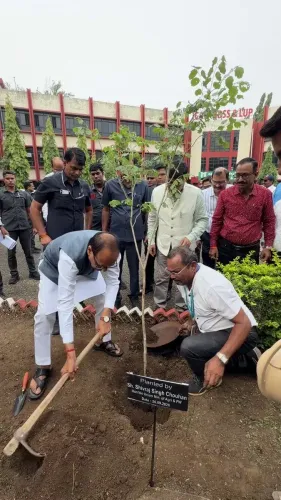
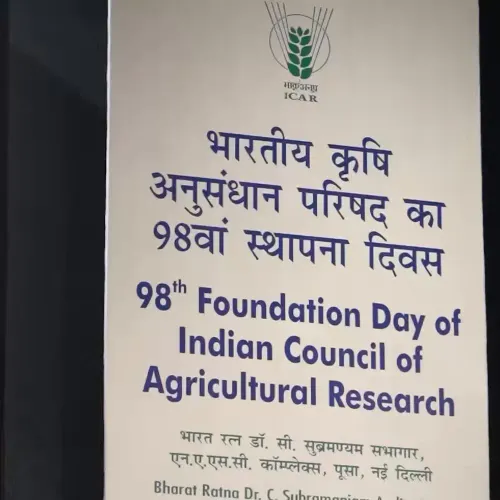
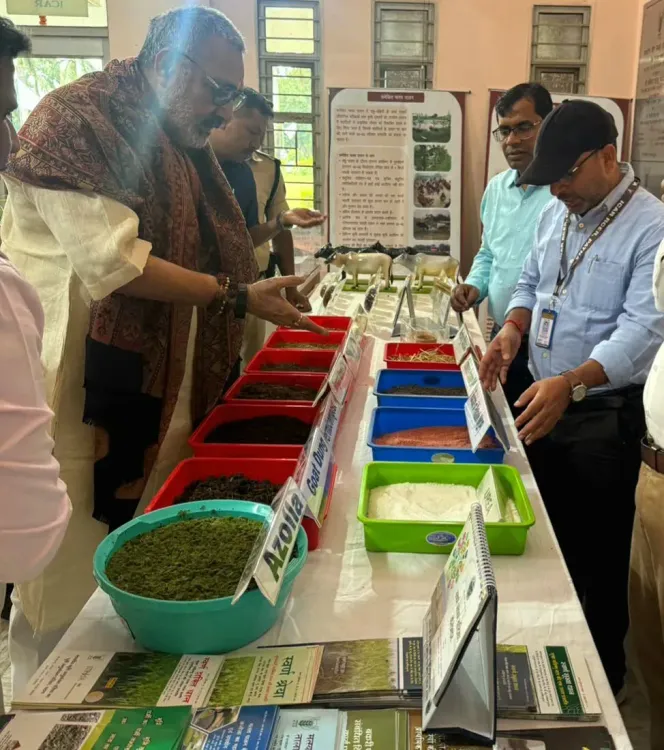
India's farm science ecosystem got a close ministerial look on Friday, 30 October 2026, when Union Textiles Minister Giriraj Singh toured an institute of the Indian Council of Agricultural Research (ICAR), examining advances in soil quality improvement, cutting-edge cultivation techniques, and newly developed crop varieties and agricultural products.
Singh shared his impressions on X, writing in Hindi: 'Vaigyanik anusandhan aur navaacharon ke maadhyam se kisaanon ki utpaadakta evam samridhi badhane mein ICAR ka yogdaan sarahaneey hai' — 'ICAR's contribution to enhancing farmers' productivity and prosperity through scientific research and innovation is commendable.'
What Singh saw at ICAR
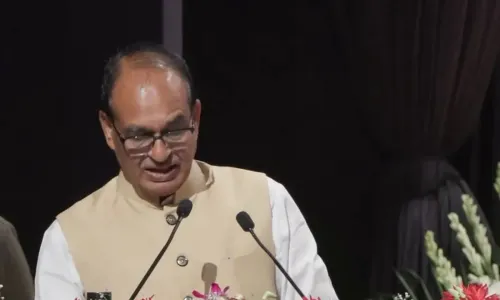
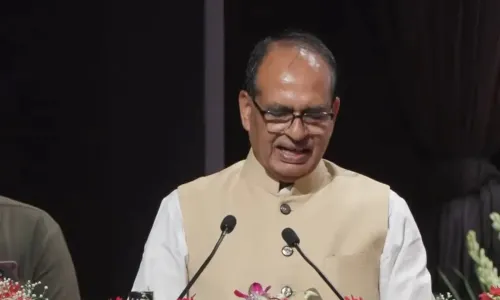
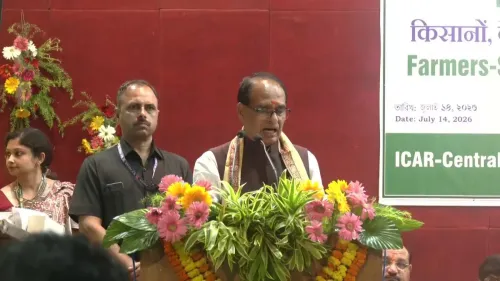
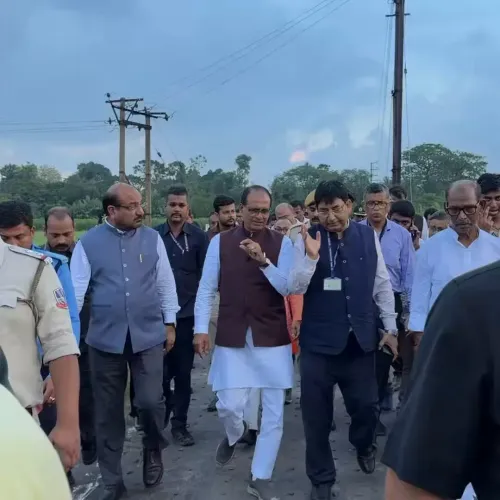
During the walkthrough, the minister received detailed briefings on three priority areas: methods to rehabilitate and improve soil health, adoption of advanced agricultural technologies, and the pipeline of new crop and product varieties developed by ICAR scientists. Two images posted alongside the update showed Singh engaged with researchers at the institute.
The visit underscores a pattern that successive central governments have followed — encouraging ministers from across portfolios to engage with public-sector agricultural research, reinforcing the message that science-driven farming is a national, not departmental, priority.
ICAR's place in India's farming story
ICAR is the apex autonomous body under the Ministry of Agriculture and Farmers Welfare, coordinating research, education, and extension across India's vast agrarian landscape. Its lineage runs deep: ICAR-coordinated programmes seeded the high-yielding varieties and modern inputs that powered India's Green Revolution from the mid-1960s onward, transforming a food-deficit nation into one of the world's largest grain producers.
Today, with soil degradation, climate variability, and stagnating yields posing new threats to farm incomes, ICAR's mandate has expanded well beyond just yield — into precision nutrition, stress-tolerant varieties, and low-input sustainable farming. A minister taking time to walk the research floor signals that these efforts remain in political view.
Why a Textiles Minister at an agriculture institute?
The visit is not as incongruous as it appears. Giriraj Singh, a senior BJP leader and Lok Sabha MP from Begusarai, Bihar, has a long-standing interest in agrarian welfare that predates his current textiles portfolio. Bihar is overwhelmingly rural, and crop research — particularly for varieties suited to Indo-Gangetic plain conditions — bears directly on his constituents. Several natural fibres, including cotton and jute, also sit at the precise intersection of his textiles brief and ICAR's research agenda.
Watchers of agricultural policy will now track whether Singh's visit translates into any push for increased budgetary allocation for ICAR in upcoming parliamentary discussions or the next Union Budget — the real test of ministerial attention.
Point of View
Whose Begusarai constituency sits in the heart of Bihar's farming belt, the visit also serves a constituency logic: ICAR's work on stress-tolerant varieties and soil health has direct income implications for small and marginal farmers he represents. The broader arc here is a government keen to associate its ministerial class with science and innovation in agriculture, particularly as soil degradation and yield plateaus emerge as structural risks to rural prosperity. Whether ministerial walk-throughs translate into sustained budget commitments for public agricultural research remains the sharper question.
NationPress
30 Oct 2026
Frequently Asked Questions
Why did Giriraj Singh visit an ICAR institute?
Giriraj Singh visited an ICAR institute on 30 October 2026 to review research on soil quality improvement, advanced agricultural techniques, and newly developed crop varieties, reflecting the government's emphasis on science-driven farming.
What is ICAR and what does it do?
ICAR, or the Indian Council of Agricultural Research, is India's apex autonomous body that coordinates agricultural research, education, and extension under the Ministry of Agriculture and Farmers Welfare. It played a central role in the Green Revolution and continues to develop new crop varieties and farming technologies.
What did Giriraj Singh say about ICAR's work?
Singh said that ICAR's contribution to enhancing farmers' productivity and prosperity through scientific research and innovation is 'commendable', sharing the observation on his official X account.
How is ICAR relevant to soil health in India?
ICAR institutes conduct research into soil quality rehabilitation, nutrient management, and sustainable farming inputs, providing farmers with science-backed solutions to combat degradation and improve yields.
Is Giriraj Singh involved in agriculture policy?
Giriraj Singh currently serves as Union Minister of Textiles, but as a senior BJP leader and MP from Bihar — a predominantly agrarian state — he has a long-standing interest in farm welfare. Several natural fibres also intersect his textiles portfolio with agricultural research.