Shivraj Singh Chouhan witnesses ICAR green ammonia trial in Haryana
Synopsis
Union Agriculture Minister Shivraj Singh Chouhan attended an ICAR green ammonia field demonstration in Tarawadi, Haryana on 23 October 2026 during the Khet Bachao Abhiyan, highlighting potential to cut farmers' input costs and reduce India's fertiliser import dependence.
Key Takeaways
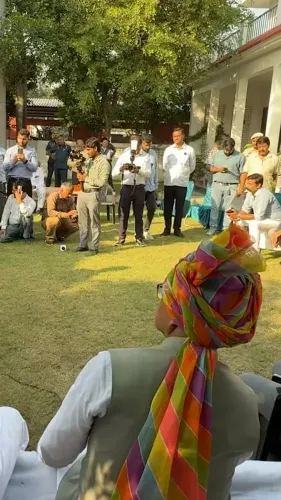
ICAR demonstrated green ammonia being injected sub-surface into farmland in Tarawadi, Karnal, Haryana using a specialised machine.
The technology delivers nitrogen directly to crop roots, aiming for better yields with lower fertiliser volumes.
Union Agriculture Minister Shivraj Singh Chouhan witnessed the trial on 23 October 2026 during the ongoing Khet Bachao Abhiyan .
India's National Green Hydrogen Mission (launched January 2023) underpins domestic green ammonia production efforts.
The demonstration targets two goals: reducing farmers' input costs and cutting India's import dependence on nitrogenous fertilisers.
Scale-up of the machinery and potential changes to fertiliser subsidy policy are the key next steps to watch.
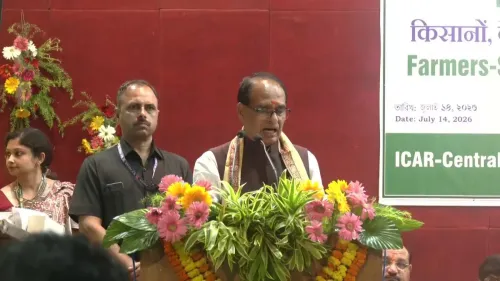
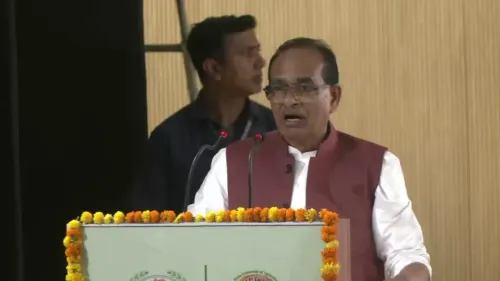
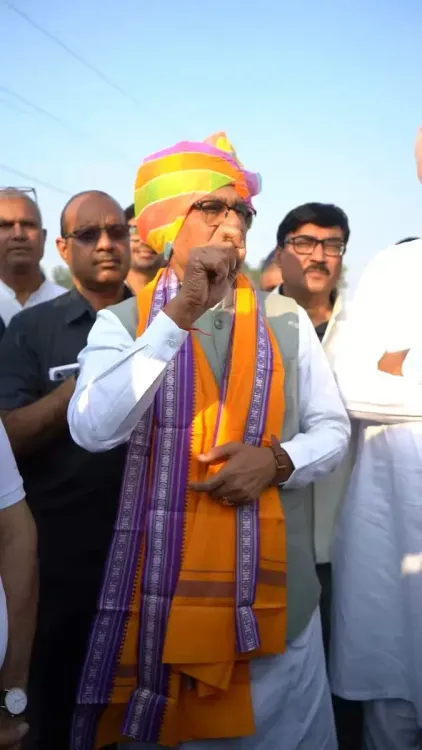
A quiet field in Tarawadi, Karnal district, Haryana, became a test bed for a potential shift in how India feeds its crops — and cuts its fertiliser import bill. Union Agriculture Minister Shivraj Singh Chouhan visited the site on Friday, 23 October 2026, during the ongoing Khet Bachao Abhiyan campaign, to witness a live demonstration by the Indian Council of Agricultural Research (ICAR) of green ammonia being injected directly into the soil.
What the ICAR machine actually does
The technology is deceptively simple in principle: a specialised machine drives green ammonia sub-surface into the soil, delivering nitrogen precisely where a crop's roots can absorb it. Chouhan described the process in his post — 'vishesh machine se ise mitti ke bheetar pahunchaya jata hai, taki fasal ko nitrogen mil sake' ('a special machine delivers it into the soil so the crop receives nitrogen'). The targeted application means less fertiliser is wasted to surface run-off or volatilisation, promising better yields at lower input volumes.
Why India's fertiliser import bill makes this urgent
India's dependence on imported urea and other nitrogenous fertilisers is one of agriculture's most persistent pressure points. Global price spikes — most dramatically during the 2021-22 commodity surge — exposed how badly that dependence can hurt both the national subsidy budget and individual farm economics. Chouhan noted the twin goals explicitly: reduce farmers' costs, and shrink India's reliance on foreign sources for fertiliser inputs.
The green ammonia trial slots directly into that larger ambition. India's National Green Hydrogen Mission, launched in January 2023, set out to scale domestic production of green hydrogen and its derivatives — ammonia chief among them — precisely to decarbonise energy-intensive sectors, including fertiliser manufacturing. An ICAR-led field demonstration in a wheat-belt district like Karnal is an early signal that the mission's outputs are now reaching farm gates.
Khet Bachao Abhiyan and the push for sustainable inputs
The Khet Bachao Abhiyan — literally 'Save the Farm Campaign' — has been the Agriculture Ministry's platform for rolling out field-level demonstrations of sustainable farming practices to farmers. Haryana, one of India's highest per-hectare fertiliser-consuming states, is a strategically logical starting point: if green ammonia can prove cost-competitive on a Haryana wheat or paddy field, scale-up arguments become harder to dismiss.
The broader pattern here is deliberate. Successive governments have backed alternative nutrient-delivery systems and domestic green production as a hedge against subsidy overruns and import vulnerability. What changes with green ammonia is the decarbonisation dimension: lower emissions from fertiliser use, not just lower costs, is now part of the pitch to farmers.
What farmers and policymakers will be watching
The demonstration is a pilot. The next questions — how quickly ICAR can scale the specialised machinery, whether state governments adopt procurement or subsidy programmes for green ammonia inputs, and what measurable cost savings farmers actually record — will determine whether Tarawadi is a footnote or a turning point. Chouhan's high-profile field visit signals that the Ministry is prepared to put political weight behind the answer.
India's farm sector employs roughly half the country's workforce. Any input that credibly cuts costs while reducing import exposure carries stakes well beyond a single field in Karnal.
Point of View
Chouhan frames green ammonia as a farmer-first, ground-up technology rather than a bureaucratic abstraction. The timing aligns with India's broader push to convert National Green Hydrogen Mission investments into tangible agricultural dividends ahead of what will be a fertiliser-subsidy-heavy Union Budget cycle. If ICAR's sub-surface injection machinery can be priced accessibly and state governments integrate it into procurement programmes, the trial could evolve into a genuine policy lever — shrinking both the import bill and the carbon footprint of Indian agriculture in one move.
NationPress
23 Oct 2026
Frequently Asked Questions
What is green ammonia and how is it used in farming?
Green ammonia is ammonia produced using renewable energy rather than fossil fuels. In farming, it serves as a nitrogen fertiliser; ICAR's trial in Haryana injects it directly into the soil via a specialised machine, allowing crops to absorb nitrogen more efficiently with less waste.
What is Khet Bachao Abhiyan?
Khet Bachao Abhiyan, meaning 'Save the Farm Campaign,' is a Union Agriculture Ministry initiative that conducts field demonstrations of sustainable and cost-effective farming practices for Indian farmers.
Why is India trying to reduce fertiliser import dependence?
India imports large quantities of urea and other nitrogenous fertilisers, making the farm sector vulnerable to global price shocks and placing a heavy burden on the government's fertiliser subsidy budget. Domestic alternatives like green ammonia could reduce both costs and vulnerability.
What is India's National Green Hydrogen Mission?
Launched in January 2023, India's National Green Hydrogen Mission aims to scale domestic production of green hydrogen and its derivatives, including ammonia, to decarbonise sectors such as fertiliser manufacturing and reduce fossil-fuel dependence.
Where did Shivraj Singh Chouhan witness the green ammonia trial?
The demonstration took place in Tarawadi, Karnal district, Haryana, on 23 October 2026, conducted by ICAR as part of the Khet Bachao Abhiyan campaign.