CM Himanta flags cloudburst floods in new Assam districts

Synopsis
Assam CM Himanta Biswa Sarma on 22 July 2026 disclosed that cloudbursts have inundated districts not previously prone to flooding, with state disaster teams deployed day and night. The development points to a widening geographic spread of flood risk in the Northeast.
Key Takeaways
Assam CM Himanta Biswa Sarma confirmed on 22 July 2026 that sudden cloudbursts have caused flooding in districts of Assam with no prior history of such inundation.
State relief and rescue teams are operating day and night to control the situation, as stated by the Chief Minister.
The flooding signals a geographic expansion of monsoon flood risk beyond Assam's traditionally vulnerable riverine zones.
The Assam State Disaster Management Authority (ASDMA) , set up under the Disaster Management Act, 2005 , is the nodal body coordinating the response.
Release of central government financial assistance figures and potential cabinet decisions on new flood-mitigation measures are being closely watched.
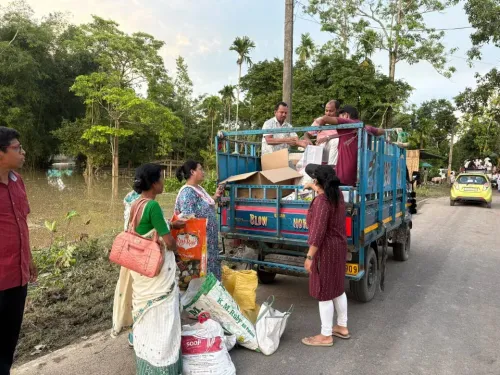
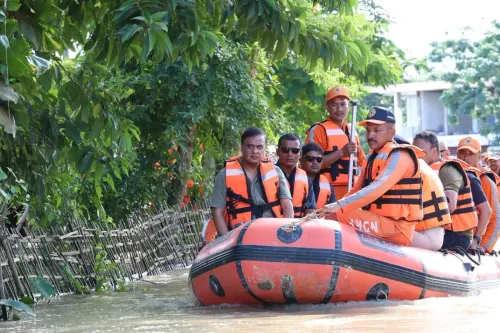
Assam Chief Minister Himanta Biswa Sarma on Wednesday, 22 July 2026 warned that sudden cloudbursts have triggered flooding in districts of Assam that had not previously experienced such inundation, and confirmed that state teams are working around the clock on relief and rescue operations.
Writing in Hindi on X, CM Sarma stated: 'Sudden cloudbursts have caused flooding in districts of Assam where such impact had not been seen before. Our team is engaged day and night in relief and rescue operations and is working to bring the situation under control.' The post was accompanied by a video, underlining the ground-level severity of the event.
Context
Assam is one of India's most flood-prone states, traversed by the vast Brahmaputra river system and its numerous tributaries. Annual monsoon flooding is a near-permanent feature of the state's calendar, but cloudbursts — intense, localised downpours — represent a more unpredictable threat that can overwhelm drainage in areas that ordinarily escape river flooding.
The Chief Minister's specific mention of districts 'where such impact had not been seen before' signals a geographic spread of flood risk beyond the traditionally vulnerable riverine belt, raising fresh concerns about changing monsoon behaviour across the Northeast.
Policy Backdrop
The Assam State Disaster Management Authority (ASDMA), constituted in 2007 under the Disaster Management Act, 2005, is the nodal body for coordinating flood response in the state. It works alongside the State Disaster Response Force (SDRF) and central teams deployed during major events.
The BJP-led state government under CM Sarma has in recent years prioritised rapid relief mobilisation alongside longer-term investments in embankment reinforcement and drainage improvement projects. Shifting monsoon patterns across the Northeast have, however, repeatedly tested the limits of existing infrastructure.
Stakeholders and Impact
Flood-affected residents across the newly impacted districts face the most immediate risk — loss of shelter, disruption to agriculture, and threats to livestock and livelihoods. Communities in areas with limited prior flood-preparedness infrastructure are particularly vulnerable when cloudbursts strike without warning.
State disaster response teams, revenue and district administration officials, and health department personnel are among the key responders currently deployed. The scale of central government assistance — including funds from the National Disaster Response Fund (NDRF) — will be a critical variable in how quickly normalcy is restored.
What's Next
Attention will now turn to whether the state government convenes an emergency cabinet meeting or issues a formal disaster declaration for the affected districts. The release of official figures on the number of people displaced, relief camps operational, and financial assistance sanctioned will be closely watched.
Broader questions about long-term flood-mitigation planning — including new embankment schemes and early-warning systems for cloudburst-prone zones — are likely to gain renewed urgency before the next assembly session. As a senior BJP leader and convenor of the North-East Democratic Alliance (NEDA), CM Sarma is also expected to coordinate with the Union government on any additional central assistance.
Point of View
Climate-linked event rather than a routine governance failure — a framing that deflects criticism while simultaneously building a case for enhanced central funding. As NEDA convenor and a key BJP voice in the Northeast, Sarma's public communication on disasters is calibrated to reinforce the image of a proactive, responsive government ahead of any political accountability that flood mismanagement could invite.
NationPress
21 Oct 2026
Frequently Asked Questions
Which districts in Assam were affected by the cloudburst floods in July 2026?
CM Himanta Biswa Sarma did not name specific districts in his post, but stated that flooding occurred in districts of Assam that had not previously experienced such cloudburst-driven inundation. Official district-wise details are expected to be released by the state disaster management authority.
What is a cloudburst and why is it dangerous in Assam?
A cloudburst is an extremely intense, localised rainfall event — typically more than 100 mm of rain in under an hour — that can overwhelm drainage systems rapidly. In Assam, cloudbursts are dangerous because they can trigger sudden flooding even in districts outside the Brahmaputra floodplain that lack flood-preparedness infrastructure.
What is the Assam State Disaster Management Authority?
The Assam State Disaster Management Authority (ASDMA) was constituted in 2007 under the Disaster Management Act, 2005. It is the nodal body responsible for planning, coordinating, and overseeing disaster response — including flood relief — across the state.
Is Assam affected by floods every year?
Yes, Assam faces annual monsoon flooding driven primarily by the Brahmaputra river system and its tributaries. In recent years, cloudbursts have added a more unpredictable layer of risk, affecting districts not traditionally considered flood-prone.
What relief measures has the Assam government announced for the 2026 floods?
CM Sarma confirmed that state teams are engaged in round-the-clock relief and rescue operations. Specific financial assistance figures, the number of relief camps, and any cabinet decisions on additional measures had not been formally announced at the time of his post on 22 July 2026.