CM Himanta Receives Centenary Invite from Sankardev, Madhabdev Bodies
Synopsis
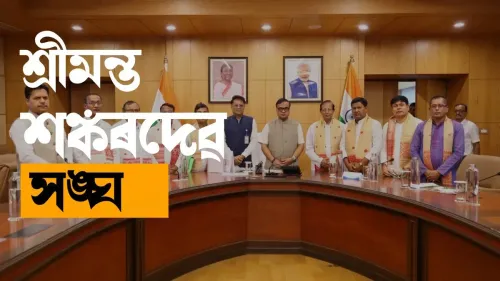
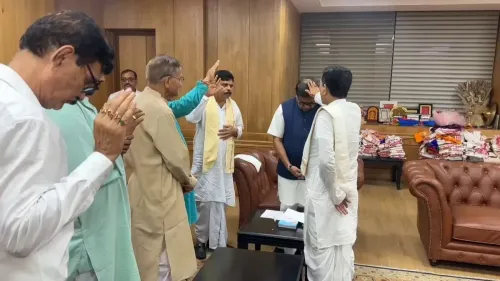
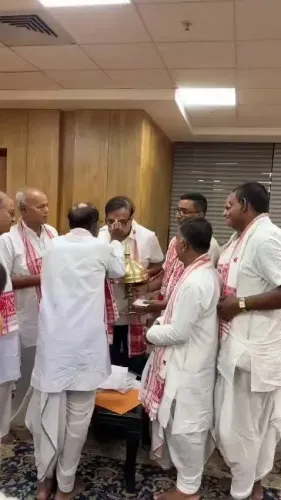
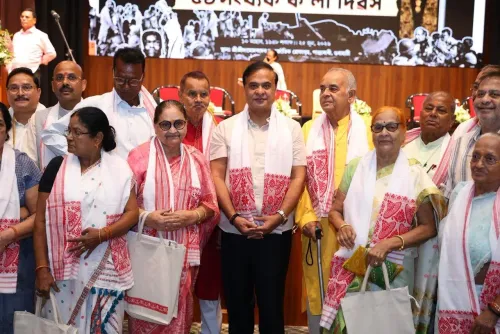
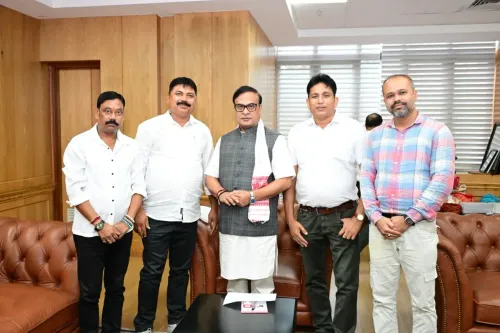
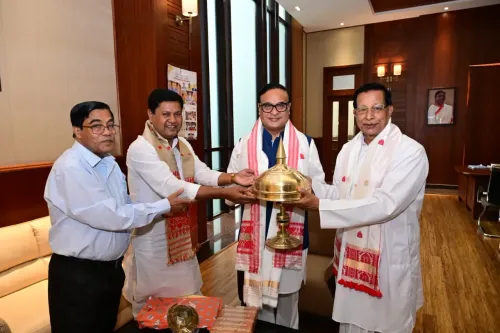
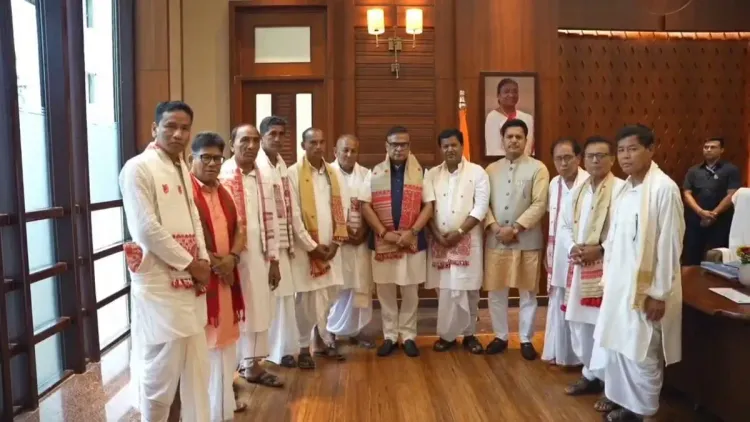
A joint delegation from the Srimanta Sankardev Sangha and Sri Sri Madhabdev Janmasthan Satabarsa Samiti, Rongajan, met Assam Chief Minister Dr. Himanta Biswa Sarma at his Assembly chamber on 8 July 2026 to invite him to their Centenary Programme, continuing the state government's active engagement with neo-Vaishnavite heritage institutions.
Key Takeaways
A joint delegation from the Srimanta Sankardev Sangha and Sri Sri Madhabdev Janmasthan Satabarsa Samiti, Rongajan met CM Himanta Biswa Sarma on 8 July 2026 .
The meeting took place at the Chief Minister's Assembly chamber in Assam .
The delegation's purpose was to formally invite the Chief Minister to their Centenary Programme .
The Srimanta Sankardev Sangha is Assam's foremost socio-religious body propagating 15th–16th century neo-Vaishnavite teachings.
Rongajan is the site associated with the birthplace of Madhabdev , principal disciple of Srimanta Sankardev.
The Assam government has prioritised engagement with neo-Vaishnavite institutions since 2021 .
The Chief Minister's Office of Assam announced on Wednesday, 8 July 2026 that a joint delegation from the Srimanta Sankardev Sangha and the Sri Sri Madhabdev Janmasthan Satabarsa Samiti, Rongajan called upon Chief Minister Dr. Himanta Biswa Sarma at his Assembly chamber to formally invite him to their upcoming Centenary Programme.
Context
The two organisations represent the living institutional legacy of Assam's neo-Vaishnavite tradition, rooted in the 15th–16th century teachings of Srimanta Sankardev and his principal disciple Madhabdev. The Srimanta Sankardev Sangha is among the state's most influential socio-religious bodies, while the Sri Sri Madhabdev Janmasthan Satabarsa Samiti is the organising committee for centenary commemorations at Rongajan, the site associated with Madhabdev's birthplace.
The delegation met Dr. Sarma directly at his Assembly chamber, a setting that signals the formal, institutional character of the invitation rather than a routine courtesy call.
Policy Backdrop
Since taking office in 2021, Chief Minister Himanta Biswa Sarma has made state engagement with neo-Vaishnavite institutions a visible feature of his administration. The Assam government has consistently extended official endorsement to heritage programmes linked to the Sankardev–Madhabdev tradition, framing them within a broader push to promote the Brahmaputra Valley's religious and cultural identity.
Meetings of this nature between senior government officials and Sankardev–Madhabdev organisations have a longer precedent in Assam's political culture, where such associations carry significant social reach across communities in the valley.
Stakeholders and Impact
The centenary programme at Rongajan is expected to draw Vaishnavite communities and cultural organisations from across Assam and potentially from neighbouring states with shared neo-Vaishnavite traditions. The Chief Minister's participation, if confirmed, would lend the event considerable official weight and visibility.
For the Srimanta Sankardev Sangha and the Satabarsa Samiti, securing the Chief Minister's attendance at a centenary milestone represents both cultural recognition and potential access to state resources or infrastructure support for the venue at Rongajan.
What's Next
The key development to watch is whether Dr. Himanta Biswa Sarma confirms his participation in the Centenary Programme and whether the government follows the invitation with any announcements on funding, infrastructure, or official patronage tied to Rongajan or associated neo-Vaishnavite sites. Such announcements, if they materialise, would fit a pattern of the Assam government linking religious heritage to tourism and identity-driven cultural policy in the state.
Point of View
Engagement with Sankardev–Madhabdev institutions reinforces a broader identity-politics architecture that has been central to its governance since 2021. For the organisations, a Chief Minister's presence at a centenary milestone can translate into state patronage, infrastructure investment, and elevated public profile. The pattern signals that religious-cultural heritage in Assam is increasingly managed as both a soft-power asset and a political constituency.
NationPress
6 Oct 2026
Frequently Asked Questions
Who invited Assam CM Himanta Biswa Sarma to the Centenary Programme?
A joint delegation from the Srimanta Sankardev Sangha and the Sri Sri Madhabdev Janmasthan Satabarsa Samiti, Rongajan, invited Chief Minister Dr. Himanta Biswa Sarma to their Centenary Programme during a meeting at his Assembly chamber on 8 July 2026.
What is the Srimanta Sankardev Sangha?
The Srimanta Sankardev Sangha is one of Assam's most influential socio-religious organisations, dedicated to propagating the neo-Vaishnavite teachings of 15th–16th century saint-scholar Srimanta Sankardev across the Brahmaputra Valley and beyond.
Where is Rongajan and why is it significant?
Rongajan is a site in Assam associated with the birthplace — the janmasthan — of Madhabdev, the principal disciple of Srimanta Sankardev, and is the focal point of the centenary commemorations being organised by the Satabarsa Samiti.
What is the Madhabdev Janmasthan Satabarsa Samiti?
The Sri Sri Madhabdev Janmasthan Satabarsa Samiti is the organising committee set up to plan and conduct centenary events at Madhabdev's birthplace at Rongajan in Assam.
Has the Assam government supported neo-Vaishnavite organisations before?
Yes. Since 2021, the Assam government under Chief Minister Himanta Biswa Sarma has consistently engaged with and extended official support to institutions and heritage programmes linked to the Sankardev–Madhabdev neo-Vaishnavite tradition.