CM Himanta Hails Ambubachi Mela, Over 8 Lakh Devotees Attend
Synopsis
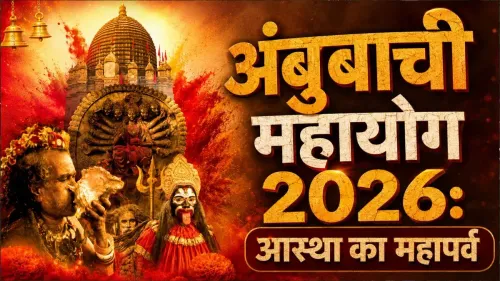
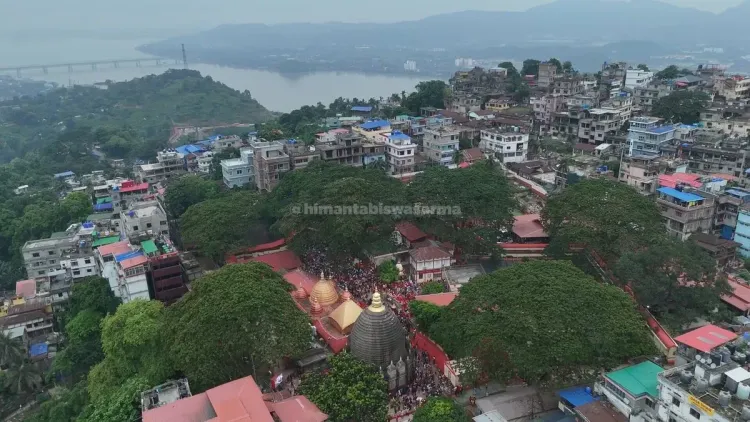
Assam Chief Minister Himanta Biswa Sarma hailed the Ambubachi Mela at Kamakhya Temple as an unparalleled expression of Nari Shakti, noting that over 8 lakh devotees attended the annual festival that centres the sacred feminine in Assam's civilisational heritage.
Key Takeaways
Assam Chief Minister Himanta Biswa Sarma publicly celebrated the Ambubachi Mela at Maa Kamakhya Temple on 26 June 2026 .
The Chief Minister stated that more than 8 lakh devotees participated in this year's celebration.
He described the festival's underlying phenomenon as having 'no parallel anywhere' and as emblematic of Nari Shakti in Assam's heritage.
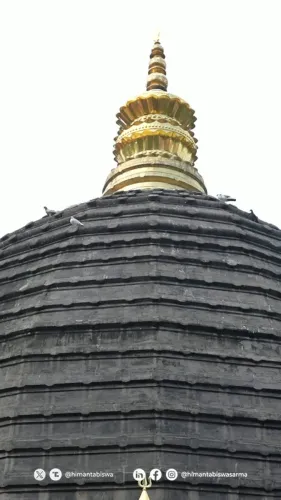
Kamakhya Temple is one of the 51 Shakti Peethas and is uniquely associated with tantric tradition and feminine sacred symbolism.
The PRASAD scheme (launched 2014 ) has funded pilgrim infrastructure at Kamakhya, supporting the growth of religious tourism at the site.
The festival's scale has significant economic impact on local traders and the hospitality sector in Guwahati and the wider Northeast .
Assam Chief Minister Himanta Biswa Sarma on Friday, 26 June 2026, paid tribute to the Ambubachi Mela at Maa Kamakhya Temple, calling the festival's underlying phenomenon unparalleled and describing it as emblematic of the centrality of Nari Shakti (feminine power) in Assam's civilisational heritage. The Chief Minister noted that more than 8 lakh devotees participated in this year's celebration over the preceding days.
Context
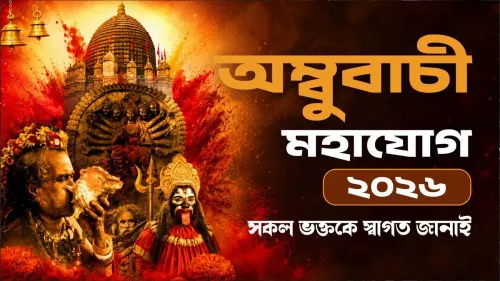
The Ambubachi Mela is an annual four-day festival observed at the Kamakhya Temple on Nilachal Hill in Guwahati, Assam. The festival marks the period during which Goddess Kamakhya is believed to undergo her annual menstrual cycle — a phenomenon unique in the Hindu religious calendar for centering feminine biology as a sacred and celebratory event. The temple remains closed during this period before reopening with elaborate rituals symbolising fertility and renewal.
Kamakhya Temple is one of the 51 Shakti Peethas — the most revered shrines in the Shakta tradition — and is particularly distinguished for its tantric character and focus on the yoni symbol. No comparable festival in the country frames the feminine biological cycle with the same degree of religious and civilisational weight, which is what Chief Minister Sarma described as having 'no parallel anywhere.'
Policy Backdrop
The development of Kamakhya Temple as a pilgrimage destination has received central government attention under the PRASAD scheme (Pilgrimage Rejuvenation and Spiritual, Heritage Augmentation Drive), launched in 2014, which has channelled funds into pilgrim amenities and infrastructure at the site. Improved facilities have contributed to the steady growth of devotee footfall during major festivals such as Ambubachi.
State leaders in Assam have consistently framed indigenous festivals as expressions of civilisational continuity, linking them simultaneously to regional identity and religious tourism. Chief Minister Sarma, who assumed office in May 2021, has been a vocal proponent of highlighting Assam's cultural heritage in public discourse, frequently invoking the concept of Nari Shakti in the context of the state's Shakta traditions.
Stakeholders and Impact
The scale of the gathering — more than 8 lakh devotees — has direct economic implications for Guwahati and the surrounding region. Local traders, hospitality providers, and transport operators benefit significantly from the annual influx, making the Ambubachi Mela one of the most consequential religious-tourism events in the Northeast. Pilgrims travel from across India and from neighbouring countries, reflecting the temple's pan-regional spiritual stature.
For the broader Shakti Peetha network, Ambubachi reinforces Kamakhya's position as a site where tantric and mainstream Hindu traditions converge. The Chief Minister's public messaging also serves to embed this regional festival within wider national cultural narratives, presenting the Northeast's heritage as integral to India's civilisational identity.
What's Next
Attention will now turn to the Assam state tourism department for announcements on upgraded pilgrim facilities or new heritage circuit proposals tied to future Ambubachi cycles. Given the growing footfall and the state government's emphasis on religious tourism, further infrastructure investment at Nilachal Hill and along key pilgrim corridors to Guwahati is widely anticipated. The festival's expanding reach also positions it as a candidate for greater inclusion in national heritage tourism calendars.
Point of View
Long-running effort by the Assam government to position the state's Shakta and tantric traditions as pillars of national civilisational identity rather than regional curiosities. By invoking Nari Shakti — a phrase with strong resonance in the ruling party's national vocabulary — in the context of Kamakhya's distinctly feminine theology, the messaging bridges local heritage with a pan-India cultural framework. The emphasis on 8 lakh devotees also signals the festival's growing scale as a religious-tourism asset, reinforcing the state's case for continued central investment under schemes like PRASAD. Taken together, the post reflects how Northeast leaders are increasingly using cultural diplomacy to assert the region's centrality within India's broader heritage narrative.
NationPress
26 Jun 2026
Frequently Asked Questions
What is the Ambubachi Mela at Kamakhya Temple?
The Ambubachi Mela is an annual four-day festival at Kamakhya Temple in Guwahati, Assam , marking the period when Goddess Kamakhya is believed to undergo her annual menstrual cycle. The temple closes during this time and reopens with rituals symbolising fertility and renewal, drawing lakhs of pilgrims each year.
Where is Kamakhya Temple located?
Kamakhya Temple is situated on Nilachal Hill in Guwahati, Assam . It is one of the 51 Shakti Peethas in the Hindu tradition and is particularly revered for its tantric character and association with the sacred feminine.
How many devotees attended Ambubachi Mela 2026?
According to Assam Chief Minister Himanta Biswa Sarma , more than 8 lakh devotees joined the Ambubachi Mela celebrations over the preceding days, as stated in his post on 26 June 2026 .
What is Nari Shakti and why is it associated with Kamakhya?
Nari Shakti refers to feminine power or energy, a concept central to the Shakta tradition of Hinduism. Kamakhya Temple is uniquely associated with this idea because the Ambubachi Mela celebrates the Goddess's menstrual cycle as a sacred event, making feminine biology a focal point of worship in a manner found nowhere else in India.
What is the PRASAD scheme and how does it relate to Kamakhya Temple?
The PRASAD scheme (Pilgrimage Rejuvenation and Spiritual, Heritage Augmentation Drive) was launched by the central government in 2014 to develop infrastructure and amenities at major pilgrimage sites across India. Kamakhya Temple has received funds under this scheme, supporting the facilities that accommodate the large number of devotees who attend events like the Ambubachi Mela.