CM Himanta Greets Bengal on Pashchimbanga Divas, Hails Shyama Prasad
Synopsis
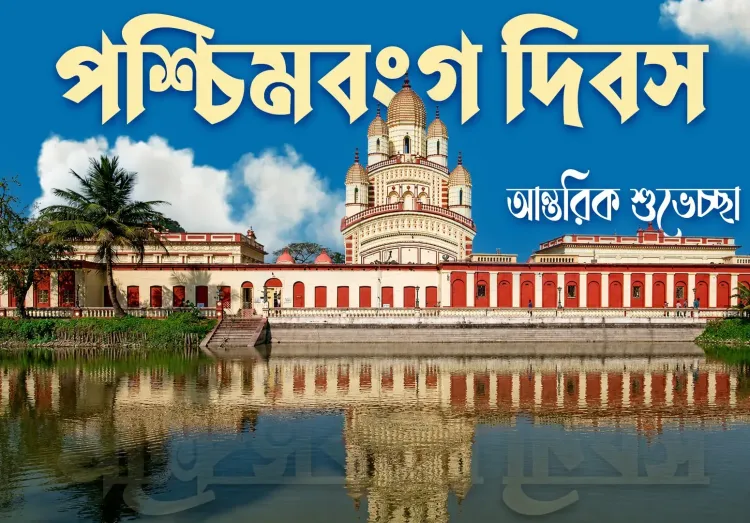
Assam CM Himanta Biswa Sarma marked Pashchimbanga Divas on 20 June 2026 by crediting Dr. Shyama Prasad Mukherjee's nationalist vision for keeping West Bengal within India in 1947, while accusing the Left of suppressing the day's historical significance for vote-bank politics.
Key Takeaways
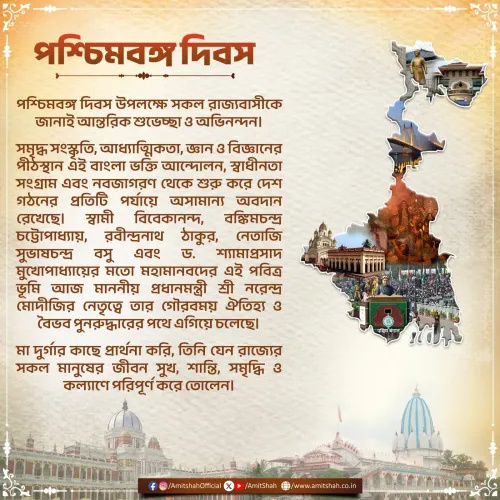
Assam CM Himanta Biswa Sarma posted greetings in Bengali on Pashchimbanga Divas , 20 June 2026 .
Shyama Prasad Mukherjee and nationalist leaders for ensuring West Bengal remained part of India after the 1947 partition .
Sarma accused the Left Front of concealing the day's historical significance for 'vote-bank politics' during its rule from 1977 to 2011 .
The post was directed in part at West Bengal BJP leader Suvendu Adhikari , signalling coordinated party outreach.
Sarma invoked Maa Kamakhya and Maa Durga , praying for peace, prosperity, and progress for West Bengal .
Assam Chief Minister Himanta Biswa Sarma on Saturday, 20 June 2026, extended greetings to the people of West Bengal on the occasion of Pashchimbanga Divas, crediting the vision of Dr. Shyama Prasad Mukherjee and nationalist leaders of the partition era for keeping a part of Bengal within India. The post, directed in part at BJP leader Suvendu Adhikari, also accused Left parties of suppressing the historical significance of the day for decades.
Context
Writing in Bengali, CM Sarma conveyed greetings to 'all brothers and sisters of West Bengal' on Pashchimbanga Divas. He described the day as a marker of 'an important turning point in Bengal's history' — ('বাংলার ইতিহাসে এক গুরুত্বপূর্ণ সন্ধিক্ষণের স্মারক') — brought about by the efforts of nationalist leaders during the 1947 partition. Sarma said their 'foresight and firm resolve' ensured that a part of Bengal remained an 'inseparable part of India,' opening doors of safety and shelter for countless Bengalis who lost everything in the partition.
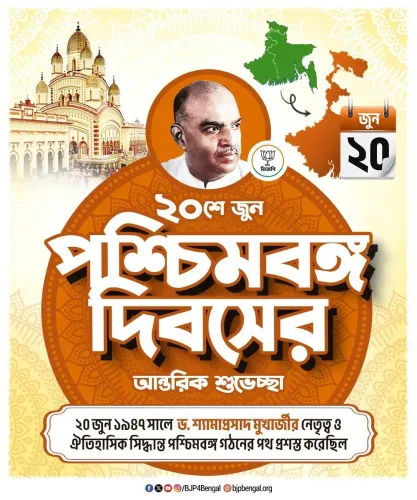
West Bengal was formed from the Hindu-majority western districts of undivided Bengal following the Radcliffe Line demarcation in 1947, which placed the eastern districts — present-day Bangladesh — within Pakistan. Dr. Shyama Prasad Mukherjee, the Bengal-born politician and founder of the Bharatiya Jana Sangh, is widely credited within BJP and its ideological ecosystem for advocating the inclusion of those western districts in India during partition negotiations.
Political Backdrop
Sarma's post contains a pointed political charge: that the Left Front — the CPI(M)-led coalition that governed West Bengal from 1977 to 2011 — had 'for a long time concealed the historical significance of this day for the sake of vote-bank politics' ('ভোটব্যাঙ্কের রাজনীতির স্বার্থে বামপন্থীরা দীর্ঘদিন ধরে এই দিনের ঐতিহাসিক তাৎপর্যকে আড়াল করে রেখেছিল'). He argued that through the sacrifice and struggle of countless Bengalis, people of the state have now found the opportunity to remember this chapter 'with due dignity.'
BJP leaders from the Northeast, including Sarma in his capacity as NEDA convenor, have increasingly engaged with West Bengal's historical and political narrative, framing the partition story as one of nationalist foresight versus Left-wing electoral calculation. The post's mention of Suvendu Adhikari, a senior West Bengal BJP leader and former minister who switched from the Trinamool Congress, signals coordination within the party's Bengal outreach.
Stakeholders and Impact
The post speaks directly to Bengali Hindu communities, including families displaced by the 1947 partition and their descendants, for whom the question of historical recognition carries deep emotional resonance. By invoking Maa Kamakhya and Maa Durga — deities revered across Assam and Bengal respectively — Sarma frames the occasion in a cultural register that cuts across state boundaries.
The ruling Trinamool Congress in West Bengal and remnant Left parties are the implicit targets of the critique. Any formal state-level response from Kolkata or reactions from opposition leaders could sharpen the political exchange in the run-up to future electoral contests in the state.
What's Next
Observers will watch whether the West Bengal BJP unit, led by figures like Suvendu Adhikari, organises formal commemorations around Pashchimbanga Divas and whether the occasion becomes a recurring platform for the party to contest the historical memory cultivated during the Left Front's three-decade rule. Sarma's prayer for Bengal's return to 'a new form of its ancient golden age' — ('প্রাচীন স্বর্ণযুগের নতুন রূপে পুনরাগমন') — signals that the BJP intends to keep the partition-era nationalist narrative central to its Bengal politics well beyond a single commemorative post.
Point of View
The BJP reclaims the partition story as one of nationalist rescue rather than communal tragedy, directly challenging the Left's long-dominant framing. The explicit accusation of vote-bank politics against the Left — rather than the currently ruling Trinamool Congress — suggests the BJP is fighting a two-front cultural war in Bengal, seeking to delegitimise both the Left's legacy and, by implication, the TMC's inheritance of that legacy. Sarma's cross-state engagement, amplified through his NEDA platform, reflects a broader BJP strategy of using Northeast leaders to lend a pan-Indian credibility to its Bengal outreach. The religious invocations of Kamakhya and Durga, deities that straddle Assam and Bengal, are a deliberate cultural bridge designed to position Sarma as a stakeholder in Bengal's future, not merely an outside commentator.
NationPress
18 Sept 2026
Frequently Asked Questions
What is Pashchimbanga Divas and why is it celebrated?
Pashchimbanga Divas marks the day West Bengal came into existence as a state within India following the 1947 partition of Bengal along the Radcliffe Line, which separated the Hindu-majority western districts from the Muslim-majority eastern districts that became East Pakistan.
What was Dr. Shyama Prasad Mukherjee's role in West Bengal's formation?
Dr. Shyama Prasad Mukherjee, founder of the Bharatiya Jana Sangh, is credited within BJP circles for advocating during 1947 partition negotiations that Hindu-majority districts of Bengal should remain within India, a position seen as instrumental in the creation of West Bengal.
Why did Himanta Biswa Sarma criticise the Left on Pashchimbanga Divas?
CM Sarma accused the Left Front, which governed West Bengal from 1977 to 2011, of suppressing the historical significance of Pashchimbanga Divas for vote-bank political reasons, arguing that the contributions of nationalist leaders like Shyama Prasad Mukherjee were deliberately downplayed during that period.
Who is Suvendu Adhikari and why was he mentioned in the post?
Suvendu Adhikari is a senior BJP leader in West Bengal and a former Trinamool Congress minister who joined the BJP; Sarma tagged him in the post, signalling coordination between the Assam CM and the West Bengal BJP unit on the occasion of Pashchimbanga Divas.
What did Himanta Biswa Sarma pray for on Pashchimbanga Divas 2026?
Sarma prayed to Maa Kamakhya and Maa Durga for West Bengal's return to what he called its 'ancient golden age' in a new form, seeking blessings of peace, prosperity, and progress for the state.