CM Himanta greets Bengal on Paschimbanga Divas, hails Mookerjee
Synopsis
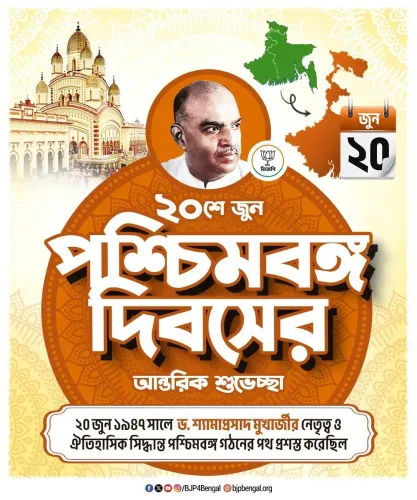
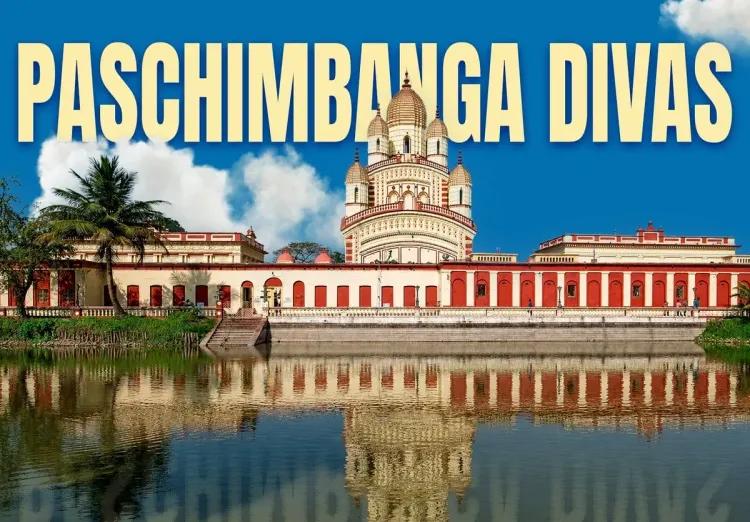
Assam CM Himanta Biswa Sarma marked Paschimbanga Divas on 20 June 2026 by honouring Dr. Syama Prasad Mookerjee's role in retaining western Bengal within India during the 1947 Partition, and accused the Left ecosystem of suppressing this history for vote-bank reasons.
Key Takeaways
Assam CM Himanta Biswa Sarma posted greetings on Paschimbanga Divas on 20 June 2026 .
Syama Prasad Mookerjee is credited with ensuring western Bengal's districts remained within the Indian Union during the 1947 Partition .
Sarma accused the 'Left ecosystem' of intentionally suppressing the significance of this chapter for vote-bank reasons.
The post tagged Suvendu Adhikari , West Bengal's BJP Leader of Opposition, signalling coordinated party messaging.
Mookerjee later founded the Bharatiya Jana Sangh , the ideological predecessor of the BJP.
Whether Paschimbanga Divas holds official state recognition in West Bengal remains unconfirmed.
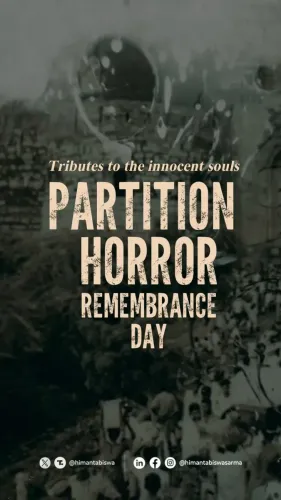
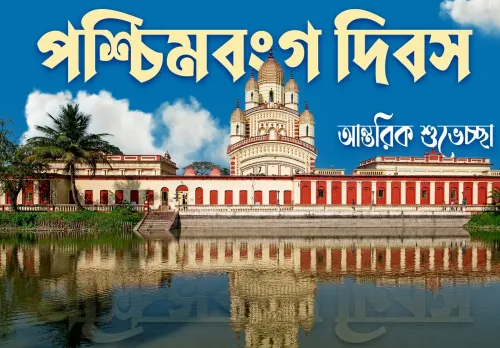
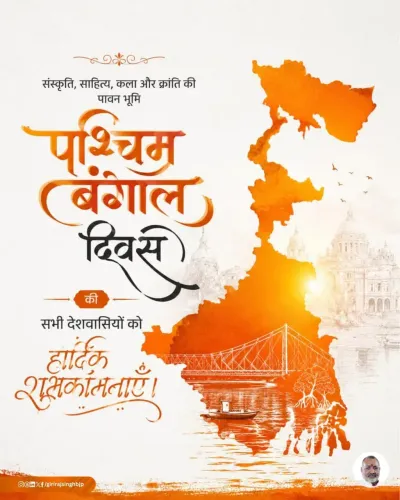
Assam Chief Minister Himanta Biswa Sarma extended greetings to the people of West Bengal on Paschimbanga Divas on Saturday, 20 June 2026, crediting Dr. Syama Prasad Mookerjee and other Hindu nationalist leaders for ensuring that western Bengal remained within the Indian Union during the 1947 Partition.
Context
Paschimbanga Divas commemorates the 1947 decision — enacted under the Indian Independence Act — that partitioned the former Bengal Presidency and retained its Hindu-majority western districts inside independent India, forming what is today the state of West Bengal. The day is observed by BJP leaders and associated groups as an occasion to recall the role of Hindu nationalist figures in shaping India's post-Partition territorial boundaries.
Dr. Syama Prasad Mookerjee, a prominent politician of that era, advocated strongly for the partition of Bengal so that Hindu-majority areas would not be absorbed into Pakistan. He later went on to found the Bharatiya Jana Sangh, the ideological forerunner of today's BJP. The 1947 Partition triggered one of the largest forced migrations in history, with millions of Hindus seeking refuge in West Bengal.
Policy Backdrop
Sarma's post directly challenged what he described as decades of deliberate silence by the 'Left ecosystem,' arguing the significance of Mookerjee's role was 'intentionally overlooked' in deference to vote-bank politics. The framing reflects a wider BJP effort to contest historical narratives long associated with Left and Congress governments in eastern India.
BJP-ruled states and senior leaders have increasingly issued public statements highlighting pre-1947 Hindu nationalist contributions to India's territorial integrity. Cross-state interventions by chief ministers on regional history — particularly in states like West Bengal where the BJP is in opposition — are part of a coordinated organisational outreach across the North-East and eastern seaboard. Sarma also tagged Suvendu Adhikari, West Bengal's Leader of Opposition and a senior BJP figure closely associated with Partition-remembrance messaging in the state.
Stakeholders and Impact
The post speaks directly to West Bengal Hindus, including communities descended from Partition-era refugees, for whom the memory of 1947 remains a live political and cultural issue. By invoking Maa Durga and calling Bengal's Partition history 'an important part of their history,' Sarma frames the occasion as one of cultural pride rather than purely partisan politics.
The ruling Trinamool Congress government in West Bengal has historically distanced itself from BJP-led Partition-remembrance narratives. Any formal state recognition of Paschimbanga Divas remains unconfirmed in established public record, meaning the day's observance currently relies primarily on BJP-affiliated networks and civil society groups.
What's Next
Responses from the West Bengal state government and Trinamool Congress leadership are expected to set the political temperature around the commemoration. As the BJP continues to build its presence in West Bengal ahead of future assembly elections, messaging around figures like Mookerjee and events like Paschimbanga Divas is likely to intensify, making historical memory an increasingly contested political battleground in the state.
Point of View
He frames the BJP as the authentic custodian of Bengal's Hindu heritage, a positioning central to the party's long-term strategy in a state it narrowly failed to capture in 2021. Tagging Suvendu Adhikari signals that this is coordinated party messaging, not a solitary reflection. As West Bengal inches toward the next assembly election cycle, battles over historical memory — particularly around Partition and figures like Mookerjee — are set to become as fiercely contested as economic or governance issues.
NationPress
18 Sept 2026
Frequently Asked Questions
What is Paschimbanga Divas and why is it celebrated?
Paschimbanga Divas marks the 1947 decision under the Indian Independence Act that partitioned the former Bengal Presidency and kept its Hindu-majority western districts inside independent India, forming present-day West Bengal. It is observed to commemorate the role of leaders like Dr. Syama Prasad Mookerjee in securing this outcome.
Who was Dr. Syama Prasad Mookerjee?
Dr. Syama Prasad Mookerjee was an Indian politician who advocated for the partition of Bengal in 1947 so that Hindu-majority areas would remain within India rather than become part of Pakistan. He later founded the Bharatiya Jana Sangh, the ideological forerunner of the BJP.
Why did Himanta Biswa Sarma post about Paschimbanga Divas?
As Assam Chief Minister and a senior BJP leader, Sarma used the occasion to honour the contributions of Hindu nationalist figures to Bengal's territorial history and to argue that the Left ecosystem had deliberately suppressed this chapter of history for political reasons.
Who is Suvendu Adhikari and why was he tagged in the post?
Suvendu Adhikari is the BJP's Leader of Opposition in the West Bengal Legislative Assembly and a senior party figure closely associated with Partition-remembrance messaging. Sarma tagging him signals coordinated BJP outreach around the Paschimbanga Divas commemoration.
Does Paschimbanga Divas have official state recognition in West Bengal?
Whether Paschimbanga Divas carries formal recognition from the West Bengal state government has not been confirmed in established public record; its observance is currently driven primarily by BJP-affiliated networks and civil society groups.