CM Himanta highlights CMAAA scheme empowering Kokrajhar weaver
Synopsis
Assam Chief Minister Himanta Biswa Sarma shared the story of a Kokrajhar weaver whose business grew through the CMAAA scheme, crediting the initiative for creating employment opportunities for multiple women in the community.
Key Takeaways
Assam CM Himanta Biswa Sarma posted on October 9, 2026 highlighting the impact of the CMAAA scheme on women entrepreneurs.
A weaver from Kokrajhar district used the scheme to expand her handloom business.
The beneficiary went on to create livelihood opportunities for several other women in her community.
The Chief Minister's Atmanirbhar Asom Abhijan (CMAAA) targets grassroots women entrepreneurs and artisans across Assam.
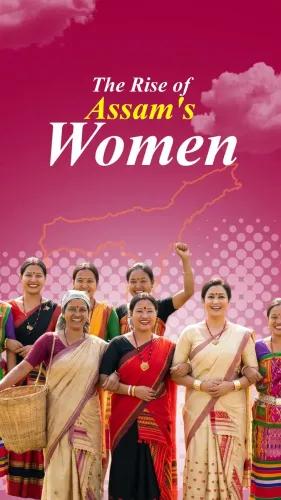
CM Sarma framed women's empowerment as 'a strong government effort, not just a slogan.'
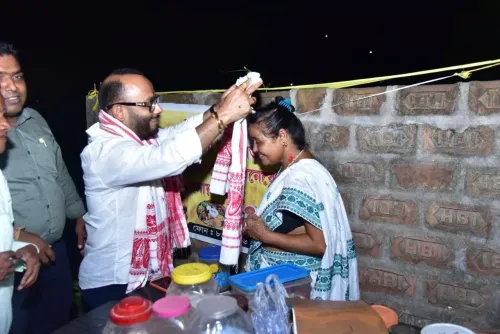
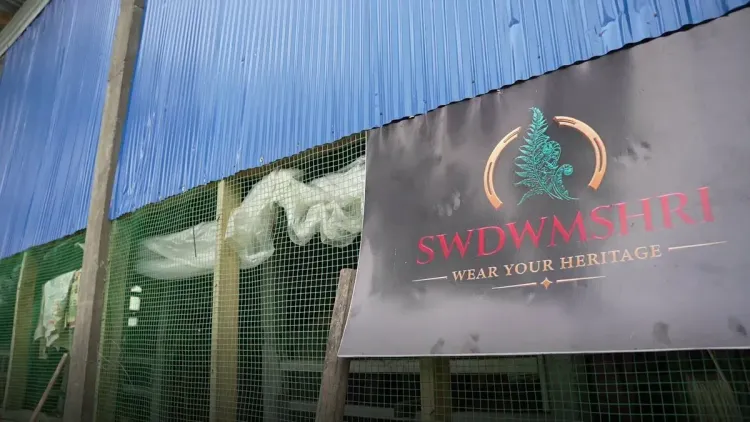
A weaver from Kokrajhar wanted to scale her craft. What she found was a government scheme that didn't just fund her — it opened doors for an entire community of women. Assam Chief Minister Himanta Biswa Sarma shared her story on Friday, October 9, 2026, spotlighting the CMAAA scheme as proof that women's empowerment in Assam is policy in action, not political rhetoric.
In his post, CM Sarma wrote: 'महिला सशक्तिकरण हमारे लिए केवल एक नारा नहीं बल्कि हमारी सरकार का मज़बूत प्रयास है' — 'Women's empowerment is not merely a slogan for us, but a strong commitment of our government.' The Chief Minister pointed specifically to a weaver from Kokrajhar who turned to the CMAAA scheme when she sought to grow her craft, and through it, built a business that now creates livelihood opportunities for several other women in her community.
Kokrajhar's weaving tradition meets government outreach
Kokrajhar, a district in western Assam and the headquarters of the Bodoland Territorial Council, has a deep tradition of handloom weaving — particularly Bodo textiles, known for their distinctive motifs and craftsmanship. For artisans in this region, scaling beyond subsistence-level production has historically been constrained by limited access to capital, markets, and skill-development infrastructure. The CMAAA scheme, as CM Sarma's post frames it, stepped into precisely that gap for this weaver.
CMAAA: the scheme behind the story
The Chief Minister's Atmanirbhar Asom Abhijan (CMAAA) is an Assam government initiative designed to promote self-reliance and entrepreneurship, with a particular focus on women from grassroots economic backgrounds. The scheme channels financial and institutional support to enable beneficiaries — artisans, small traders, and micro-entrepreneurs — to formalise and expand their livelihoods. CM Sarma has positioned it as a flagship delivery mechanism for the state's women-empowerment agenda, distinct from symbolic gestures.
One weaver, a chain of opportunity
What makes the Kokrajhar case politically and socially noteworthy is the multiplier effect CM Sarma describes: the beneficiary did not stop at growing her own business. She created 'new avenues of opportunity for many sisters,' as the CM's post puts it — a ripple from one woman's ambition into a broader network of employment. This peer-to-peer economic lift is exactly the outcome government self-reliance schemes are designed — but rarely verified — to produce.
For a Chief Minister who has repeatedly staked the BJP's Assam record on tangible grassroots delivery, a single weaver's journey from Kokrajhar becomes a pointed piece of evidence in an ongoing political argument — that governance, not sloganeering, is what changes lives. The story now travels far beyond the district it began in.
Point of View
The Assam government is effectively arguing that its self-reliance programmes produce systemic change, not one-off assistance. The framing also pre-empts opposition criticism that BJP's women-empowerment language is rhetorical by anchoring it to a verifiable local story. Whether the scheme's aggregate impact matches this showcase case will be the real test of credibility.
NationPress
9 Oct 2026
Frequently Asked Questions
What is the CMAAA scheme in Assam?
CMAAA stands for Chief Minister's Atmanirbhar Asom Abhijan, an Assam government initiative that provides financial and institutional support to women entrepreneurs, artisans, and micro-entrepreneurs to help them formalise and grow their livelihoods.
Who is the Kokrajhar weaver mentioned by CM Himanta Biswa Sarma?
CM Sarma referred to a handloom weaver from Kokrajhar district in western Assam who used the CMAAA scheme to expand her craft business and subsequently created employment opportunities for other women in her community. Her specific name was not disclosed in the post.
What did CM Himanta Biswa Sarma say about women's empowerment in Assam?
CM Sarma said that women's empowerment is 'not merely a slogan but a strong effort of our government,' citing the Kokrajhar weaver's success through the CMAAA scheme as concrete evidence of policy-level impact.
What is Kokrajhar known for in Assam?
Kokrajhar is the headquarters of the Bodoland Territorial Council in western Assam and has a rich tradition of handloom weaving, particularly Bodo textiles, known for their distinctive patterns and artisanship.
How does the CMAAA scheme help women in Assam?
The CMAAA scheme provides financial support and institutional backing to help women at the grassroots level — including artisans, weavers, and small traders — grow their businesses and achieve greater economic self-reliance.