Share trading fraud: Two held in Ahmedabad for cheating Surat man of ₹27 lakh

Synopsis
A fake share trading scheme that cheated a Surat man of ₹27 lakh has unravelled into something far bigger: the single bank account allegedly used in the fraud is linked to ₹8.93 crore in online cheating complaints across 14 cases in multiple states, exposing a wider mule-account network behind India's booming investment fraud crisis.
Key Takeaways
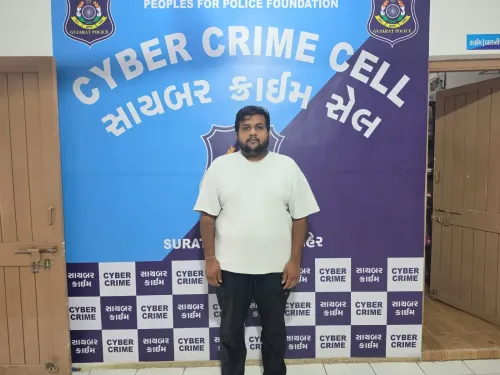
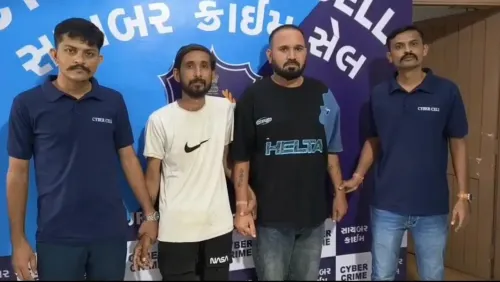
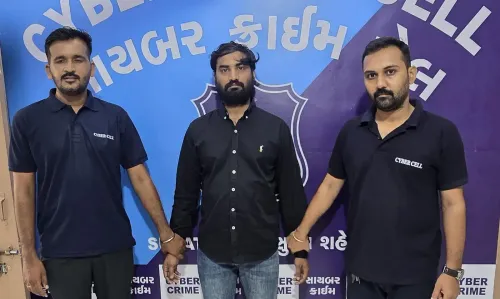
Two men — Sameerkhan Pathan, 30 , and Mohammad Sheikh, 31 — were arrested in Ahmedabad by Surat City Police's Cyber Crime Cell .
A Surat -based complainant was allegedly cheated of ₹27 lakh via a fake share trading website promoted on WhatsApp .
The bank account allegedly used in the fraud was a Bank of Maharashtra savings account handed over for commissions of ₹8,000 and ₹15,000 .
Transactions of ₹30,09,057 were routed through the account between 3 May and 7 June 2025 .
The National Cyber Crime Reporting Portal linked the same account to 14 complaints involving alleged fraud of ₹8,93,80,922 across multiple states.
A third accused remains absconding ; police advise victims to call helpline 1930 immediately.
Two men have been arrested in Ahmedabad for allegedly facilitating a cyber fraud in which a Surat-based complainant was duped of ₹27 lakh on the pretext of high returns through share trading. Investigators further found that a bank account allegedly used in the scheme was linked to 14 separate online cheating complaints across multiple states, involving a combined alleged fraud of ₹8.93 crore.
How the Fraud Unfolded
According to police, the accused first contacted the complainant via WhatsApp and shared a link to a fake share trading website, where a dummy account was created in his name. They allegedly promised attractive returns from equity trading and gradually persuaded him to transfer a total of ₹27 lakh across multiple bank accounts.
'The complainant was subsequently prevented from withdrawing the money,' police stated. The fraud model — luring victims through messaging apps with promises of outsized investment gains — is a pattern authorities have flagged repeatedly across India's growing cyber fraud landscape.
Who Was Arrested
The Cyber Crime Cell of Surat City Police arrested the two accused following a technical investigation. They have been identified as Sameerkhan Pathan, 30, and Mohammad Sheikh, 31, both residents of the Jamalpur area in Ahmedabad. Pathan works as a casual labourer and studied up to Class 10, while Sheikh is also a casual labourer and holds a B.Com degree.
The case has been registered under Sections 318(4), 336(2), 338, 336(3), 340(2), 61(2) and 3(5) of the Bharatiya Nyaya Sanhita, 2023, and Section 66(D) of the Information Technology Amendment Act, 2008.
The Mule Account Trail
Police said Pathan allegedly handed over a savings account held in his name with the Bank of Maharashtra to Sheikh in exchange for a commission of ₹8,000. Sheikh then allegedly passed the account to an absconding accused for use in the fraud, receiving a commission of ₹15,000 in return.
Investigators found that transactions totalling ₹30,09,057 were routed through the bank account between 3 May and 7 June 2025. A search on the National Cyber Crime Reporting Portal using the account details returned 14 complaints registered across different states, pointing to an organised network using rented or purchased bank accounts — commonly called 'mule accounts' — to launder proceeds of online fraud.
Scale of the Wider Network
The aggregate alleged fraud linked to the single account stood at ₹8,93,80,922, according to police. This pattern — where low-level middlemen rent out bank accounts for small commissions, enabling large-scale fraud by operators who remain at arm's length — has emerged as a key enforcement challenge for cyber crime units nationwide. A third accused in the case remains absconding, and investigators are reportedly pursuing leads.
Police Advisory and What Victims Should Do
Surat City Police have urged residents to exercise caution when approached with online investment schemes promising guaranteed or unusually high returns, and to verify the identity and credentials of any unknown individual before transferring money. Victims of financial cyber fraud have been advised to immediately dial the national cybercrime helpline 1930 to improve the likelihood of the fraudulent funds being frozen in the relevant accounts.
Point of View
Absorbing all legal risk. Pathan and Sheikh's commissions — ₹8,000 and ₹15,000 respectively — are trivial against the ₹8.93 crore the account allegedly cycled. The mule-account problem will not be solved by arresting the bottom rung; enforcement needs to trace the absconding operator and the platform infrastructure behind the fake website. The 1930 helpline remains critically underused, and faster inter-state coordination on account freezing — not just arrests — is the metric that actually protects victims.
NationPress
9 Oct 2026
Frequently Asked Questions
How did the Surat share trading fraud work?
The accused contacted the Surat-based victim on WhatsApp, shared a link to a fake share trading website, and persuaded him to deposit money by promising high returns. After the complainant transferred ₹27 lakh across multiple accounts, he was blocked from withdrawing any funds.
Who are the two men arrested in Ahmedabad?
The arrested individuals are Sameerkhan Pathan, 30, and Mohammad Sheikh, 31, both residents of the Jamalpur area in Ahmedabad. Pathan allegedly provided his Bank of Maharashtra savings account to Sheikh for a commission of ₹8,000, who then passed it to an absconding suspect for ₹15,000.
How widespread is the fraud linked to this bank account?
A search on the National Cyber Crime Reporting Portal revealed 14 fraud complaints across different states linked to the same bank account, with total alleged losses of ₹8,93,80,922 — suggesting the account was part of a broader organised network.
What should victims of online investment fraud do immediately?
Victims should call the national cybercrime helpline 1930 as soon as possible. A prompt call improves the chances of authorities freezing the fraudulent funds in the relevant bank accounts before they are transferred further.
What legal sections have been invoked in this case?
The case has been registered under Sections 318(4), 336(2), 338, 336(3), 340(2), 61(2) and 3(5) of the Bharatiya Nyaya Sanhita, 2023, as well as Section 66(D) of the Information Technology Amendment Act, 2008, which covers cheating by impersonation using computer resources.