CM Himanta Honours Birangana Sati Sadhani, Blends Vikas With Virasat
Synopsis
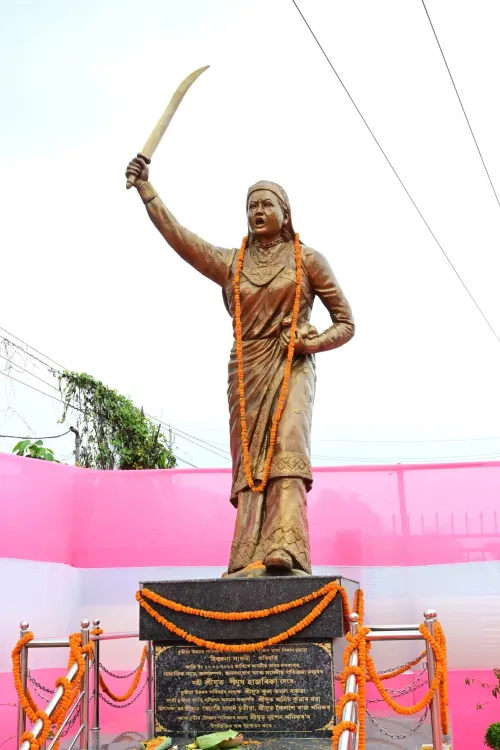
Assam Chief Minister Himanta Biswa Sarma has publicly honoured Birangana Sati Sadhani, a Chutia-kingdom figure of valour, declaring that his government will no longer allow political convenience to determine which histories are remembered. He framed the move under the BJP's twin agenda of Vikas and Virasat.
Key Takeaways
CM Himanta Biswa Sarma on 20 June 2026 publicly celebrated Birangana Sati Sadhani , a historical figure from Assam's Chutia kingdom , on social media.
He argued that for 'decades, political convenience' determined which histories received official recognition — a pointed critique of earlier administrations.
The post reaffirmed the BJP government's dual framework: Vikas (development) and Virasat (heritage) as inseparable governance pillars.
Since 2021-22 , the Assam government has expanded heritage documentation to include Chutia , Koch , and other pre-Ahom communities alongside Ahom commemorations.
Possible state announcements on memorials or annual events for Sati Sadhani are anticipated in the coming assembly session.
Assam Chief Minister Himanta Biswa Sarma on Saturday, 20 June 2026, invoked the legacy of Birangana Sati Sadhani, a historical figure from the Chutia kingdom celebrated for her valour, declaring that his government was committed to rescuing forgotten regional histories from the margins of official memory.
Context
In his post, Sarma stated: 'For decades, political convenience shaped which histories were celebrated and which were forgotten — not anymore.' He singled out Birangana Sati Sadhani as a 'braveheart' synonymous with valour, and affirmed that for his administration, 'Vikas and Virasat go hand in hand' — development and heritage as twin, inseparable pillars of governance.
The statement arrives against a backdrop of the BJP-led Assam government's sustained effort, since coming to power in 2016, to formally recognise warrior figures from pre-Ahom and indigenous polities who received limited acknowledgement under previous administrations. Sati Sadhani belongs to the tradition of the Chutia kingdom, one of Assam's significant pre-medieval political formations.
Policy Backdrop
Between 2021 and 2022, the Sarma administration expanded heritage documentation projects to cover the Chutia, Koch and other communities alongside the already high-profile commemorations of Ahom general Lachit Borphukan. The move was part of a broader, state-wide effort to produce an inclusive archive of Assamese martial and cultural history.
The BJP's dual slogan of Vikas (development) and Virasat (heritage) has been a consistent ideological frame across Northeast India, particularly within NEDA-governed states. Sarma, as convenor of the North-East Democratic Alliance, has championed this framing as a counter-narrative to what the party describes as selective, Congress-era historiography that privileged certain communities and periods over others.
Stakeholders and Impact
Indigenous Assamese communities — particularly those with historical ties to the Chutia kingdom — stand to gain symbolic and cultural recognition through such official commemorations. Local historians and cultural organisations have long advocated for greater state acknowledgement of these traditions, which they argue were systematically marginalised in mainstream accounts of Assamese history.
For the BJP in Assam, the political dividend is equally significant: elevating figures like Sati Sadhani broadens the party's cultural coalition beyond its traditional base and positions heritage revival as an electoral as well as ideological project ahead of future assembly cycles.
What's Next
Observers will watch the forthcoming Assam assembly session for possible announcements on memorials, museums, or annual commemorative events dedicated to Birangana Sati Sadhani and comparable figures from the state's indigenous traditions. CM Sarma's post signals political intent; concrete institutional follow-through — in the form of budgetary allocations or gazette notifications — will determine the depth of the commitment.
If the government translates this cultural recognition into durable state infrastructure, it could set a template for other NEDA-aligned states to similarly institutionalise the histories of their own indigenous warrior traditions.
Point of View
A figure from the Chutia tradition, the BJP signals that its cultural project in Assam extends well beyond the Ahom-centric narrative it initially popularised through the Lachit Borphukan commemorations. The 'Vikas and Virasat' pairing is now a settled ideological grammar for the party across the Northeast, and invoking it here suggests the government is preparing institutional ground — memorials, curricula, or commemorative events — rather than making a purely rhetorical gesture. The framing of previous governments as driven by 'political convenience' is a calibrated electoral move, broadening the BJP's cultural coalition among communities that have long felt excluded from official Assamese identity. Whether the state backs this with budgetary and legislative action will be the real test of its sincerity.
NationPress
20 Jun 2026
Frequently Asked Questions
Who is Birangana Sati Sadhani?
Birangana Sati Sadhani is a historical figure from Assam's Chutia kingdom, remembered in local tradition for her acts of valour and resistance. She has been given limited official recognition in mainstream Assamese historiography until recent BJP-led efforts to document indigenous histories.
What does 'Vikas and Virasat' mean in BJP's Assam policy?
'Vikas' means development and 'Virasat' means heritage. The BJP-led Assam government uses this pairing to argue that economic progress and cultural revival are inseparable goals, and the slogan has become a defining frame for governance across Northeast India under NEDA-aligned parties.
Why is CM Himanta Biswa Sarma honouring forgotten historical figures?
CM Sarma and the BJP argue that previous governments allowed political convenience to determine which histories were celebrated, marginalising figures from communities like the Chutia and Koch. The current government's heritage programme aims to formally recognise these warrior traditions through commemorations, documentation, and state infrastructure.
What is the Chutia kingdom in Assam's history?
The Chutia kingdom was one of Assam's significant pre-medieval political formations, predating the dominant Ahom period. It had its own martial and cultural traditions that remained largely outside mainstream official historiography until recent state-level documentation efforts.
What could follow CM Himanta's post on Sati Sadhani?
Observers expect possible state announcements — such as memorials, museums, or annual commemorative events — dedicated to Birangana Sati Sadhani in the coming Assam assembly session, though no specific projects have been officially confirmed yet.