CM Himanta honours Van Durgas, Assam's women rhino guardians
Synopsis
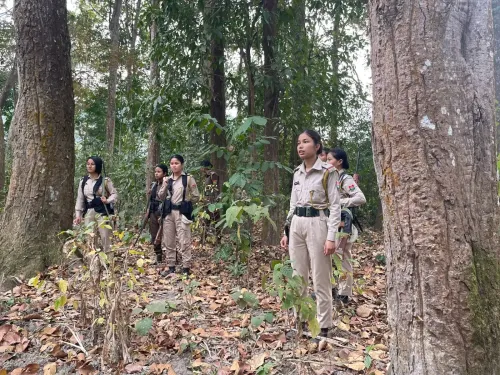
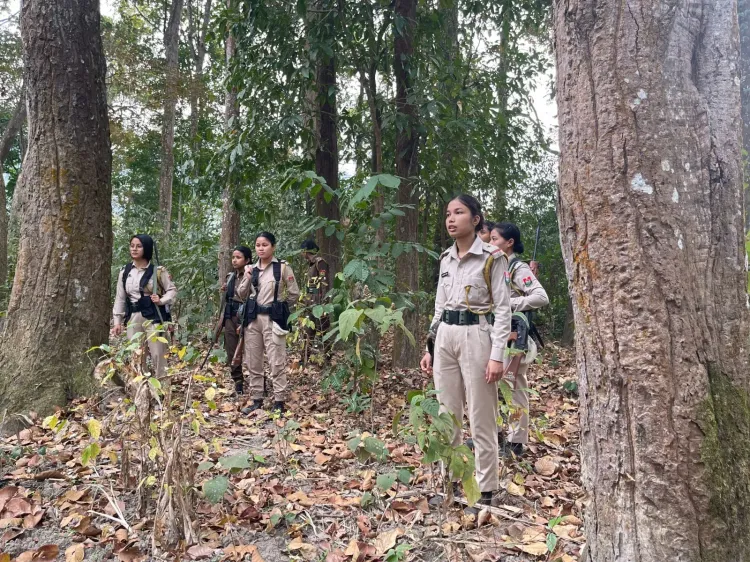
On Navratri's Katyayani day, Assam CM Himanta Biswa Sarma celebrated the Van Durgas — 108 women recruited in August 2023 as Kaziranga National Park's first frontline female forest guards, patrolling by vehicle, foot and boat to protect one-horned rhinos, elephants, tigers and wild buffalo.
Key Takeaways
108 women were recruited in August 2023 as Kaziranga National Park's first frontline female forest guards, known as Van Durgas .
Recruits come from rural farming families and were trained at the 11th Assam Police Battalion in Dergaon .
Van Durgas patrol Kaziranga — a UNESCO World Heritage Site — by vehicle, on foot and by boat, including during seasonal floods.
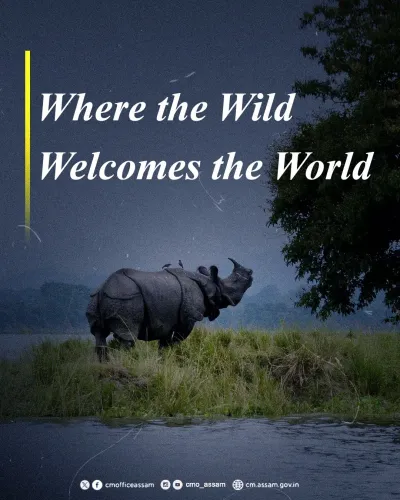
They protect the greater one-horned rhino , elephants, tigers and wild buffalo.
Prime Minister Narendra Modi visited Kaziranga and called the women guards' courage 'truly inspiring'.
Assam CM Himanta Biswa Sarma framed the initiative through the Navratri worship of Maa Katyayani, linking conservation with cultural identity.
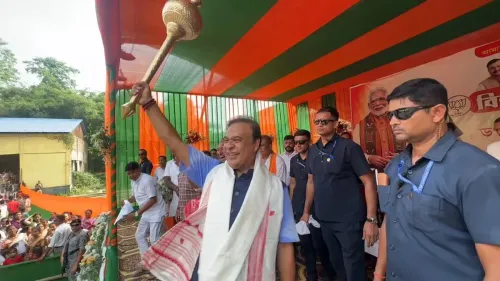
On the sixth day of Navratri — the day devoted to Maa Katyayani, the warrior goddess who slew Mahishasura — Assam Chief Minister Himanta Biswa Sarma invoked a very earthly parallel: the 108 women who patrol the wilderness of Kaziranga National Park as the state's first frontline female forest guards, the Van Durgas.
Who are the Van Durgas — and how they came to be
In August 2023, the Assam government recruited the inaugural cohort of 108 women as frontline forest guards for Kaziranga — one of the world's most consequential wildlife habitats and a UNESCO World Heritage Site famed for its population of the greater one-horned rhinoceros. These were not women plucked from urban campuses. They are daughters of farming families, trained at the 11th Assam Police Battalion in Dergaon, and deployed into one of India's most demanding patrol environments.
Their beat covers Kaziranga's dense grasslands and forests by vehicle, on foot, and — critically — by boat during the annual floods that inundate the park each monsoon season. The animals they protect include not only the iconic one-horned rhino but also elephants, tigers and wild buffalo. Poachers do not take days off during the floods. Neither do the Van Durgas.
The Navratri thread: Katyayani, the Yamuna, and the forests of Assam
Sarma's post wove together myth and ground reality with deliberate intent. The Katyayani tradition — in which the gopis (cowherd women) of Vrindavan worshipped the goddess on the banks of the Yamuna to invoke her protection — becomes a lens for the Van Durgas' own vigil in Assam's forests. 'When our daughters guard our forests, they guard Assam's identity itself,' he wrote. It is a framing that ties biodiversity conservation directly to cultural continuity — Kaziranga's rhinos as both ecological treasure and civilisational symbol.
PM Modi's visit and what it signalled
Prime Minister Narendra Modi visited Kaziranga National Park and met with the women guards, describing their courage as 'truly inspiring.' The Prime Minister's direct engagement with the Van Durgas lent the initiative national visibility — rare for a state-level forest department recruitment drive.
A recruitment model that could travel
The Van Durga initiative is part of a broader pattern in Assam of integrating gender inclusion into hard conservation infrastructure — not symbolic desk postings, but multi-modal, flood-season field patrols in a UNESCO site. The recruits come from the same rural farming communities whose livelihoods coexist, sometimes tensely, with wildlife corridors. Putting those communities' daughters at the front of conservation work changes the relationship between villages and the park in ways that top-down enforcement rarely achieves.
Whether the model expands to other protected areas in the Northeast — Manas, Dibru-Saikhowa, Nameri — and whether Assam's forest department budget reflects a second recruitment tranche will be the real measure of its institutional staying power. For now, on the day of the warrior goddess, Sarma made sure the country knew: Assam already has its Katyayanis — and they carry patrol logs, not just prayers.
Point of View
Sarma is doing something politically deliberate: converting a state-level forest department recruitment into a cultural narrative of women's empowerment tied to Assam's most iconic natural symbol. The initiative is substantively significant — rural women deployed in multi-modal, flood-season patrols at a UNESCO site is a genuine policy innovation, not optics. The Prime Minister's personal endorsement during his Kaziranga visit elevated it to a national BJP showcase of gender inclusion meeting environmental governance. The real test of institutional depth, however, lies in whether Assam follows through with a second recruitment tranche and budget allocations that match the symbolism.
NationPress
16 Oct 2026
Frequently Asked Questions
Who are the Van Durgas in Assam?
The Van Durgas are Assam's first batch of women frontline forest guards, recruited in August 2023 to patrol Kaziranga National Park. The inaugural cohort comprised 108 women from rural farming families, trained at the 11th Assam Police Battalion in Dergaon.
What do the Van Durgas do at Kaziranga?
They conduct multi-modal patrols of Kaziranga National Park — by vehicle, on foot and by boat during floods — to protect the park's wildlife including the one-horned rhino, elephants, tigers and wild buffalo from poaching and encroachment.
Why did PM Modi meet the Van Durgas?
Prime Minister Narendra Modi visited Kaziranga National Park and met the women forest guards, describing their courage as 'truly inspiring.' The visit brought national attention to the state-level initiative.
What is the connection between Navratri and the Van Durgas?
Assam CM Himanta Biswa Sarma invoked Maa Katyayani — the warrior goddess worshipped on Navratri's sixth day — as a symbol parallel to the Van Durgas, framing the women guards as modern protectors of Assam's forests and identity.
Is Kaziranga National Park a UNESCO World Heritage Site?
Yes, Kaziranga National Park in Assam is a UNESCO World Heritage Site, globally recognised for its population of the greater one-horned rhinoceros and its rich biodiversity.