CM Himanta inaugurates Assam House in Bengaluru

Synopsis
Assam Chief Minister Himanta Biswa Sarma inaugurated Assam House in Bengaluru on October 16, 2026, establishing an official state facility in Karnataka to serve travelling officials and the growing Assamese diaspora in India's IT capital.
Key Takeaways
Assam House was inaugurated in Bengaluru on October 16, 2026 by Chief Minister Himanta Biswa Sarma .
The facility is designed to support Assam's administrative presence and serve Assamese citizens living or working in Karnataka .
Bengaluru hosts a significant concentration of Northeast Indian migrants, making it a strategic location for such an initiative.
The move follows a broader Indian tradition of state bhawans and official houses in major metros as institutional outreach tools.
CM Sarma , as convenor of NEDA , has consistently promoted Northeast connectivity with the national mainstream.
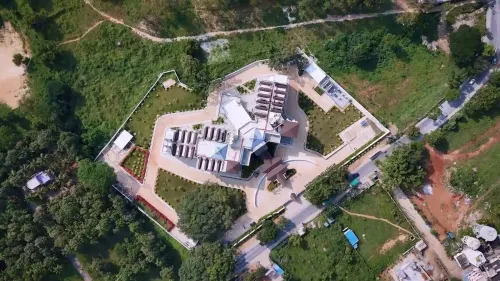
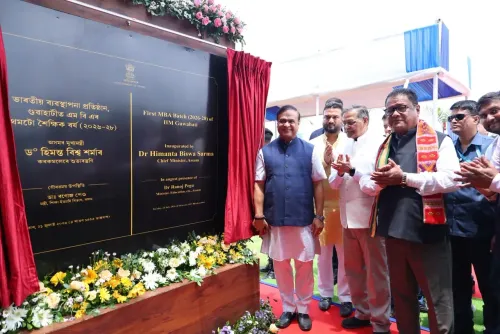
Assam Chief Minister Himanta Biswa Sarma on Friday, October 16, 2026, inaugurated Assam House in Bengaluru — giving the state a formal institutional foothold in one of India's most consequential cities for Northeast migration and commerce.
A Northeast state plants its flag in India's IT capital
Bengaluru is not just a tech hub — it is home to one of the largest concentrations of Northeast Indian migrants anywhere in the country. Professionals, students, and workers from Assam have flocked to the city for decades, drawn by IT campuses, service-sector jobs, and educational institutions. Until now, they had no dedicated state-backed facility to turn to.
Assam House fills that gap. Like the network of state bhawans that dot New Delhi and other metros, the facility is designed to provide accommodation for travelling officials, a point of administrative contact for Assamese citizens in Karnataka, and a platform for cultural outreach.
State bhawans and the logic of institutional reach
Indian states have long used official houses in major cities as low-cost diplomatic instruments — soft-power outposts that project a state's identity while offering practical support to its people far from home. Bengaluru's emergence as a magnet for Northeast workers has already prompted comparable moves by other states in the region.
For CM Sarma, who also serves as convenor of the North-East Democratic Alliance (NEDA), the inauguration is consistent with a broader push to lift the Northeast's institutional visibility and connectivity with the rest of India — not just through infrastructure within the region, but through presence in the cities that drive national economic activity.
What Assam House means for the diaspora
For the Assamese diaspora in Bengaluru, the facility offers something tangible: a government address, a potential venue for cultural events, and a bridge to state services from hundreds of kilometres away. The practical value of such spaces — for document attestation, emergency liaison, or simply a sense of home — is well understood by migrants who have navigated large cities without institutional backing.
Whether the facility lives up to that potential will depend on its operational model, staffing, and public accessibility — details that will emerge in the weeks after inauguration.
Assam now has a room in Bengaluru. The question is how fully it fills it.
Point of View
It doubles as both a practical welfare gesture toward a sizeable Assamese diaspora and a soft-power signal that the Northeast is investing in national connectivity. In the context of NEDA politics, such visible deliverables help reinforce the BJP-led alliance's narrative of Northeast integration with mainstream India. The real test, however, will be whether the facility is adequately resourced to deliver meaningful services — or remains largely ceremonial.
NationPress
16 Oct 2026
Frequently Asked Questions
What is Assam House in Bengaluru?
Assam House in Bengaluru is an official state facility inaugurated by Assam Chief Minister Himanta Biswa Sarma on October 16, 2026, to support Assam's administrative presence in Karnataka and serve Assamese officials and citizens in the city.
Why did Assam open a state house in Bengaluru?
Bengaluru has a large and growing population of Northeast Indian migrants, including many from Assam. The facility provides an official point of contact, accommodation for travelling state officials, and a base for cultural outreach.
Who inaugurated Assam House in Bengaluru?
Assam Chief Minister Himanta Biswa Sarma inaugurated Assam House in Bengaluru on October 16, 2026.
What is the purpose of state bhawans or state houses in India?
State bhawans and official houses in major Indian cities serve as accommodation for visiting officials, administrative liaison points for citizens from that state, and venues for cultural events — acting as institutional outposts in cities far from the home state.
What is NEDA and what is Himanta Biswa Sarma's role in it?
The North-East Democratic Alliance (NEDA) is a BJP-led political alliance of Northeast Indian parties. Himanta Biswa Sarma, Assam's Chief Minister, serves as its convenor and has played a central role in expanding its influence across the region.