CM Himanta Targets Rahul Gandhi Over Ayodhya Absence
Synopsis
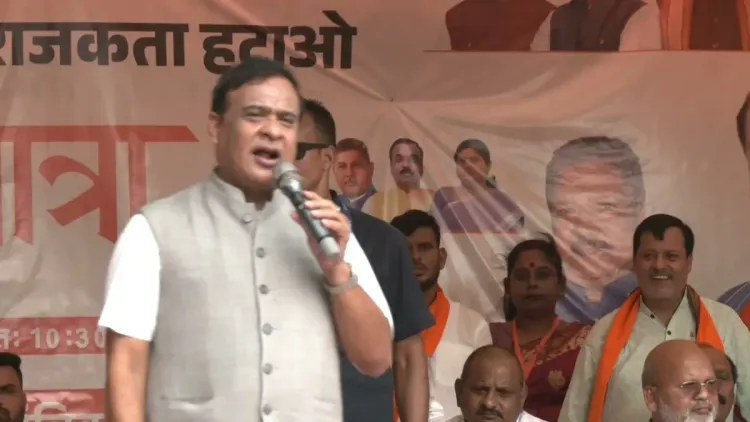
Assam CM Himanta Biswa Sarma questions why Rahul Gandhi has not visited Ram Lalla in 1,017 days since the Ayodhya temple consecration, accusing the Congress leader of avoiding the site for fear of losing minority votes.
Key Takeaways
Assam CM Himanta Biswa Sarma posted on 4 November 2026 questioning why Rahul Gandhi has not visited the Ayodhya Ram Temple.
The post cites 1,017 days since the Pran Pratishtha ceremony held on 22 January 2024 .
Sarma accused Gandhi of staying away out of 'fear of vote bank chori' — implying minority-vote calculations drive the Congress leader's absence.
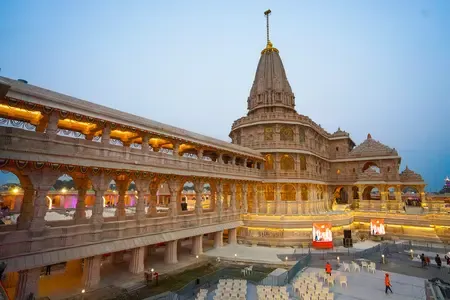
The Ram Temple was built following the Supreme Court of India's 2019 verdict on the Ayodhya title dispute.
BJP leaders have consistently used the temple inauguration as a contrast point against Congress's cautious secularism posture.
Congress has not publicly responded; any future Ayodhya visit by Gandhi will be a closely watched political signal.
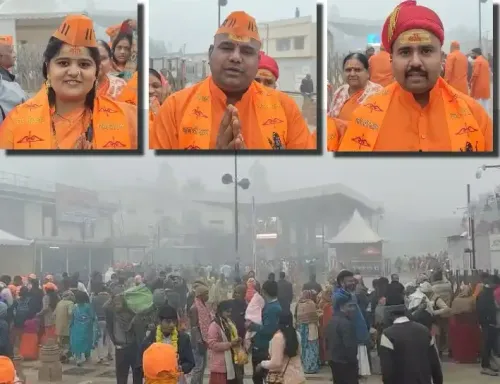
More than a thousand days after one of modern India's most consequential religious events, Assam Chief Minister Himanta Biswa Sarma is asking a pointed question: why has Rahul Gandhi still not visited Ram Lalla at Ayodhya?
Posting on Wednesday, 4 November 2026, Sarma noted it has been 1,017 days since the Pran Pratishtha — the consecration ceremony — of the Ram Temple, and that the Congress leader had yet to make the trip. His barb was direct: 'Fear of vote bank chori?' — implying Gandhi stays away to avoid alienating minority voters who form a critical part of the Congress base.
The 1,017-Day Clock on Ayodhya
The Ram Temple's Pran Pratishtha was performed on 22 January 2024, with Prime Minister Narendra Modi presiding over the ceremony — a moment BJP framed as the culmination of a decades-long civilisational aspiration. The event followed the Supreme Court of India's November 2019 verdict on the Ayodhya title dispute, which cleared the path for temple construction on the Ram Janmabhoomi site.
That date has become a political reference point. BJP leaders have repeatedly invoked the temple inauguration to draw a contrast with the Congress party's posture, which has remained cautious and deliberately low-profile — a stance the party links to its commitment to secularism, but which critics like Sarma characterise as calculated minority appeasement.
The 'Vote Bank' Accusation and What It Signals
Sarma's post is a recognisable BJP playbook move — but its timing matters. Such attacks typically intensify ahead of state or national elections, designed to frame the political debate around a simple binary: who stands with majority cultural sentiment, and who hedges for minority votes. The phrase 'vote bank chori' — loosely, 'vote-bank theft' — is a rhetorical device that accuses the opposition of trading on community identity rather than governance.
Rahul Gandhi, as the face of Congress, has been a recurring target on precisely this terrain. His public religiosity — temple visits, the Bharat Jodo Yatra's stops at shrines — has been both cited by Congress as proof of a genuinely inclusive Hinduism and dismissed by BJP as performative. The Ayodhya gap, as Sarma frames it, is the one omission that cuts through that counter-narrative.
Congress has not issued an immediate public response to Sarma's post. Whether Gandhi eventually visits Ayodhya — and when — will be watched as a signal about how the party intends to navigate the temple issue in the electoral cycle ahead.
Point of View
Not a one-cycle story. For Congress, the dilemma is structural: visiting Ayodhya risks accusations of opportunism and may unsettle sections of its base; not visiting keeps handing rivals a clean attack line. The 'vote bank' framing is particularly pointed because it attempts to invert the usual secularism debate — positioning Congress's restraint not as principled pluralism but as cynical communal arithmetic. How Gandhi navigates this in the run-up to elections will reveal whether Congress has found a credible answer to a question that has dogged it since January 2024.
NationPress
4 Nov 2026
Frequently Asked Questions
Has Rahul Gandhi visited the Ayodhya Ram Temple?
As of 4 November 2026 , Assam CM Himanta Biswa Sarma's post states that Rahul Gandhi has not visited the Ayodhya Ram Temple since its consecration on 22 January 2024 . Congress has not publicly contradicted this claim.
When was the Pran Pratishtha of the Ayodhya Ram Temple?
The Pran Pratishtha — consecration ceremony — of the Ram Lalla idol at the Ayodhya Ram Temple was held on 22 January 2024 , presided over by Prime Minister Narendra Modi .
Why is Himanta Biswa Sarma criticising Rahul Gandhi over Ayodhya?
Sarma accused Gandhi of avoiding the Ram Temple to protect his minority vote base, calling it 'fear of vote bank chori.' This is part of a broader BJP strategy of contrasting its pro-temple stance with Congress's cautious approach.
What is the BJP's political strategy around the Ayodhya Ram Temple?
BJP has repeatedly invoked the Ram Temple's consecration to frame the opposition as culturally out of step with majority sentiment, using it as a contrast point in both state and national election campaigns.
What did the Supreme Court say about the Ayodhya dispute?
The Supreme Court of India delivered its final verdict on the Ayodhya title dispute in November 2019 , ruling in favour of the Hindu side and clearing the path for temple construction on the Ram Janmabhoomi site.