CM Himanta Unveils 18-Pillar Development Plan in Assam Budget 2026
Synopsis
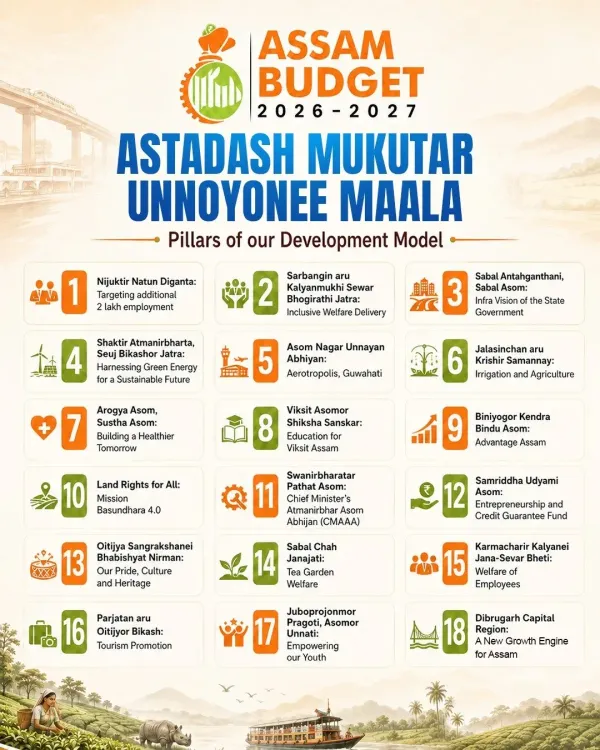
Assam Chief Minister Himanta Biswa Sarma on 10 July 2026 introduced the 'Astadash Mukutar Unnoyonee Maala', an 18-pillar development framework anchoring Assam Budget 2026-27, aimed at propelling the state into its next phase of growth across major sectors.
Key Takeaways
Chief Minister Himanta Biswa Sarma announced the Astadash Mukutar Unnoyonee Maala on 10 July 2026 as the development spine of Assam Budget 2026 .
The framework comprises 18 pillars intended to cover 'major avenues of development' across the state.
The initiative builds on a lineage of numbered-pillar budget frameworks used by BJP -led governments in Assam since 2016 .
An earlier 18-point Ashtadash agenda was introduced in the 2021-22 budget for governance reform and post-COVID recovery.
The specific allocations and policy details underpinning each pillar are expected to be revealed at the formal tabling of the Assam Budget 2026-27 .
The framework aligns with national programmes such as PM Gati Shakti and the Act East Policy that position the Northeast as a regional growth hub.
Assam Chief Minister Himanta Biswa Sarma on Friday, 10 July 2026, unveiled the Astadash Mukutar Unnoyonee Maala — a framework of 18 pillars anchoring the state's development vision under Assam Budget 2026. The Chief Minister described the initiative as covering 'major avenues of development' to propel the state into its next phase of growth.
Context
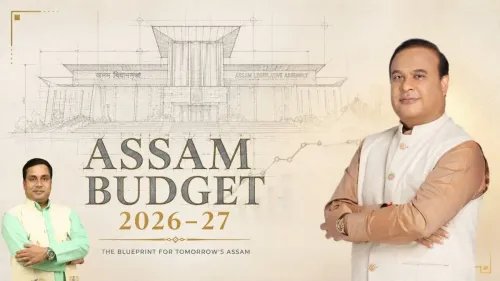
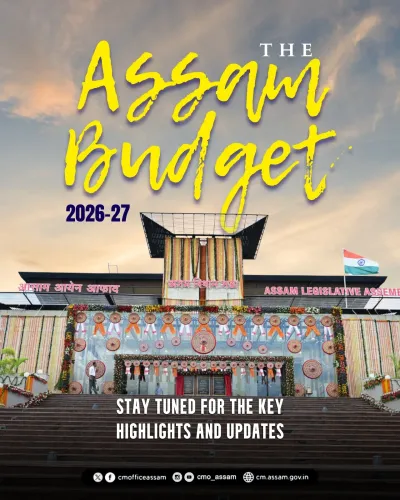
The announcement introduces a named, structured framework — the Astadash Mukutar Unnoyonee Maala (translated roughly as 'the garland of development of eighteen crowns') — as the organising principle for Assam's 2026-27 state budget. Chief Minister Sarma shared the framework publicly on social media alongside an image, signalling that the 18-pillar model will serve as the government's primary communication tool for this budget cycle. The Sanskrit-rooted nomenclature draws on astadash (eighteen) to lend the framework a culturally resonant identity.
Policy Backdrop
Numbered-pillar development frameworks have been a recurring feature of BJP-led governance in Assam since the party came to power in 2016. The party's original election manifesto emphasised five-year roadmaps focused on roads, power, and flood management, while the 2021-22 budget introduced an earlier Ashtadash (18-point) agenda targeting governance reform and post-COVID economic revival. The current iteration appears to build on that lineage, extending the numbered-pillar approach into a fresh budget cycle. Assam's successive administrations have also aligned such frameworks with national programmes including PM Gati Shakti and India's Act East Policy, which positions the Northeast as a gateway to Southeast Asian markets.
Stakeholders and Impact
The framework is designed to address a wide cross-section of Assam's population — from rural residents dependent on infrastructure and flood-control investment to urban entrepreneurs seeking an improved industrial climate. State investors and business bodies will watch closely to see which of the 18 pillars translate into capital expenditure commitments and policy incentives. The multi-pillar structure also allows the government to signal comprehensive intent across sectors — infrastructure, human development, agriculture, and governance — without committing to a single headline number.
What's Next
The formal tabling of the Assam Budget 2026-27 will be the critical next step, at which point the specific allocations and policy measures underpinning each of the 18 pillars of the Astadash Mukutar Unnoyonee Maala are expected to be detailed. A white paper or budget document elaborating the pillars will determine whether the framework translates into concrete fiscal commitments or remains a communication device. How Chief Minister Sarma links the pillars to measurable outcomes will shape public and investor confidence in Assam's medium-term growth trajectory.
Point of View
Chief Minister Sarma is also signalling an Assamese cultural identity to the fiscal agenda, a pattern that has served the party well in state elections. The real test will come when individual pillars are mapped to rupee allocations, because without that, the framework risks being perceived as branding rather than governance. Investors and civil society groups will scrutinise whether this iteration moves beyond the 2021-22 Ashtadash agenda in ambition and execution.
NationPress
8 Oct 2026
Frequently Asked Questions
What is the Astadash Mukutar Unnoyonee Maala in Assam Budget 2026?
The Astadash Mukutar Unnoyonee Maala is an 18-pillar development framework announced by Assam Chief Minister Himanta Biswa Sarma as the central theme of Assam Budget 2026-27, aimed at covering major avenues of development across the state.
How many pillars does Assam's new development model have?
Assam's new development model — the Astadash Mukutar Unnoyonee Maala — has 18 pillars, as announced by Chief Minister Himanta Biswa Sarma on 10 July 2026.
What does 'Astadash' mean in the context of Assam Budget 2026?
'Astadash' is derived from Sanskrit and means 'eighteen', referring to the 18 pillars of the development framework unveiled by Chief Minister Himanta Biswa Sarma for Assam Budget 2026.
Has Assam used a similar 18-pillar framework before?
Yes. Assam's 2021-22 budget introduced an earlier Ashtadash (18-point) agenda focused on governance reform and post-COVID economic revival, making the 2026 framework part of an ongoing BJP-led governance tradition in the state.
When will the details of Assam Budget 2026-27 be revealed?
The specific allocations and policy measures for each of the 18 pillars are expected to be detailed at the formal tabling of the Assam Budget 2026-27, the date of which has not been specified in the Chief Minister's announcement.