CM Himanta Launches Cultural Mahasangram for Tea Tribe Kids
Synopsis
Assam Chief Minister Himanta Biswa Sarma has launched Cultural Mahasangram, a state-backed platform to spotlight the performing arts talents of children from the tea-tribe community. The initiative extends Assam's decade-long policy of pairing tea-sector economic support with cultural and educational outreach for plantation workers and their families.
Key Takeaways
Cultural Mahasangram has been launched by the Assam government to provide a public platform for performing-arts talents among tea-tribe children .
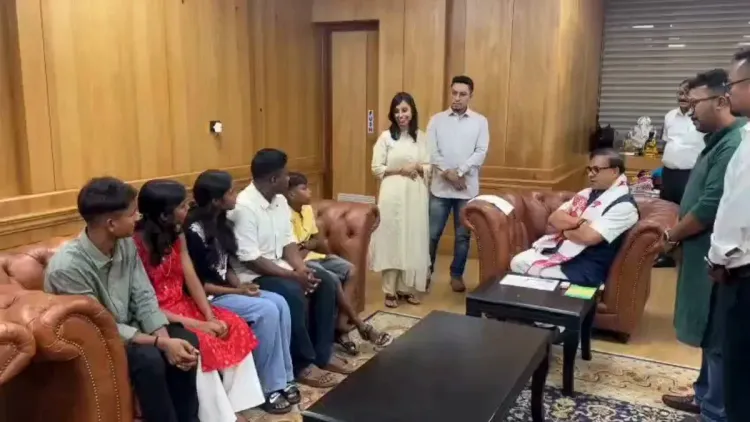
CM Himanta Biswa Sarma personally met tea-tribe children whose performances he described as captivating, ahead of announcing the initiative on 6 July 2026 .
Assam's tea gardens produce more than half of India's total tea output and are home to a large Tea Tribe community descended from 19th-century indentured labourers.
The initiative continues a state policy trend dating to 2018 of holding district-level cultural festivals in tea districts to document and promote Adivasi performing arts.
District-level rounds of Cultural Mahasangram are expected, with possible linked announcements on scholarships or residential schools for tea-tribe students.
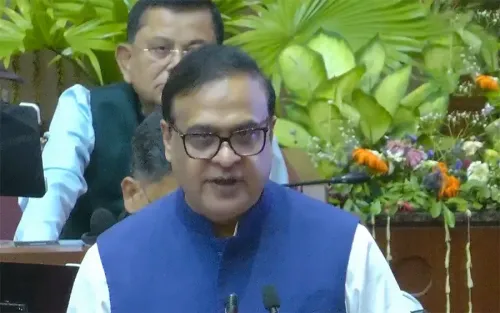
Assam Chief Minister Himanta Biswa Sarma on Monday, 6 July 2026, spotlighted the performing talents of children from the state's tea-tribe communities, announcing that a dedicated cultural platform — Cultural Mahasangram — has been launched to give these young artists a stage. The Chief Minister shared the moment on social media, describing a recent personal meeting with the children whose performances, he said, captivated him.
In his post, Sarma wrote: 'हमारे चाय बागान केवल असम की अर्थव्यवस्था की पहचान नहीं, बल्कि अनगिनत प्रतिभाओं की भी भूमि हैं' — 'Our tea gardens are not merely the identity of Assam's economy, but also the land of countless talents.' He added that he had recently met gifted children from the tea-tribe community whose 'melodious performances won my heart,' and that Cultural Mahasangram had been launched specifically to provide a platform to such hidden talents.
Context
The Tea Tribe community in Assam are descendants of indentured labourers brought to the Brahmaputra valley's plantations during the 19th century. Today they form a large and distinct socio-economic group within the state, concentrated in the sprawling tea estates that produce more than half of India's total tea output. Despite their numbers and economic contribution, the community has historically faced gaps in educational and cultural visibility.
Assam's tea gardens have long been recognised as sites of rich Adivasi performing traditions — music, dance, and oral storytelling — that rarely reach mainstream cultural spaces. The Chief Minister's post frames Cultural Mahasangram as a direct response to that gap, positioning the state as an active patron of plantation-community heritage.
Policy Backdrop
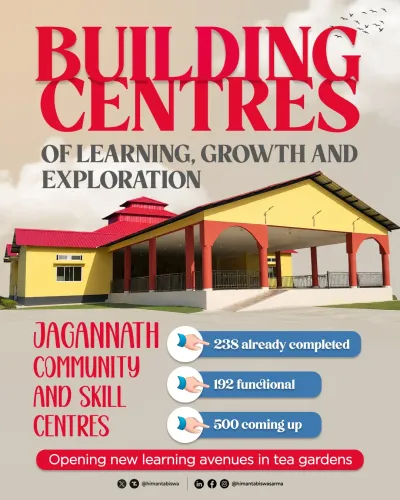
Targeted welfare programmes for Tea Tribe workers have been a feature of Assam state policy since the early 2000s, covering scholarships, housing, and skill-development centres. From 2018 onward, district-level cultural festivals in tea districts began documenting and promoting Adivasi performing arts, laying the groundwork for a larger platform.
Successive state budgets since 2016 have treated tea estates simultaneously as production units and as sites of community heritage — pairing economic policy for the sector with parallel cultural and educational outreach. Cultural Mahasangram sits squarely within this pattern, extending to the tea belt an approach already applied to other tribal groups in the Brahmaputra valley.
Stakeholders and Impact
The most immediate beneficiaries are tea-tribe children living inside estate boundaries, whose access to public cultural infrastructure has traditionally been limited by geography and socio-economic status. A competitive or showcase platform of this kind can open pathways to formal arts training, scholarships, and wider public recognition.
For the broader tea-garden workforce — estimated at several lakh workers and their families across Assam — cultural recognition carries symbolic weight alongside any material benefit, reinforcing a sense of inclusion in the state's mainstream identity. Industry stakeholders and estate managements are also likely to engage, as community wellbeing is increasingly linked to productivity and labour stability on the estates.
What's Next
District-level rounds of Cultural Mahasangram are expected to follow, with observers watching for linked announcements on residential schools or fresh scholarship tranches for tea-tribe students. The initiative's scale and funding structure will be key indicators of whether it remains a one-off showcase or becomes an institutionalised annual event. CM Sarma's personal visibility at such events signals continued political priority for the tea-belt constituency ahead of future electoral cycles in Assam.
Point of View
Sarma is reinforcing a welfare-and-identity narrative that has been central to the BJP's outreach in plantation districts. The move also fits a broader North-East pattern of using state-sponsored cultural platforms to build political capital among historically marginalised communities without requiring large fiscal outlays. Whether the initiative translates into sustained institutional support — or remains a high-visibility symbolic gesture — will be the real test of its policy seriousness.
NationPress
7 Jul 2026
Frequently Asked Questions
What is Cultural Mahasangram in Assam?
Cultural Mahasangram is a state government initiative launched by Assam CM Himanta Biswa Sarma to provide a public stage for the performing arts talents of children from the tea-tribe community living in Assam's tea estates.
Who are the tea tribe people of Assam?
The Tea Tribe community are descendants of indentured labourers brought to Assam's tea plantations during the 19th century . They form a large and distinct socio-economic group concentrated in the state's tea estates, which produce over half of India's tea.
What welfare schemes exist for tea tribe workers in Assam?
Assam has run targeted Tea Tribe welfare programmes since the early 2000s , covering scholarships, housing, and skill-development centres. Since 2018 , the state has also held district-level cultural festivals in tea districts to promote Adivasi performing arts.
Why did CM Himanta Biswa Sarma meet tea tribe children?
CM Sarma met gifted children from the tea-tribe community and was impressed by their performances. He cited this encounter as motivation for launching Cultural Mahasangram to ensure such hidden talents receive a proper public platform.
What is the significance of Assam's tea gardens beyond the economy?
Beyond generating more than half of India's tea output, Assam's tea gardens are home to rich Adivasi cultural traditions — music, dance, and oral storytelling — and support several lakh workers and their families, making them sites of significant community heritage as well as production.