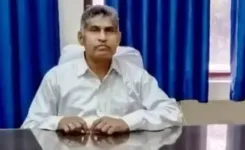
CM Himanta launches Nijut Moina & Nijut Babu first instalment

Synopsis
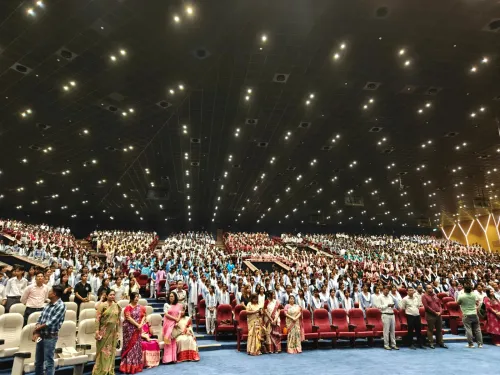
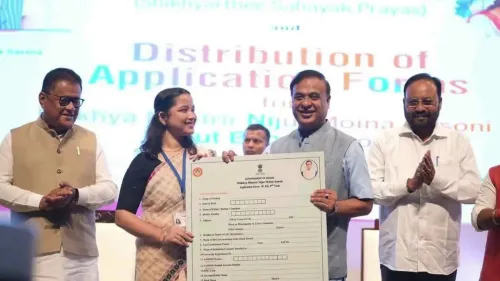
Chief Minister Himanta Biswa Sarma presided over the ceremonial distribution of the first instalment of financial aid under Assam's Nijut Moina (girls) and Nijut Babu (boys) student welfare schemes on October 15, 2026, as students gave him a warm welcome at the event.
Key Takeaways
Dual launch: The Nijut Moina and Nijut Babu schemes provide financial assistance to girl and boy students in Assam respectively.
First instalment distributed: The ceremonial first disbursal took place on October 15, 2026 , presided over by CM Dr.
Himanta Biswa Sarma .
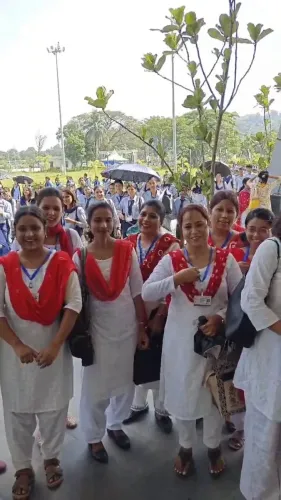
Student reception: Students gave the Chief Minister a warm welcome at the distribution event.
Policy goal: The schemes aim to improve educational access and reduce student dropout rates through direct financial transfers.
What's ahead: Subsequent instalments and official data on beneficiary numbers and eligibility criteria are yet to be announced.
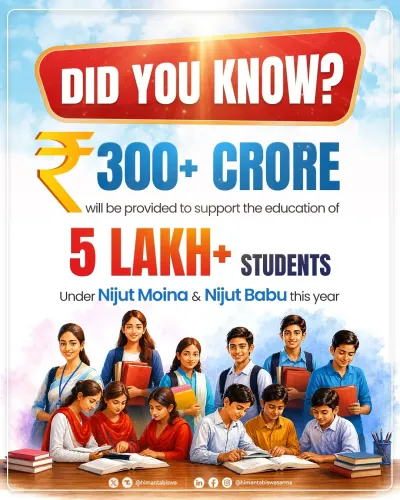
Students in Assam received the first instalment of direct financial assistance under two state welfare schemes on Thursday, October 15, 2026, as the Chief Minister's Office of Assam announced that Chief Minister Dr. Himanta Biswa Sarma presided over a ceremonial distribution event for the Nijut Moina and Nijut Babu schemes — initiatives designed to put money directly in the hands of girl and boy students respectively.
Two schemes, one ceremony — what Nijut Moina and Nijut Babu promise
The Nijut Moina scheme targets girl students in Assam, while the complementary Nijut Babu scheme extends a parallel financial lifeline to boy students. Together, they represent the Assam government's bet that periodic cash transfers — delivered with public ceremony — can keep classrooms fuller by easing the economic pressure that pushes students out. The dual launch signals the state's intent to make the support gender-inclusive from the outset.
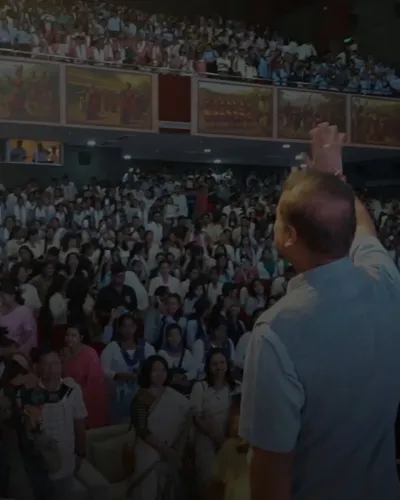
Students at the venue gave Dr. Sarma a warm welcome, a scene the Chief Minister's Office highlighted as emblematic of the schemes' grassroots reach. The ceremonial first instalment is the opening salvo; subsequent disbursements will determine whether the promise translates into sustained retention on the ground.
Assam's direct-benefit push for education
The Assam government under Dr. Himanta Biswa Sarma — Chief Minister since 2021 — has made student-facing direct-benefit transfers a recurring feature of its welfare calendar. The pattern is deliberate: announce, disburse publicly, build visibility. It serves both a policy goal — reducing dropout rates by addressing household cash crunches — and a political one, anchoring the government's image to tangible student welfare.
The broader educational access challenge in Assam, particularly in rural and semi-urban pockets, makes such schemes consequential beyond optics. Financial stress remains a leading reason families pull children — especially girls — out of school before completion. A scheme that reaches students before that tipping point arrives is structurally different from one that compensates after the fact.
What beneficiaries and families should watch next
With the first instalment now ceremonially distributed, the spotlight shifts to the disbursal of subsequent tranches and any official updates on beneficiary numbers and eligibility criteria. Scale will tell the real story — how many students are enrolled, how regularly the transfers arrive, and whether the twin schemes together move the needle on Assam's retention and completion rates. That data, when it emerges, will be the most honest verdict on the promise made today.
Point of View
Nijut Babu for boys — reflects a deliberate effort by the Sarma administration to pre-empt criticism of gender exclusivity while maximising political visibility through public ceremony. Direct-benefit transfers to students have become a signature welfare instrument for state governments across India, and Assam is following that established playbook. The real test, however, will be administrative: whether the disbursement pipeline sustains beyond the inaugural ceremony into regular, needs-indexed transfers. If it does, the scheme fits neatly into the broader northeast India development narrative the Centre has been constructing; if it stalls, it becomes another launch-day headline with little structural impact.
NationPress
15 Oct 2026
Frequently Asked Questions
What is the Nijut Moina scheme in Assam?
The Nijut Moina scheme is an Assam government initiative that provides financial assistance to girl students, aimed at improving educational access and reducing dropout rates.
What is the Nijut Babu scheme in Assam?
The Nijut Babu scheme is the counterpart to Nijut Moina, providing similar direct financial assistance to boy students in Assam.
Who launched the Nijut Moina and Nijut Babu schemes?
Chief Minister Dr. Himanta Biswa Sarma of Assam presided over the ceremonial distribution of the first instalment under both schemes on October 15, 2026.
Who is eligible for the Nijut Moina and Nijut Babu schemes?
Both schemes target school and college students in Assam — Nijut Moina for girl students and Nijut Babu for boy students — though official eligibility criteria and benefit amounts are yet to be publicly detailed.
When will the next instalment of Nijut Moina and Nijut Babu be released?
The Assam government has not yet announced a date for subsequent instalments; official notifications on disbursement timelines and beneficiary numbers are awaited.