CM Himanta Links Navratri's Kalaratri to Women's Safety Push
Synopsis
Assam CM Himanta Biswa Sarma used Navratri's Kalaratri day to spotlight the Sakhi Niwas scheme, announcing a ₹142 crore hostel at Jagiroad for over a thousand women set to work at Tata's upcoming semiconductor plant, alongside a facility near NIT Silchar.
Key Takeaways
Assam CM Himanta Biswa Sarma invoked Maa Kalaratri on the seventh day of Navratri to link women's safety fears with the state's hostel infrastructure drive.
The Sakhi Niwas scheme is building safe, affordable hostels for working women across Assam, including at Silcoorie in Cachar , near NIT Silchar, Assam University, and Silchar Medical College.
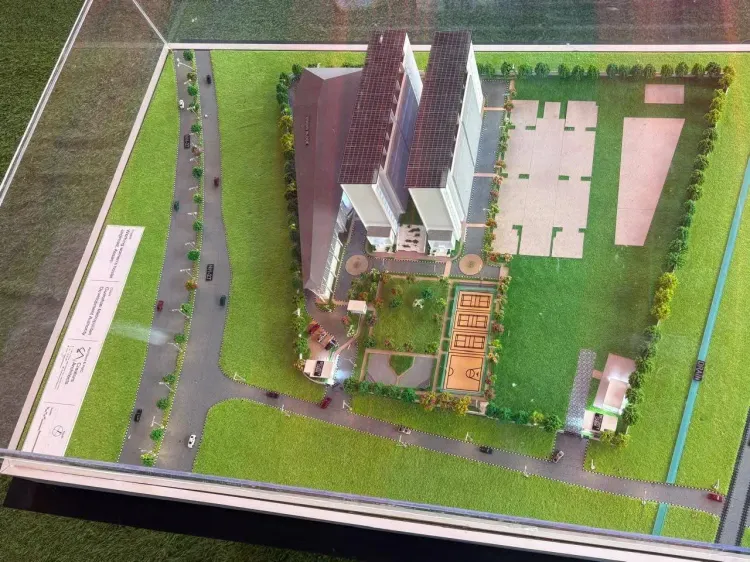
A ₹142 crore hostel is under construction at Jagiroad, Morigaon district , designed to house more than 1,000 women who will work at the upcoming Tata semiconductor facility .
The Assam government signed investment agreements with Tata Group for the Jagiroad semiconductor plant in 2024 , part of the state's industrial diversification push.
Sarma framed safe accommodation as workforce infrastructure — essential to Assam's industrial ambitions — rather than purely a welfare measure.
On the seventh day of Navratri — dedicated to Maa Kalaratri, the goddess who destroys fear — Assam Chief Minister Himanta Biswa Sarma turned a devotional moment into a policy statement, drawing a direct line between divine symbolism and the state's working-women hostel drive.
From prayer to policy: the Sakhi Niwas connect
Sarma invoked Maa Kalaratri's dual nature — fearsome in form, yet called Shubhankari (bringer of good) — to frame a very real fear: the hesitation of young women to leave home for work or study because of unsafe accommodation, unfamiliar cities, and late-night commutes. His post pointed directly at the state's Sakhi Niwas scheme as the policy answer to that fear. The scheme, rooted in the Central Working Women's Hostel programme that has operated since the 1970s, has gained renewed momentum in Assam as the state courts large-scale industrial investment.
One facility specifically named is the hostel at Silcoorie in Cachar district, positioned deliberately close to NIT Silchar, Assam University, and Silchar Medical College — a cluster of institutions that collectively draw thousands of women each year and have historically lacked adequate, affordable housing for them.
The ₹142 crore hostel at Jagiroad — and what it signals about Tata's semiconductor bet
The more striking announcement woven into the post concerns Jagiroad, a town in Morigaon district. Sarma stated that a ₹142 crore hostel is under construction there to house more than a thousand women who will work at the upcoming Tata semiconductor facility. In 2024, the Assam government signed investment agreements with the Tata Group for a semiconductor assembly and testing plant at Jagiroad — one of the most consequential industrial bets the state has made in its drive to diversify beyond tea and oil. A dedicated women's hostel of this scale, built in anticipation of the plant's workforce, signals that the state is treating female employment at the facility not as an afterthought but as a design requirement.
'Our daughters will not just watch Assam's new industries rise,' Sarma wrote. 'They will work in them, with a safe home waiting for them every evening.' The framing is pointed: it positions safe accommodation not as welfare but as workforce infrastructure — as essential to Assam's industrial ambitions as the factory floor itself.
Navratri as a platform for governance messaging
The choice to embed a policy update inside a Navratri devotional post is deliberate and increasingly common for BJP leaders: festival moments offer high organic reach, and the goddess Kalaratri's association with fearlessness maps cleanly onto a women's safety narrative. Sarma has consistently used religious occasions in Assam — a state with deep syncretic traditions — to communicate governance priorities to a wide audience. What distinguishes this post is the specificity: actual scheme names, actual locations, an actual rupee figure. The detail does the credibility work that a vague inspirational message cannot.
Construction timelines for both the Silcoorie and Jagiroad hostels, and the commissioning schedule for the Tata plant, will be the real test of the promises embedded in the prayer.
Point of View
Signalling that the state sees female labour as central, not peripheral, to its industrial ambitions. Embedding a rupee figure and specific project locations in a Navratri post forces accountability into what would otherwise be aspirational rhetoric. The real political test comes when construction deadlines and Tata's commissioning schedule are scrutinised against these public commitments.
NationPress
17 Oct 2026
Frequently Asked Questions
What is the Sakhi Niwas scheme in Assam?
Sakhi Niwas is an Assam state initiative under the broader Central Working Women's Hostel programme to provide safe and affordable accommodation to women who move to new cities or towns for work or study. It builds on a central scheme operational since the 1970s, with Assam expanding it to support growing industrial and educational hubs.
Where is the ₹142 crore women's hostel being built in Assam?
The ₹142 crore hostel is being built at Jagiroad in Morigaon district, Assam, to accommodate more than a thousand women expected to work at the upcoming Tata semiconductor assembly and testing facility in the same area.
What is the Tata semiconductor plant at Jagiroad?
The Tata semiconductor facility at Jagiroad, Morigaon district, is a semiconductor assembly and testing plant announced by the Tata Group as part of India's push to expand domestic electronics manufacturing. The Assam government signed investment agreements with Tata for this project in 2024.
What hostel is being built near NIT Silchar under Sakhi Niwas?
A Sakhi Niwas hostel is being developed at Silcoorie in Cachar district, strategically located close to NIT Silchar, Assam University, and Silchar Medical College to serve the large number of women students and workers in that academic cluster.
Why did Himanta Biswa Sarma mention Maa Kalaratri in connection with women's hostels?
Sarma drew on Maa Kalaratri's symbolism as a destroyer of darkness and fear — and her epithet 'Shubhankari' (bringer of good) — to frame the working-women hostel programme as a policy effort to remove the fear that stops women from leaving home for employment or education, tying a governance message to the Navratri devotional occasion.