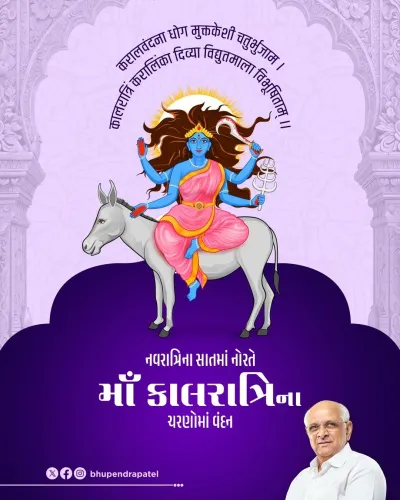
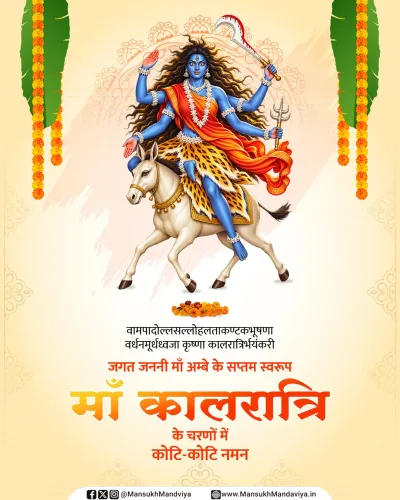
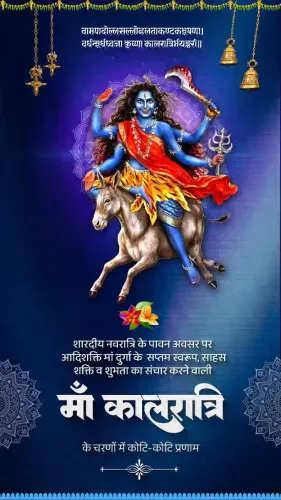
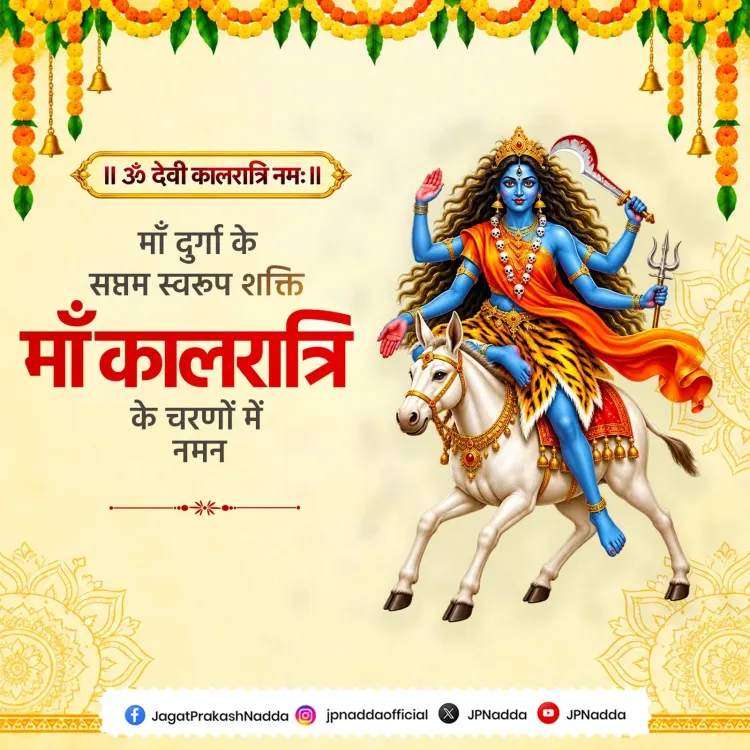
Nadda offers prayers to Maa Kalaratri on Navratri Day 7
Synopsis
Union Health Minister and BJP president J. P. Nadda offered prayers to Maa Kalaratri, the seventh form of Goddess Durga, on Day 7 of Sharadiya Navratri, reciting a Sanskrit shloka and wishing devotees and citizens divine blessings.
Key Takeaways
Union Health Minister J.
Nadda posted devotional greetings on Day 7 of Sharadiya Navratri , observed on 17 October 2026 .
The post is dedicated to Maa Kalaratri , the seventh and most fierce form of Goddess Durga.
Nadda recited a Sanskrit shloka describing Kalaratri as the destroyer of time and an eternal bestower of happiness.
He prayed that Maa Shubhankari bless all devotees and citizens of India with her love and grace.
The post reflects a long-standing practice among Indian political leaders of public engagement during major Hindu festivals.
On the seventh day of Sharadiya Navratri, Union Health Minister J. P. Nadda offered his reverence to Maa Kalaratri — the fierce seventh form of Goddess Durga — invoking her blessings for every devotee and citizen of the country.
Reciting a Sanskrit shloka in his post — 'Vampadollasalloha latakantak bhushana, Vardhana moordhdhwaja Krishna Kalaratrir bhayankari' — Nadda saluted the goddess described as the destroyer of time and the eternal bestower of happiness. In translation, the verse venerates Maa Kalaratri as the terrifying yet auspicious one, adorned with thorny creepers and crowned in glory. He closed with the timeless invocation, 'Jai Mata Di!'The seventh night: who is Maa Kalaratri?
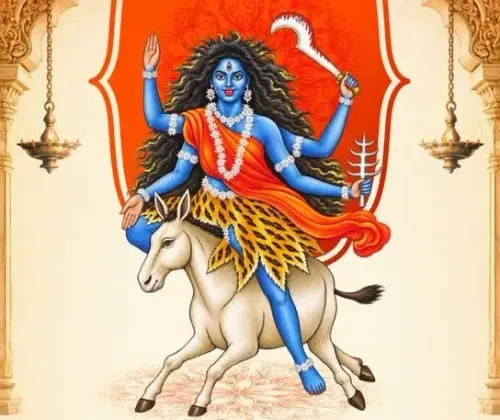
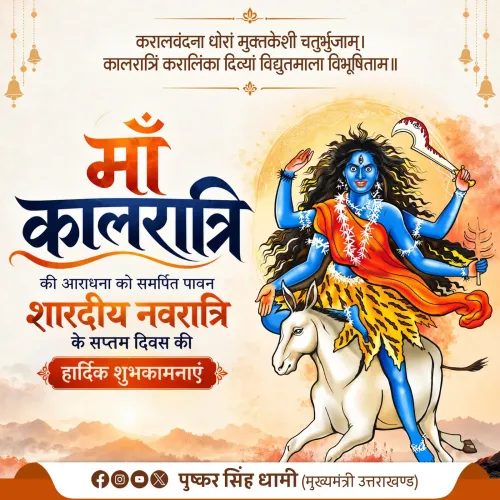
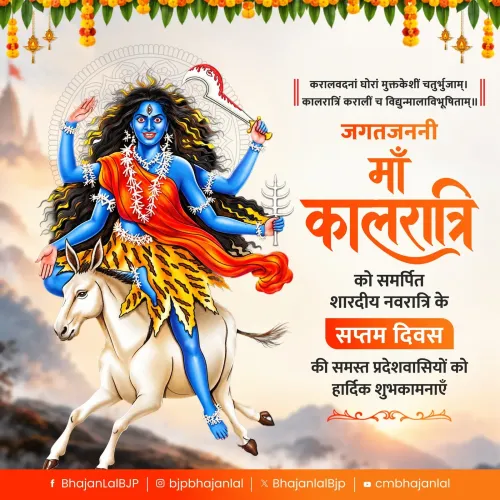
Across India, Navratri's seventh day is dedicated to Maa Kalaratri, the most ferocious manifestation of Goddess Durga. Dark-complexioned, riding a donkey, she is traditionally depicted as the slayer of demons — and simultaneously as Shubhankari, the bringer of auspiciousness. The paradox is the point: destruction of evil is, itself, a form of grace.
Nadda's post carried precisely that spirit, praying that Maa Shubhankari shower her loving blessings on all devotees and every citizen of the nation.
A political tradition as old as the republic
Indian political leaders across party lines have long used major festivals as a moment of public communion. Sharadiya Navratri — the nine-night autumn festival leading into Vijayadashami — draws hundreds of millions of Hindus into prayer, fasting, and celebration from Kashmir to Kanyakumari. For a BJP national president and senior cabinet minister like Nadda, such devotional outreach is both personal and civic in its register.
As the remaining nights of Navratri unfold, the country will also move toward the grand Durga Puja tableau processions and the Dussehra effigy-burning ceremonies that mark the festival's climax — a season that brings politics, culture, and faith into the same public square.
Point of View
Particularly during Sharadiya Navratri — a festival with massive resonance across North and East India. For the party's national president and a senior cabinet minister, such messages serve a dual purpose: personal faith and cultural solidarity with the majority electorate. The invocation of Maa Kalaratri's dual character — destroyer of evil and giver of auspiciousness — also lends itself to a broader civilisational messaging the party frequently deploys. With Dussehra and Durga Puja imminent, expect a sustained cadence of such communication from senior BJP leadership.
NationPress
17 Oct 2026
Frequently Asked Questions
What is Navratri Day 7 dedicated to?
Navratri Day 7 is dedicated to Maa Kalaratri, the seventh form of Goddess Durga, worshipped as the destroyer of evil and the bringer of auspiciousness.
What did JP Nadda post on Navratri Day 7?
J. P. Nadda posted a Sanskrit shloka in praise of Maa Kalaratri and prayed that she bless all devotees and citizens of India with her love and grace.
Who is Maa Kalaratri in Navratri?
Maa Kalaratri is the most fierce manifestation of Goddess Durga, associated with destroying darkness and evil, yet also called 'Shubhankari' — the bestower of good fortune.
When is Sharadiya Navratri 2026?
Sharadiya Navratri is the nine-night autumn Hindu festival dedicated to Goddess Durga; it culminates in Vijayadashami (Dussehra). Specific 2026 dates have not been independently verified.
What does 'Jai Mata Di' mean?
'Jai Mata Di' is a popular devotional exclamation in Hindi meaning 'Victory to the Divine Mother,' widely used during Navratri and other celebrations of Goddess Durga.