CM Himanta marks 51 years since India's 1975 Emergency
Synopsis
On the 51st anniversary of India's 1975 Emergency, Assam Chief Minister Himanta Biswa Sarma paid tribute to those who resisted the suspension of civil liberties, calling it a dark chapter in Indian democratic history and saluting the brave fighters who stood for democracy.
Key Takeaways
Assam CM Himanta Biswa Sarma marked the 51st anniversary of the 1975 Emergency on 25 June 2026 with a tribute post in Hindi.
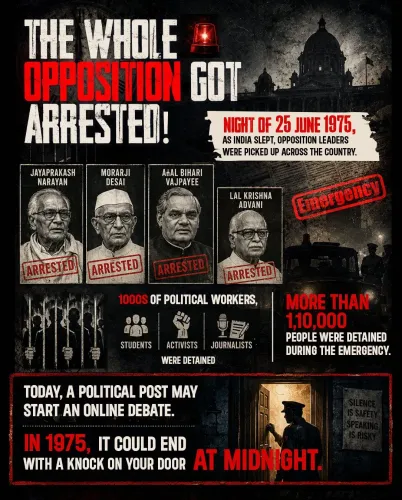
The Emergency , proclaimed by PM Indira Gandhi on 25–26 June 1975 , suspended fundamental rights and lasted until March 1977 .
Sarma described the period as a 'dark chapter' in Indian democratic history and offered a 'humble salute' to those who resisted it.
Socialist leader Jayaprakash Narayan led the anti-Emergency movement and was imprisoned; his efforts contributed to the Janata Party 's historic 1977 victory.
The BJP and its predecessor Jana Sangh were active in opposing the Emergency; the party has consistently commemorated 25 June as a day of democratic remembrance.
As convenor of NEDA , Sarma is among the most prominent BJP voices in the North-East and his statement is part of a coordinated party-wide pattern on this date.
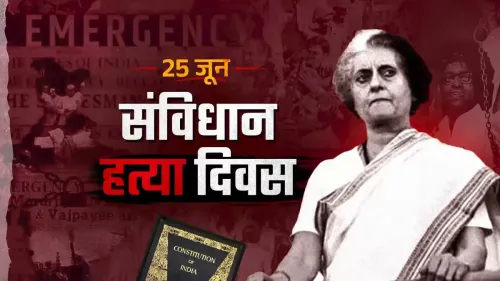
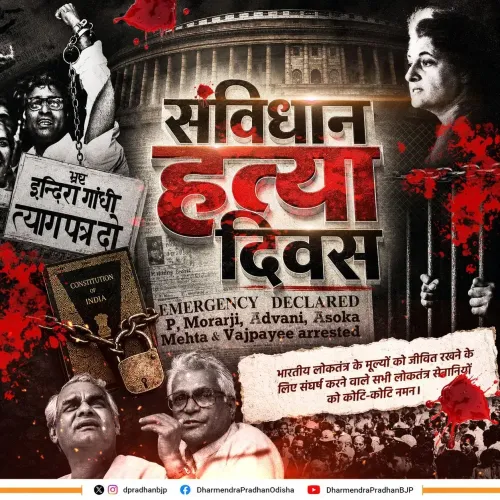
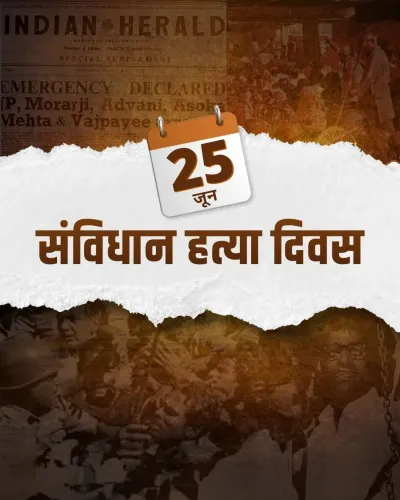
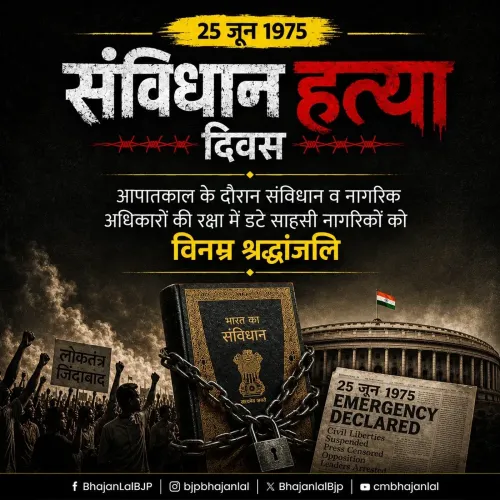
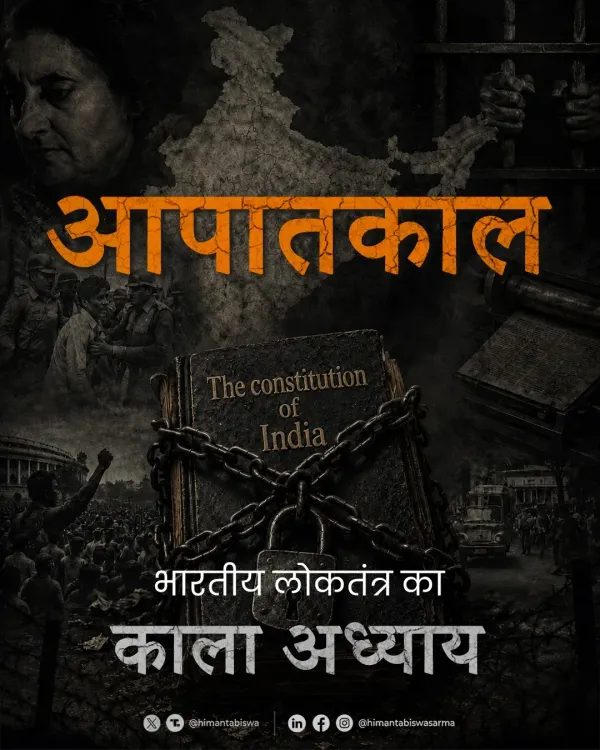
Assam Chief Minister Himanta Biswa Sarma on 25 June 2026 paid tribute to those who resisted the 1975 Emergency, marking the 51st anniversary of the day Prime Minister Indira Gandhi imposed the controversial state of emergency that suspended fundamental rights across India.
Posting in Hindi, CM Sarma wrote: 'भारतीय लोकतंत्र के इतिहास के उस काले अध्याय को स्मरण करते हैं' — 'We remember that dark chapter in the history of Indian democracy' — when, he said, an attempt was made in 1975 to crush the country's democratic values and civil liberties by imposing the Emergency. He offered a 'humble salute to all the brave fighters who struggled to protect democracy.'
Context
On the night of 25–26 June 1975, then Prime Minister Indira Gandhi proclaimed a national Emergency under Article 352 of the Constitution, citing internal disturbance. The order suspended fundamental rights, imposed press censorship, and authorised the mass detention of opposition leaders. The Emergency lasted until March 1977, when it was lifted ahead of general elections.
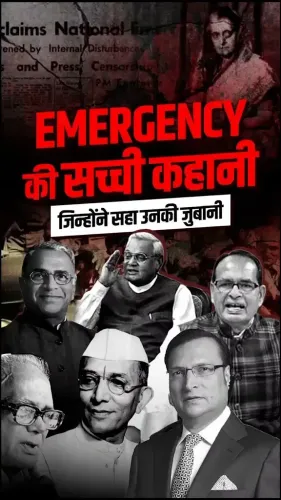
Among the most prominent voices of resistance was socialist leader Jayaprakash Narayan, who spearheaded the anti-Emergency movement and was subsequently imprisoned. His mobilisation helped forge the Janata Party coalition that went on to defeat Congress in the 1977 general election — producing India's first non-Congress government at the Centre.
Policy Backdrop
The Bharatiya Janata Party and its ideological predecessor, the Jana Sangh, along with RSS affiliates, were among the organisations that actively resisted the Emergency. Thousands of their members were among those detained during the period. Since the 1990s, BJP leaders at the national and state levels have consistently marked 25 June as a day of democratic remembrance, framing it as a cautionary reminder of Congress-era authoritarianism.
As Assam Chief Minister and convenor of the North-East Democratic Alliance (NEDA), CM Sarma is one of the BJP's most prominent regional voices. His annual statements on the Emergency anniversary fit within a broader, coordinated party communication pattern observed across multiple states each year on this date.
Stakeholders and Impact
The tribute resonates with civil liberties advocates, historians, and opposition-era political families who view the Emergency as a foundational moment in India's democratic memory. For the BJP, the commemoration serves a dual purpose: honouring those who resisted detention and censorship, and keeping the historical record of the period in public discourse.
Survivors of the Emergency period — including former political prisoners, journalists who defied censorship, and activists associated with the Jayaprakash Narayan movement — are the primary stakeholders acknowledged by such tributes. Civil society organisations that document this period also mark the anniversary each year.
What's Next
Statements from other BJP chief ministers and central leadership are expected to follow through the day, as 25 June has become a coordinated occasion for party-wide messaging. The anniversary may also feature in forthcoming NEDA coordination meetings or in the Assam Legislative Assembly as a point of historical reference. As India's democratic institutions continue to evolve, the Emergency's legacy remains a live reference point in debates over civil liberties, press freedom, and constitutional governance.
Point of View
For three decades, positioned the party as the custodian of democratic memory against what it frames as Congress-era authoritarianism. By invoking the 'dark chapter' of the Emergency on its 51st anniversary, Sarma reinforces a historical narrative that continues to serve electoral and ideological purposes well beyond Assam. The tribute also signals the party's intent to keep the Emergency's legacy alive as a reference point in contemporary debates on civil liberties and constitutional governance. For the broader opposition, the annual BJP commemoration remains a politically charged reminder of an episode both sides interpret through sharply different lenses.
NationPress
25 Jun 2026
Frequently Asked Questions
What was the 1975 Emergency in India?
The 1975 Emergency was a nationwide state of emergency proclaimed by Prime Minister Indira Gandhi on 25–26 June 1975, which suspended fundamental rights, imposed press censorship, and authorised mass detention of opposition leaders; it lasted until March 1977.
Why does Himanta Biswa Sarma mark 25 June every year?
CM Sarma, like other BJP leaders, marks 25 June as the anniversary of the 1975 Emergency to pay tribute to those who resisted it and to highlight what the party describes as a dark chapter in Indian democratic history.
Who led the resistance against the 1975 Emergency?
Socialist leader Jayaprakash Narayan spearheaded the anti-Emergency movement, was imprisoned during the period, and later helped form the Janata Party coalition that defeated Congress in the 1977 general election.
What happened after the Emergency was lifted in 1977?
After the Emergency was lifted in March 1977, the subsequent general election produced India's first non-Congress government when the Janata Party coalition, which included Jana Sangh members who later became the BJP, defeated Indira Gandhi's Congress.
What is NEDA and what is Himanta Biswa Sarma's role in it?
NEDA, the North-East Democratic Alliance, is a BJP-led political alliance of parties in India's north-eastern states; Himanta Biswa Sarma serves as its convenor alongside his role as Chief Minister of Assam.