CM Himanta meets Haflong MLA and Dima Hasao Council chief

Synopsis
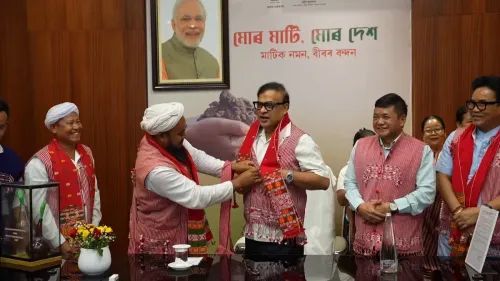
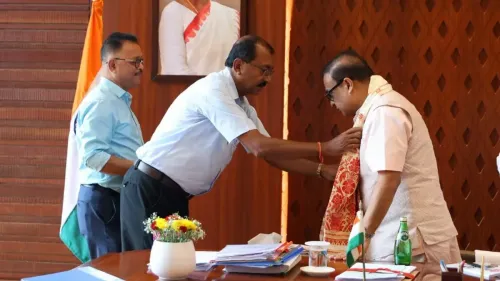
Chief Minister Himanta Biswa Sarma held a cordial meeting with Haflong MLA Rupali Langthasa and Dima Hasao Autonomous Council chief Debolal Gorlosa on 23 June 2026, signalling active state engagement with Sixth Schedule governance in Assam's hill districts.
Key Takeaways
Rupali Langthasa , MLA from Haflong , and Debolal Gorlosa , Chief Executive Member of the Dima Hasao Autonomous Council , met CM Himanta Biswa Sarma on 23 June 2026 .
The Dima Hasao Autonomous Council operates under the Sixth Schedule of the Indian Constitution , which has governed tribal autonomy in Assam since 1950 .
Haflong is the district headquarters of Dima Hasao , one of Assam's key hill districts with a significant Dimasa tribal population.
The CM's Office described the interaction as 'cordial', indicating a constructive state-council relationship.
Meetings of this nature historically precede announcements on development projects, infrastructure funds, or welfare scheme extensions for autonomous council areas.
The engagement reflects the Sarma government's policy of active coordination with Assam's Sixth Schedule institutions.
The Chief Minister's Office of Assam announced on 23 June 2026 that Rupali Langthasa, Member of the Legislative Assembly from Haflong, and Debolal Gorlosa, Chief Executive Member of the Dima Hasao Autonomous Council, called on Chief Minister Dr. Himanta Biswa Sarma and held a cordial discussion.
Context
Haflong is the headquarters of Dima Hasao district, one of Assam's hill districts governed partly through the framework of the Sixth Schedule of the Indian Constitution. Smt. Rupali Langthasa represents the Haflong constituency in the Assam Legislative Assembly, while Shri Debolal Gorlosa heads the Dima Hasao Autonomous Council (DHAC), the statutory body that administers tribal affairs in the district. The two leaders together represent both the elected legislative and the autonomous-council dimensions of governance in Dima Hasao.
Policy Backdrop
The Dima Hasao Autonomous Council was constituted under the Sixth Schedule, enacted in 1950, which provides a special constitutional framework for tribal areas in Assam, Meghalaya, Tripura, and Mizoram. The council exercises legislative and executive powers over specified subjects — land management, forests, social customs, and local governance — within the district. Assam governments have historically held periodic consultations with Sixth Schedule council heads to coordinate administrative, infrastructure, and welfare priorities that require both state and council action. The Bodoland Territorial Council accord and related arrangements of 2020-21 reinforced this template of structured state-council engagement across Assam's autonomous regions.
Stakeholders and Impact
The primary stakeholders are the Dimasa community and the broader resident population of Dima Hasao, whose welfare programmes, road connectivity, and development projects depend on seamless coordination between the state government and the autonomous council. Such high-level meetings at the Chief Minister's level signal that Dima Hasao's administrative priorities are on the state's active agenda. Decisions or commitments that emerge from such interactions can directly influence fund releases, scheme implementation, and infrastructure timelines in one of Assam's more remote hill districts.
What's Next
While the specific agenda and outcomes of the 23 June 2026 discussion have not been officially disclosed, meetings of this nature frequently precede announcements on project approvals, budget allocations, or policy directives for autonomous council areas. Observers of Assam's hill-district governance will watch for follow-up communications from either the Chief Minister's Office or the Dima Hasao Autonomous Council regarding any new initiatives for the district. The meeting underscores the Sarma government's continued engagement with Sixth Schedule institutions as part of its broader tribal-welfare and regional-development agenda.
Point of View
And they allow the government to pre-empt grievances before they escalate into political friction. In the broader arc of Assam's tribal policy, the Sarma administration has consistently used high-visibility meetings to signal intent, even when concrete outcomes are announced later. Whether this meeting yields tangible project announcements for Dima Hasao will be the real measure of its significance.
NationPress
22 Sept 2026
Frequently Asked Questions
Who is Debolal Gorlosa?
Debolal Gorlosa is the Chief Executive Member of the Dima Hasao Autonomous Council, the statutory body that administers tribal governance in Dima Hasao district of Assam under the Sixth Schedule of the Indian Constitution.
What is the Dima Hasao Autonomous Council?
The Dima Hasao Autonomous Council is an autonomous district council constituted under the Sixth Schedule of the Indian Constitution, enacted in 1950, to govern tribal areas in Dima Hasao district of Assam. It has legislative and executive powers over land, forests, and local governance.
Who is Rupali Langthasa?
Rupali Langthasa is the Member of the Legislative Assembly representing the Haflong constituency in the Assam Legislative Assembly. Haflong is the headquarters of Dima Hasao district.
Why did the Haflong MLA and Dima Hasao Council chief meet CM Himanta?
The Chief Minister's Office described the meeting on 23 June 2026 as a cordial discussion, but did not disclose the specific agenda. Such meetings typically cover administrative coordination, development projects, and welfare schemes for the hill district.
What is the Sixth Schedule of the Indian Constitution?
The Sixth Schedule, enacted in 1950, provides a special constitutional framework for tribal areas in Assam, Meghalaya, Tripura, and Mizoram, allowing autonomous district councils to exercise legislative and executive powers over specified local subjects.