CM Himanta to personally oversee Assam damage assessment
Synopsis
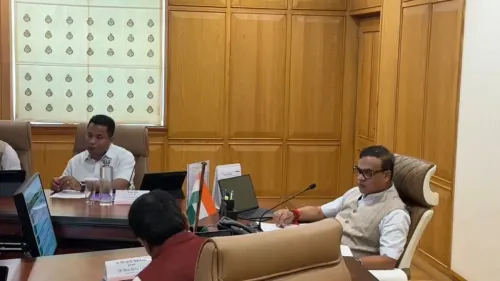
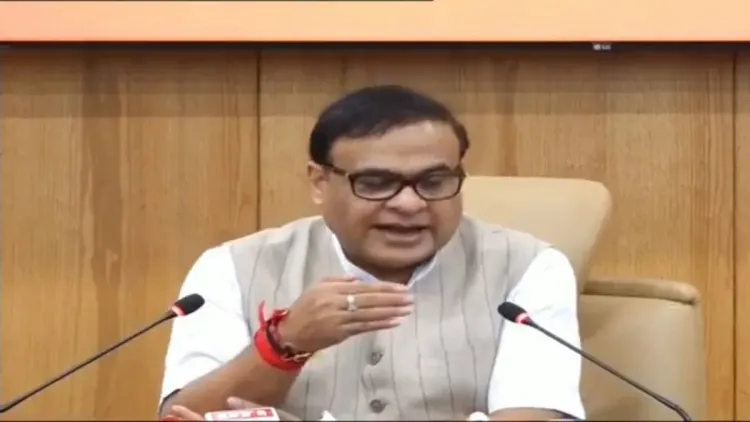
Assam Chief Minister Himanta Biswa Sarma has announced he will personally oversee damage assessments across three categories — loss of lives, public infrastructure, and long-term capital assets — to ensure no affected person is denied adequate compensation.
Key Takeaways
Himanta Biswa Sarma announced personal oversight of Assam's damage assessment process on 31 July 2026 .
The assessment framework covers three areas: loss of lives , damage to public infrastructure , and long-term damage to capital assets .
The Chief Minister stated that no affected person will be deprived of adequate compensation.
Assam has a history of recurring natural calamities requiring structured relief and rehabilitation.
Official government orders detailing specific relief criteria and disbursement timelines are yet to be announced.
When lives are lost and infrastructure lies broken, the question that follows is always the same: who gets compensated, and who gets left behind? Assam Chief Minister Himanta Biswa Sarma moved to answer that on Friday, 31 July 2026, announcing he will personally monitor the state's damage assessment process to ensure no affected person is denied adequate relief.
Three pillars of the assessment framework
Sarma laid out a clear, three-point framework for how the state will evaluate the scale of the disaster. The assessment will cover loss of lives, damage to public infrastructure, and long-term damage to capital assets — a structure that goes beyond immediate visible destruction to account for losses that compound over time.
The inclusion of 'long-term damage to capital assets' is notable. It signals that the state intends to look past broken roads and flooded buildings to assess how the incident has eroded productive infrastructure — bridges, embankments, irrigation systems — whose degradation can set a region back for years.
Direct oversight as a transparency signal
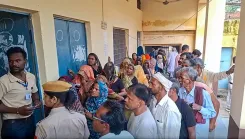
Chief ministers stepping into the assessment process personally is not unprecedented in Indian disaster governance, but it is a deliberate political and administrative signal. Assam has faced recurring natural calamities — floods in particular — that have repeatedly exposed gaps between announced relief and actual disbursement at the ground level.
By placing himself at the centre of the monitoring chain, Sarma is staking his office's credibility on the outcome. The move puts pressure on district administrations and infrastructure departments to move without the delays that typically blunt the impact of state relief mechanisms.
What comes next for affected citizens
The immediate question for those affected is timeline: when do assessments conclude, and when does compensation flow? Sarma's post does not specify a deadline or the triggering incident, and official government orders detailing relief criteria are yet to be made public.
Affected citizens, state infrastructure departments, and local bodies will be watching whether the three-pillar framework translates into a structured, auditable process — or remains a statement of intent. The Chief Minister's direct involvement raises the stakes for both.
Assam has built institutional experience with disaster relief over successive flood cycles. Whether that experience accelerates or complicates this round of assessment will become clear as the process unfolds — and as CM Sarma has made explicit, the accountability for that answer now rests with his office.
Point of View
Which could set a higher benchmark for compensation but also delay disbursement. The announcement reflects a broader BJP pattern of projecting executive decisiveness in disaster response, particularly in electorally sensitive states. Whether institutional follow-through matches the political commitment will define the real impact of this intervention.
NationPress
15 Sept 2026
Frequently Asked Questions
What are the three factors Assam CM Himanta will assess for compensation?
Assam Chief Minister Himanta Biswa Sarma has identified three factors for the damage assessment: loss of lives, damages to public infrastructure, and long-term damage to capital assets.
Why is Himanta Biswa Sarma personally monitoring the damage assessment?
Sarma stated he will personally monitor the assessment procedure to ensure that no affected person is deprived of adequate compensation, signalling direct executive accountability.
What does 'long-term damage to capital assets' mean in Assam's relief assessment?
'Long-term damage to capital assets' refers to harm inflicted on durable productive infrastructure — such as bridges, embankments, and irrigation systems — whose degradation has economic consequences well beyond the immediate incident.
Has Assam faced disasters requiring such assessments before?
Yes. Assam has experienced recurring natural calamities, particularly floods, that have required structured state relief and rehabilitation mechanisms on multiple occasions.
When will compensation be disbursed to those affected in Assam?
No specific timeline has been announced yet. Official government orders detailing relief criteria and disbursement schedules are expected to follow the assessment process.