CM Himanta Opens FIFA Fan Park in Dibrugarh

Synopsis
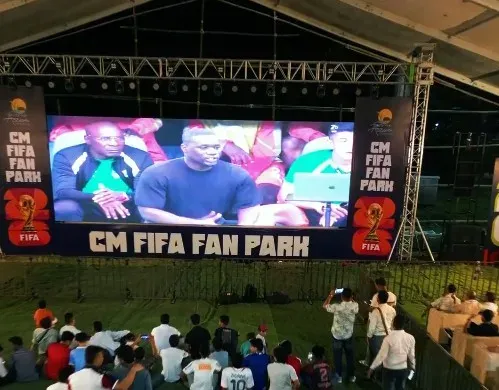
Assam Chief Minister Himanta Biswa Sarma has launched a CM FIFA Fan Park in Dibrugarh, the state's second capital, offering residents a large-screen community football viewing experience. The initiative follows an earlier rollout in Guwahati and reflects Assam's strong cultural bond with the sport.
Key Takeaways
Assam CM Himanta Biswa Sarma announced the CM FIFA Fan Park in Dibrugarh on 1 July 2026 .
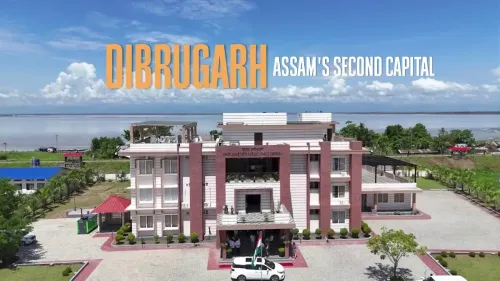
Dibrugarh , referred to as Assam's second capital, is the second city after Guwahati to host the fan park.
The initiative provides large-screen public football viewing for community audiences in Upper Assam .
Football carries strong cultural resonance in Assam and the Northeast, making such events significant for community engagement.
Guwahati previously hosted FIFA U-17 World Cup matches in 2017 , underlining the state's football credentials.
Further expansion of the fan park model to other Assam cities remains a key development to watch.
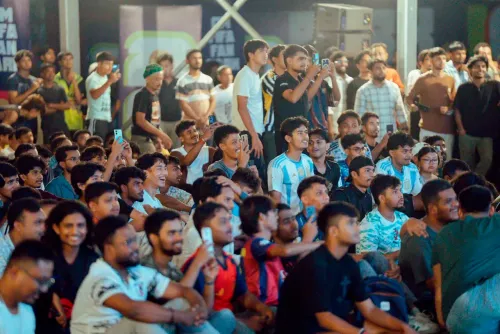
Assam Chief Minister Himanta Biswa Sarma on Wednesday, 1 July 2026, announced the launch of the CM FIFA Fan Park in Dibrugarh, extending the large-screen public football viewing initiative beyond Guwahati to the state's second-largest urban centre. The move brings community match-viewing facilities to Upper Assam, allowing residents to watch their favourite games together on a large screen.
Context
Sarma's post on X declared: 'Divided by team loyalty, united by the spirit of football. After Guwahati, Assam's second capital Dibrugarh has opened its doors to the CM FIFA Fan Park which brings unparalleled match experience on a large screen for people to enjoy their favourite game together.' The announcement marks the second city in Assam to host the initiative, following the earlier rollout in Guwahati.
Dibrugarh, widely known as the tea capital of India and frequently referred to as Assam's second capital, is a major commercial and cultural hub in Upper Assam. Its inclusion signals an intent to extend state-backed fan engagement beyond the state capital.
Policy Backdrop
Assam and the broader Northeast have a deep cultural affinity with football, making the region one of the sport's most passionate audiences in India. State governments across the country have periodically created public viewing zones during major football tournaments to foster community participation and social cohesion.
Assam's own sporting infrastructure has been in the spotlight since Guwahati's Indira Gandhi Athletic Stadium hosted matches during the FIFA U-17 World Cup in 2017 — a milestone that elevated the state's profile in Indian football. The CM FIFA Fan Park initiative draws on that legacy by bringing the tournament atmosphere to everyday public spaces rather than formal stadiums.
Stakeholders and Impact
The primary beneficiaries are football fans and youth in Dibrugarh and surrounding districts of Upper Assam, many of whom may not have easy access to private streaming infrastructure. Large-screen public viewing events also generate informal economic activity around the venue — food stalls, merchandise, and local gatherings.
The sequential rollout — first Guwahati, now Dibrugarh — suggests a deliberate strategy of expanding the initiative to multiple urban centres across the state, potentially covering a wider demographic and geographic spread of Assam's football-loving population.
What's Next
Attention will now turn to whether the CM FIFA Fan Park model is extended to additional cities across Assam, including towns in the Brahmaputra Valley and the Barak Valley region. Integration with state sports promotion schemes or youth engagement programmes could further institutionalise such fan parks beyond individual tournament cycles.
For now, the Dibrugarh launch positions the Sarma administration as an active participant in channelling the Northeast's football enthusiasm into organised, state-facilitated community events.
Point of View
High-visibility initiative that allows the Sarma administration to align itself with a sport that commands genuine mass passion in the Northeast, distinct from cricket's dominance elsewhere in India. By branding the fan parks under the Chief Minister's name, the initiative doubles as both a sports outreach and a political identity-building exercise in a region where Sarma's BJP has been consolidating influence. The sequential expansion from Guwahati to Dibrugarh follows a familiar playbook of extending state-backed events to secondary cities to signal inclusive governance. How far the rollout travels — and whether it outlasts the current tournament cycle — will determine whether this becomes a durable sports policy or a one-time spectacle.
NationPress
2 Jul 2026
Frequently Asked Questions
What is the CM FIFA Fan Park in Assam?
The CM FIFA Fan Park is a state government initiative in Assam that sets up large-screen public viewing facilities so residents can watch football matches together as a community. It was first launched in Guwahati and has now been extended to Dibrugarh.
Where is the Dibrugarh FIFA Fan Park located?
The CM FIFA Fan Park has been launched in Dibrugarh, a major city in Upper Assam often called the tea capital of India and referred to as the state's second capital. The exact venue within Dibrugarh was not specified in the announcement.
Why is football popular in Assam and Northeast India?
Football has deep cultural roots in Assam and the broader Northeast, where it has historically been more popular than cricket. The region has produced several national-level players, and state governments have invested in football infrastructure, including hosting the FIFA U-17 World Cup matches in Guwahati in 2017.
Who launched the CM FIFA Fan Park in Dibrugarh?
Assam Chief Minister Himanta Biswa Sarma announced and launched the CM FIFA Fan Park in Dibrugarh on 1 July 2026, following the earlier launch of a similar facility in Guwahati.
Will the CM FIFA Fan Park expand to other cities in Assam?
As of the announcement, the fan park has been set up in Guwahati and Dibrugarh. Chief Minister Sarma has not confirmed further cities, but the sequential rollout pattern suggests additional locations could be added during the ongoing football season.