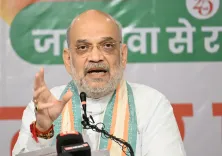
CM Himanta Flags ₹500 Cr Push for Dibrugarh's Growth
Synopsis
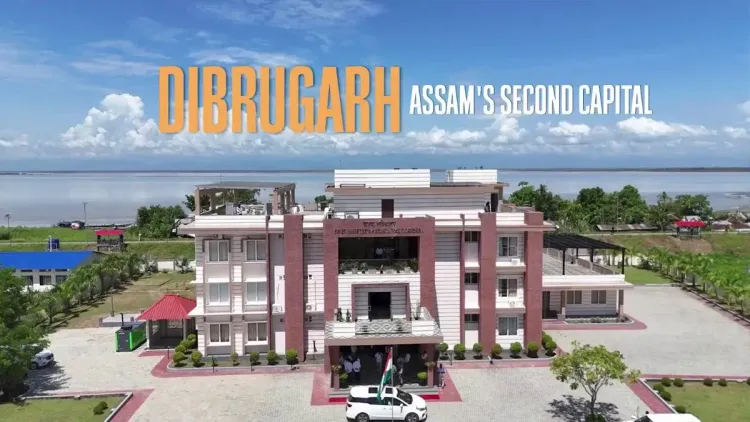
Assam CM Himanta Biswa Sarma has announced a State Capital Region framework for Dibrugarh and earmarked ₹500 crore for infrastructure, advancing the city's formal status as the state's second capital and signalling a polycentric development push for Upper Assam.
Key Takeaways
Assam CM Himanta Biswa Sarma announced the creation of a State Capital Region centred on Dibrugarh .
An additional ₹500 crore has been earmarked specifically for infrastructure development in Dibrugarh .
Dibrugarh was first designated Assam's second capital in 2022 to decentralise administration away from Guwahati .
The move is part of a broader post- 2021 BJP state government push to develop Upper Assam districts.
Formal notification of State Capital Region boundaries and the project list for the ₹500 crore fund are still awaited.
Assam Chief Minister Himanta Biswa Sarma on Sunday, June 14, 2026, reaffirmed the state government's commitment to transforming Dibrugarh into a fully equipped second capital, announcing the creation of a State Capital Region and earmarking an additional ₹500 crore for infrastructure development in the city.
Context
Dibrugarh, situated in Upper Assam, has long been the commercial and educational nerve centre of the region, anchored by its historic tea and petroleum industries. The Chief Minister's post underscores the city's enduring strategic importance, describing its role in Assam's growth story as 'always significant.'
The announcement follows the Assam government's 2022 declaration that Dibrugarh would function as the state's second capital alongside Guwahati, a move designed to decentralise administration and reduce the development gap between western and eastern Assam.
Policy Backdrop
The State Capital Region framework is intended to give Dibrugarh a formal administrative structure comparable to that of the primary capital, enabling coordinated urban planning, governance, and investment attraction. The designation signals an intent to move beyond symbolic recognition toward institutional change.
The additional ₹500 crore allocation for infrastructure is part of a broader post-2021 push by the BJP-led state government to extend development beyond Guwahati into Upper Assam districts. This aligns with wider Northeast connectivity and urbanisation priorities that have gained momentum at both the state and central levels over the past decade.
Stakeholders and Impact
Residents and businesses in Dibrugarh and the surrounding Upper Assam belt stand to be the most direct beneficiaries. Improved infrastructure is expected to strengthen logistics, ease administrative access, and attract investment to a region whose economy is heavily tied to tea estates, oil installations, and educational institutions.
The polycentric development model being pursued by Chief Minister Sarma also carries political significance for Upper Assam, a region that has historically felt overshadowed by the concentration of state resources in Guwahati. A formal State Capital Region could help address long-standing grievances about administrative distance and uneven development.
What's Next
The immediate milestones to watch include the formal notification of State Capital Region boundaries and the phased rollout of projects funded through the ₹500 crore infrastructure corpus in successive state budgets. Clarity on the scope, timeline, and project list will determine whether the announcement translates into measurable urban transformation.
If implemented as envisioned, the elevation of Dibrugarh to a fully functional second capital could serve as a template for polycentric governance across other states in the Northeast, reinforcing the region's integration into India's broader urbanisation agenda.
Point of View
Moving institutional weight eastward toward Upper Assam after decades of Guwahati-centric planning. Formalising the State Capital Region framework adds administrative teeth to what was, since 2022, largely a political declaration. The ₹500 crore earmark, if tracked through budget utilisation, will be the real test of whether this is a structural shift or an aspirational signal. Regionally, it fits a pattern of BJP-governed northeastern states using capital-region designations and large infrastructure allocations to consolidate political support in historically underserved districts.
NationPress
14 Sept 2026
Frequently Asked Questions
Why is Dibrugarh being made Assam's second capital?
The Assam government designated Dibrugarh as the state's second capital in 2022 to decentralise administration from Guwahati and promote balanced development in Upper Assam, which has historically received fewer state resources despite its economic importance in tea and oil sectors.
What is the State Capital Region announced for Dibrugarh?
The State Capital Region is a proposed administrative framework that would give Dibrugarh a formal governance structure akin to a capital city, enabling coordinated urban planning and investment. The exact boundaries and scope are yet to be officially notified.
How much money has been allocated for Dibrugarh's infrastructure?
Chief Minister Himanta Biswa Sarma has earmarked an additional ₹500 crore specifically for infrastructure development in Dibrugarh as part of its preparation for 'coordinated growth' as Assam's second capital.
What is Dibrugarh known for in Assam?
Dibrugarh is the largest city in Upper Assam and a major hub for the tea industry, petroleum production, and higher education. It has long been considered the commercial and administrative centre of eastern Assam.
When did Himanta Biswa Sarma become Assam Chief Minister?
Himanta Biswa Sarma became Chief Minister of Assam in May 2021 after the BJP-led alliance won the state assembly elections. He is also the convenor of the North-East Democratic Alliance (NEDA).