CM Himanta Pays Tribute on Hul Diwas to Santhal Uprising Heroes
Synopsis
Assam Chief Minister Himanta Biswa Sarma marked Hul Diwas on 30 June 2026 by paying tribute to Sido, Kanhu Murmu, and all warriors of the 1855 Santhal Hul, honouring their struggle for water, forests, and land as a foundational moment in India's freedom movement.
Key Takeaways
Assam CM Himanta Biswa Sarma posted a tribute on 30 June 2026 to mark Hul Diwas .
Hul Diwas commemorates the Santhal Hul (Santhal Rebellion) of 1855 , led by brothers Sido and Kanhu Murmu .
CM Sarma honoured the rebels' fight for 'Jal, Jungle aur Zameen' — water, forests, and land — against colonial exploitation.
He described their sacrifice as having given 'a new direction to the freedom movement' and called it 'a perpetual source of inspiration.' The Santhal community is one of India's largest tribal groups, with presence across Jharkhand , West Bengal , Odisha , Bihar , and Assam .
The tribute reflects broader political outreach to tribal communities in eastern and northeastern India.
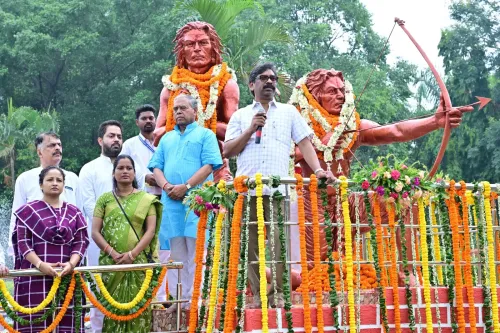
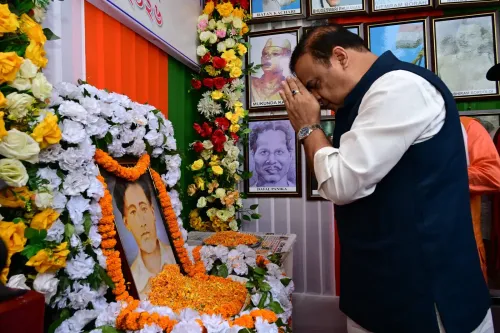
Assam Chief Minister Himanta Biswa Sarma on Tuesday, 30 June 2026, paid tribute to the martyrs of the Santhal Hul uprising on the occasion of Hul Diwas, honouring the bravery of Sido and Kanhu Murmu and all the warriors who fought in the rebellion against colonial oppression.
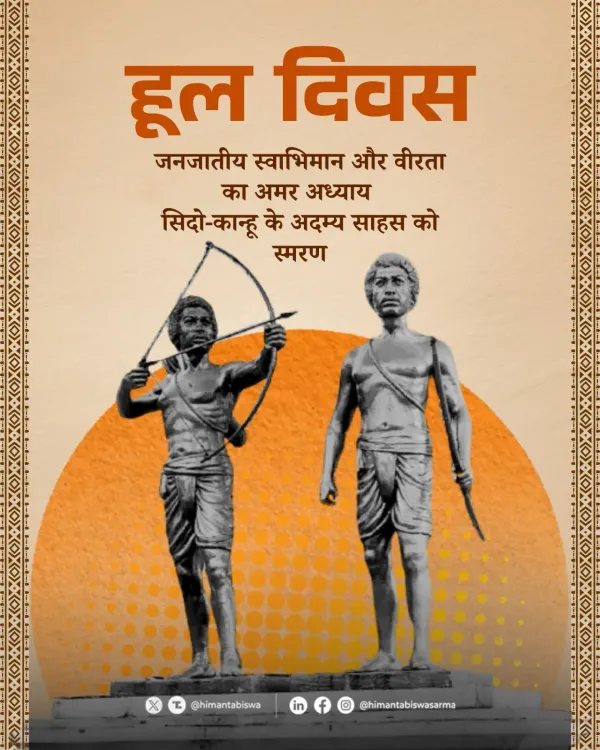
Posting on X in Hindi, CM Sarma wrote: 'हूल दिवस पर सिदो-कान्हू एवं संथाल हूल के सभी वीर सेनानियों को कोटिशः नमन।' — translated as, 'On Hul Diwas, I offer countless salutations to Sido-Kanhu and all the brave fighters of the Santhal Hul.' He added that their courageous struggle for the protection of 'Jal, Jungle aur Zameen' (water, forests, and land) and against injustice gave a new direction to the freedom movement, and that their sacrifice and martyrdom would forever remain a source of inspiration.
Context
Hul Diwas is observed every year on 30 June to commemorate the Santhal Hul (Santhal Rebellion) of 1855, one of the most significant uprisings against British colonial rule in the Indian subcontinent. The rebellion was led by brothers Sido and Kanhu Murmu, along with Chand and Bhairav, who mobilised tens of thousands of Santhal tribal people across present-day Jharkhand, West Bengal, and Bihar to resist colonial land exploitation and the oppressive zamindari system.
The word 'Hul' means 'revolution' in the Santali language. The uprising, though eventually suppressed by British forces, is widely regarded as a precursor to the larger Indian independence movement and a defining moment in the assertion of tribal rights and identity.
Policy Backdrop
The slogan 'Jal, Jungle, Zameen' — water, forest, and land — has remained central to tribal rights discourse in India for decades. It underpins legislation such as the Forest Rights Act, 2006, which sought to recognise the rights of forest-dwelling communities, including Scheduled Tribes, over land they have historically inhabited and depended upon. The Santhal Hul is widely cited as an early articulation of these very rights, predating formal legal frameworks by over a century.
Several state governments across eastern and northeastern India observe Hul Diwas as a public holiday or occasion for official commemoration, acknowledging the rebellion's place in the national freedom struggle. The Government of Jharkhand in particular treats the day as a major state observance.
Stakeholders and Impact
The tribute carries significance beyond ceremonial acknowledgment. As convenor of the North-East Democratic Alliance (NEDA), CM Sarma's outreach to Santhal heritage reflects the broader effort to build political and cultural bridges with tribal communities across eastern and northeastern India. The Santhal community is one of the largest tribal groups in the country, with a significant presence in Jharkhand, West Bengal, Odisha, Bihar, and Assam.
Tributes from senior political figures on Hul Diwas are seen as an acknowledgment of the Santhal community's historical contribution to India's freedom struggle and their ongoing cultural and political relevance.
What's Next
Hul Diwas observances across eastern and northeastern India are expected to include state-sponsored events, cultural programmes, and memorial gatherings honouring Sido and Kanhu Murmu. As political parties and governments across the spectrum mark the occasion, the day reinforces the continuing national conversation around tribal rights, forest land protections, and the recognition of indigenous freedom fighters within India's official historical memory.
Point of View
While ceremonial in form, is politically meaningful given the BJP's sustained effort to deepen roots among tribal communities across eastern and northeastern India. The invocation of 'Jal, Jungle aur Zameen' — a phrase long associated with tribal rights movements — signals an attempt to align the party's narrative with indigenous heritage rather than cede that ground to opposition parties. As NEDA convenor, Sarma's voice carries weight beyond Assam, making such gestures part of a wider coalition-building strategy. The tribute also fits a national pattern of formally integrating tribal freedom fighters into the mainstream independence narrative.
NationPress
30 Jun 2026
Frequently Asked Questions
What is Hul Diwas and why is it celebrated on 30 June?
Hul Diwas is observed on 30 June every year to commemorate the launch of the Santhal Hul (Santhal Rebellion) of 1855 , when tribal leaders Sido and Kanhu Murmu led a mass uprising against British colonial rule and the exploitative zamindari system.
Who were Sido and Kanhu Murmu?
Sido and Kanhu Murmu were brothers and leaders of the 1855 Santhal Hul , mobilising tens of thousands of Santhal people in present-day Jharkhand, West Bengal, and Bihar to resist colonial land exploitation. They are revered as tribal freedom fighters and martyrs.
What does 'Jal, Jungle, Zameen' mean in the context of the Santhal Hul?
'Jal, Jungle, Zameen' means 'water, forest, and land' and encapsulates the core demands of tribal communities to protect their natural resources and ancestral territories. The Santhal Hul of 1855 was fought partly over these very rights, making it an early articulation of what later became the basis for laws like the Forest Rights Act, 2006 .
Why did Himanta Biswa Sarma pay tribute on Hul Diwas?
As Assam Chief Minister and a senior national political leader, CM Himanta Biswa Sarma paid tribute on Hul Diwas 2026 to honour the Santhal martyrs and acknowledge their contribution to India's freedom struggle, reflecting both cultural respect and political outreach to tribal communities.
Which states observe Hul Diwas?
Hul Diwas is observed most prominently in Jharkhand , where it is a major state occasion, as well as in West Bengal , Odisha , Bihar , and Assam — states with significant Santhal tribal populations.