CM Himanta unveils Ejar plantation, Ring Road plan for Guwahati

Synopsis
Chief Minister Himanta Biswa Sarma told the Assam Assembly on 15 July 2026 that the government will pursue large-scale Ejar tree plantation along the Jalukbari-Khanapara National Highway and advance a Ring Road Project to resolve recurring flash floods in Jorabat, Guwahati.
Key Takeaways
CM Himanta Biswa Sarma presented the vision in the Assam Legislative Assembly on 15 July 2026 .
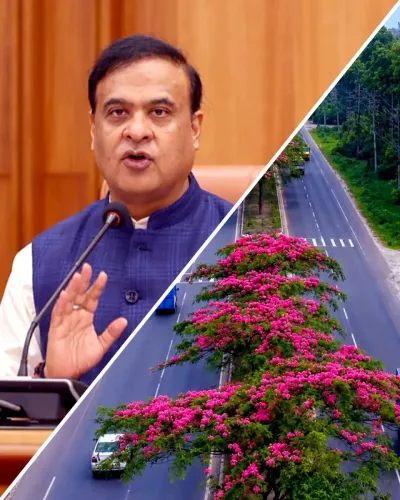
The government plans large-scale Ejar plantation along the Jalukbari-to-Khanapara National Highway stretch in Guwahati .
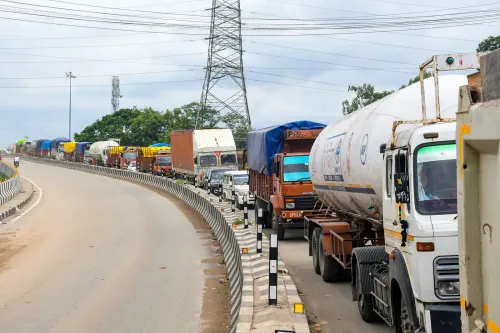
A proposed Ring Road Project is intended to mitigate recurring flash floods in Jorabat .
Both initiatives align with Assam's broader strategy of pairing highway infrastructure with climate-resilience measures in the Brahmaputra valley .
National Highway upgrades in Assam have previously drawn funding under the Bharatmala Pariyojana launched in 2015 .
Detailed project reports and environmental clearances for both components are yet to be publicly released.
The Chief Minister's Office of Assam announced on Wednesday, 15 July 2026 that Chief Minister Dr. Himanta Biswa Sarma presented the government's twin infrastructure vision in the Assam Legislative Assembly — a large-scale Ejar plantation along the Jalukbari-to-Khanapara National Highway stretch and a proposed Ring Road Project aimed at addressing recurring flash floods in Jorabat.
Context
Speaking on the floor of the Assam Assembly, HCM Dr. Himanta Biswa Sarma outlined plans to transform the busy National Highway corridor connecting Jalukbari and Khanapara — the arterial east-west spine of Guwahati — through large-scale plantation of the Ejar tree (also known as Hollong or related native species). The Chief Minister also underlined that the proposed Ring Road Project would serve as a structural solution to the flash flood problem that has long plagued Jorabat, a congestion-prone locality on the city's eastern fringe.
Policy Backdrop
National Highway upgrades across Assam have formed part of the Bharatmala Pariyojana, the central government's flagship road-connectivity programme launched in 2015. Successive state governments have pursued highway widening alongside afforestation and drainage components, seeking to address both mobility deficits and the recurrent waterlogging that the Brahmaputra valley experiences during the monsoon season.
Guwahati's drainage and flood-mitigation challenges have featured in state urban development plans since the early 2010s. The pairing of a green plantation corridor with a bypass ring road reflects a broader Northeast infrastructure philosophy that emphasises climate-resilient urban design — combining hard infrastructure with ecological buffers to reduce surface run-off and urban heat.
Stakeholders and Impact
The Jalukbari-Khanapara stretch is one of Guwahati's most heavily trafficked corridors, used daily by lakhs of commuters, goods vehicles and inter-city buses. A greened highway median and roadside plantation would improve air quality and shade for pedestrians while potentially stabilising embankments vulnerable to erosion during heavy rains.
For residents of Jorabat — which sits at a topographic low point where highway drainage converges — the Ring Road Project represents a long-awaited structural intervention. By diverting through-traffic away from the existing bottleneck, the project is expected to reduce the volume of impervious surface run-off that currently overwhelms local drainage channels during monsoon downpours.
What's Next
Detailed project reports, environmental clearances and tender schedules for both the Ejar plantation initiative and the Ring Road alignment will be closely watched in coming assembly sessions and state budget cycles. The government's ability to secure central funding — potentially through Bharatmala or urban development grants — will be a key determinant of implementation timelines.
The announcements signal that Assam intends to treat the Guwahati highway corridor not merely as a mobility asset but as a climate-resilience spine for the state capital — a framing that could shape how future urban infrastructure bids are structured across the Northeast.
Point of View
CM Himanta Biswa Sarma is positioning infrastructure as an environmental governance issue — a framing that resonates with voters in flood-weary Guwahati ahead of any future electoral cycle. The Ring Road announcement revisits a long-pending demand from Jorabat residents, signalling that the administration is willing to re-engage with urban flood grievances that have persisted across multiple governments. Tying the highway plantation to the NH corridor also aligns with central government green-highway guidelines, potentially easing environmental clearance hurdles. Whether these visions translate into funded, tendered projects will be the real test of political will.
NationPress
13 Oct 2026
Frequently Asked Questions
What is the Ejar plantation plan announced by CM Himanta in the Assam Assembly?
CM Himanta Biswa Sarma announced on 15 July 2026 that the Assam government intends to carry out large-scale Ejar tree plantation along the National Highway stretch from Jalukbari to Khanapara in Guwahati, aiming to green the busy urban highway corridor.
How will the Ring Road Project help Jorabat's flood problem?
The proposed Ring Road Project is designed to divert through-traffic away from Jorabat, reducing surface run-off pressure on local drainage channels and thereby mitigating the recurring flash floods that affect the area during the monsoon season.
Where is the Jalukbari-Khanapara stretch located?
The Jalukbari-to-Khanapara stretch is a key National Highway section running through Guwahati, connecting the city's western and eastern parts and serving as one of its most heavily used commuter corridors.
What is Bharatmala Pariyojana and is it linked to Assam's road projects?
Bharatmala Pariyojana is the central government's flagship national highway development programme launched in 2015. National Highway upgrades in Assam have previously been funded under this scheme, making it a likely avenue for future Ring Road financing.
Has Jorabat faced flash floods before?
Yes, Jorabat is a Guwahati locality with a documented history of flash flooding and traffic congestion along major highway corridors, a problem that state urban development plans have sought to address since the early 2010s.