CM Himanta Puts Assam on India's Manufacturing Map
Synopsis
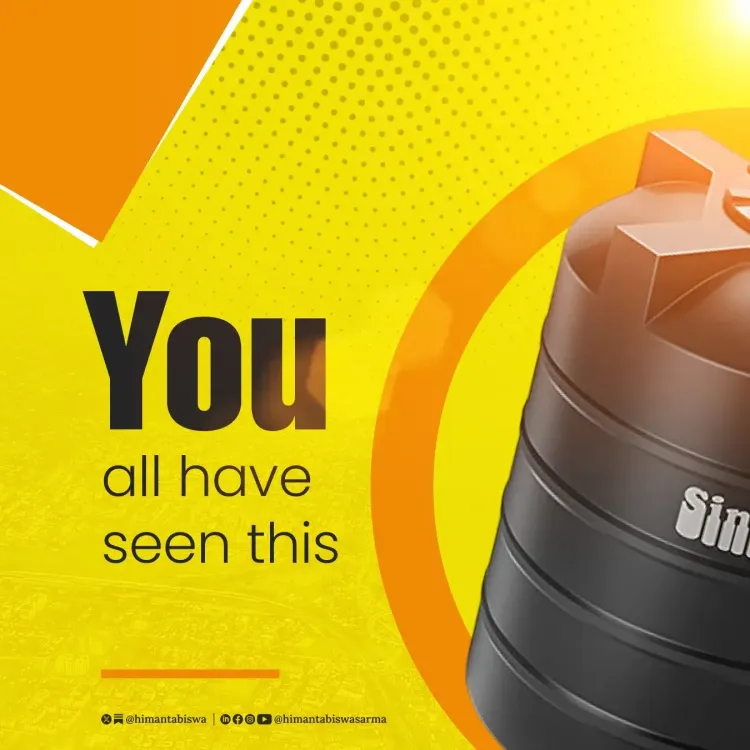
Assam CM Himanta Biswa Sarma announced on 2 November 2026 that Sintex, India's iconic water tank maker, has begun manufacturing in Assam — the latest step in the state's drive to diversify beyond tea, oil, and agriculture and attract broad-spectrum industrial investment.
Key Takeaways
Sintex , a leading Indian water tank and plastics manufacturer, has set up a manufacturing unit in Assam .
CM Himanta Biswa Sarma framed the news under the 'Pin se lekar Plane tak — Come, Manufacture in Assam' pitch on 2 November 2026 .
The announcement aligns with the central government's Make in India (2014) and North East Industrial Development Scheme (2017) frameworks.
Assam is actively diversifying its economy away from traditional dependence on tea, oil, and agriculture .
Sarma signalled further manufacturing investments are in the pipeline with the phrase 'many more to come.'
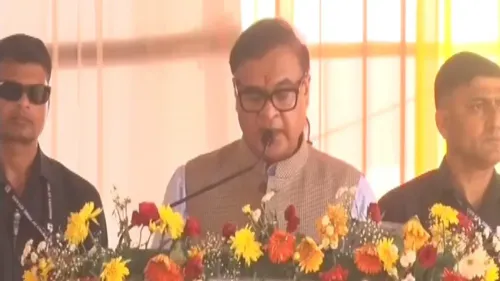
From pins to planes — Assam Chief Minister Himanta Biswa Sarma is making it plain that India's northeast is no longer just tea gardens and oil fields. On Monday, 2 November 2026, Sarma announced on X that Sintex, one of India's most recognised names in water tank and plastics manufacturing, has chosen Assam as its newest production destination.
Sintex plants its flag in the northeast
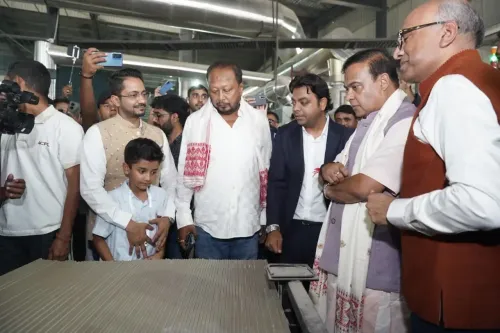
Sintex, a household name synonymous with the ubiquitous black rooftop water tank found across India, is now manufacturing in Assam. CM Sarma framed the announcement with the slogan 'Pin se lekar Plane tak — Come, Manufacture in Assam' ('From pin to plane — Come, Manufacture in Assam'), signalling that the state is open to every rung of the industrial ladder, not just large-scale or high-tech capital. The arrival of a consumer-goods giant like Sintex gives that ambition a concrete, visible symbol.
Sintex's decision matters beyond the factory floor. Water tanks are a volume-intensive, logistics-heavy product — manufacturing them closer to northeast India's fast-growing urban and semi-urban markets cuts freight time and cost, making the Assam unit commercially logical rather than charity-driven. That argument, that northeast geography is a feature and not a bug for certain industries, is exactly the case Sarma has been building.
The policy scaffolding behind the pitch
Assam's industrial push sits on two national pillars. The Make in India initiative, launched in 2014, created the domestic-manufacturing narrative; the North East Industrial Development Scheme (NEIDS), introduced in 2017, added fiscal incentives — tax breaks, capital subsidies, and employment-linked benefits — specifically designed to pull factories into the eight-state region. The BJP-led government in Assam has worked to layer state-level land acquisition, single-window clearance, and industrial park development on top of those central schemes.
Sarma, as convenor of the North-East Democratic Alliance (NEDA), has also leveraged political alignment across most northeast states to project a unified, investor-friendly face to industry. A consistent message from eight governments in a region once known for insurgency and isolation is itself a selling point.
A diversification story decades in the making
Assam's economy has historically rested on three pillars — tea, oil, and agriculture — each vulnerable to global commodity cycles. Successive state governments tried to broaden that base; this administration has tried harder and louder. From semiconductor-adjacent electronics to food processing to now consumer plastics, each announcement adds a data point to the argument that the northeast is no longer a manufacturing blind spot on India's industrial map.
Sarma closed his post with four deliberate words: 'many more to come.' That is not incidental. It is a direct signal to investors watching the Sintex move as a proof of concept — that the first mover found the ground solid enough to build on. The kicker for any boardroom reading between the lines: Assam just became a reference case.
Point of View
Leveraging the North East Industrial Development Scheme's fiscal sweeteners. If the pipeline of announcements Sarma hints at materialises, it would mark a structurally significant break from the northeast's historical marginalisation in India's industrial geography. The risk is that single-factory announcements remain symbolic unless matched by sustained infrastructure upgrades and workforce development at scale.
NationPress
2 Nov 2026
Frequently Asked Questions
What did Assam CM Himanta Biswa Sarma announce about Sintex?
CM Sarma announced on 2 November 2026 that Sintex, the well-known Indian water tank and plastics manufacturer, has established a manufacturing unit in Assam, marking a new chapter in the state's industrial diversification push.
What is the 'Come, Manufacture in Assam' campaign?
'Come, Manufacture in Assam' is CM Himanta Biswa Sarma's investor outreach pitch, summarised by the slogan 'Pin se lekar Plane tak' (from pin to plane), inviting industries of all sizes to set up production in the state.
What government schemes support manufacturing in northeast India?
Two key central government schemes support manufacturing in the northeast: the Make in India initiative launched in 2014, and the North East Industrial Development Scheme (NEIDS) launched in 2017, which provides capital subsidies and tax incentives to industries in the region.
Why is Sintex setting up manufacturing in Assam significant?
Sintex is one of India's most recognised consumer-goods manufacturers, and its decision to produce in Assam signals that the northeast has become commercially viable for volume-driven industries — strengthening the state's case to attract more investors.
How is Assam trying to diversify its economy?
Assam is actively working to reduce dependence on its traditional pillars of tea, oil, and agriculture by attracting manufacturing investment in sectors such as consumer goods, food processing, and electronics under both central and state industrial promotion schemes.