CM Himanta Reviews Assam Power Dept Transmission Roadmap
Synopsis
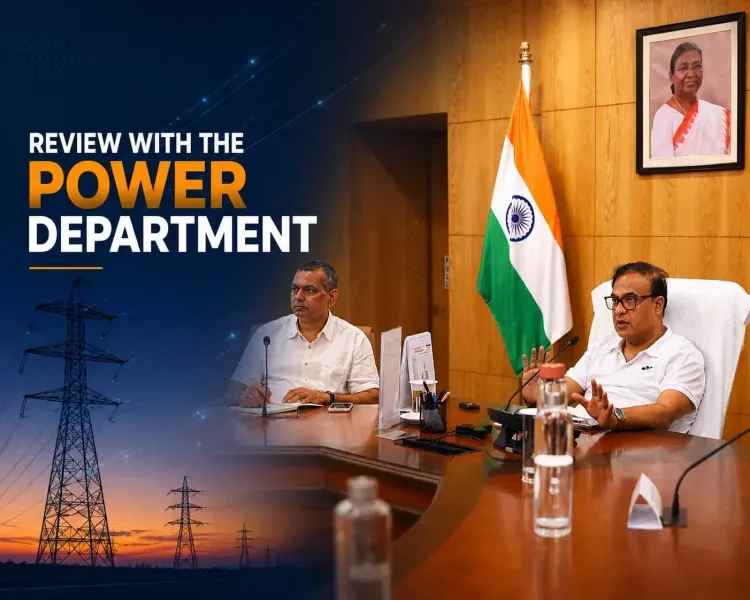
Chief Minister Dr. Himanta Biswa Sarma on 3 July 2026 reviewed the Assam Power Department's roadmap to strengthen the state's transmission network, ensuring reliable power evacuation for upcoming thermal projects and addressing the state's growing energy demand.
Key Takeaways
Himanta Biswa Sarma chaired a review of the Power Department's transmission roadmap on 3 July 2026 .
The roadmap targets reliable power evacuation infrastructure for Assam's upcoming thermal power projects .
The initiative is part of a broader strategy, begun after May 2021 , to reduce Assam's dependence on external power purchases.
Industrial consumers and domestic households across Assam are the primary beneficiaries of a stronger grid.
Key next steps include tendering for new transmission lines and budget allocations to fund grid-strengthening works.
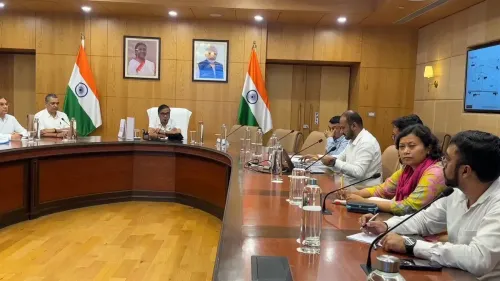
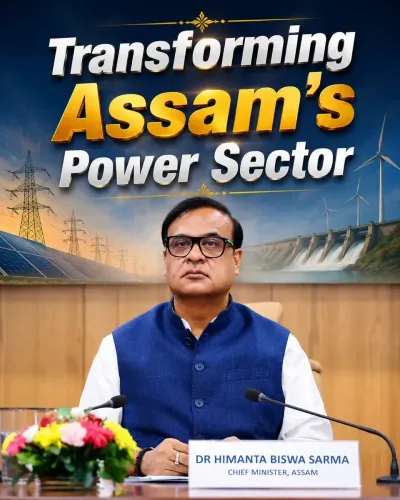
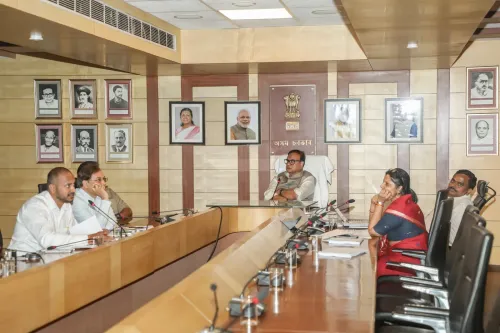
The Chief Minister's Office of Assam announced on Friday, 3 July 2026, that Chief Minister Dr. Himanta Biswa Sarma reviewed the Power Department's strategic roadmap aimed at strengthening the state's electricity transmission network to support upcoming thermal power projects and address Assam's expanding energy requirements.
Context
The review meeting centred on ensuring that Assam's transmission infrastructure keeps pace with new generation capacity coming online. According to the Chief Minister's Office, the roadmap focuses on 'reliable power evacuation for upcoming thermal power projects and meeting the State's growing energy needs.' Transmission bottlenecks have historically limited the effective utilisation of generation capacity across northeastern states, making grid upgrades a prerequisite for any meaningful capacity addition.
Policy Backdrop
Since Dr. Himanta Biswa Sarma assumed office in May 2021, the state government has pursued a dual strategy of expanding generation capacity while simultaneously modernising its transmission and distribution network. Earlier policy announcements from 2021-22 had outlined plans to reduce Assam's dependence on external power purchases by scaling up indigenous capacity. The Power Department sits at the centre of this effort, responsible for planning and executing grid-strengthening works that allow new thermal and renewable units to dispatch electricity reliably to consumers.
This push aligns with national-level programmes that prioritise evacuation infrastructure as the backbone of state-level energy security. Northeastern states, given their geographic remoteness and historically under-built grids, have been identified as priority areas for transmission investment under central schemes.
Stakeholders and Impact
The most immediate beneficiaries of a stronger transmission network are Assam's industrial consumers, whose operations are sensitive to supply interruptions and voltage fluctuations. Domestic households across the state also stand to gain from more reliable supply, particularly in peri-urban and rural areas where load-shedding remains a concern. A robust evacuation corridor for thermal projects would also reduce the state's power-purchase costs over time, potentially easing pressure on electricity tariffs.
The Power Department will be the primary implementing agency, coordinating with central transmission utilities and private contractors for line construction and substation upgrades. Progress on these works will directly determine when new thermal capacity can be commercially dispatched.
What's Next
Attention will now turn to the tendering processes for new transmission lines and substation projects that the reviewed roadmap is expected to trigger. Funding allocations in the next state budget will be a key indicator of the government's timeline and commitment. Progress reports on the linked thermal power projects — whose viability depends on evacuation readiness — will also be closely tracked by energy-sector stakeholders and industrial investors eyeing Assam as a destination.
Point of View
The administration is attempting to pre-empt the evacuation bottlenecks that have stalled capacity additions elsewhere in India. The meeting also reflects a broader political calculus: reliable electricity supply is a visible governance deliverable ahead of any electoral cycle, and infrastructure reviews of this nature serve as accountability milestones. Whether the roadmap translates into on-ground contracts and commissioning timelines will be the real test of intent.
NationPress
4 Jul 2026
Frequently Asked Questions
Why did CM Himanta review the Assam Power Department's roadmap?
CM Himanta Biswa Sarma reviewed the roadmap to ensure Assam's transmission network is strong enough to evacuate power from upcoming thermal projects and meet the state's rising energy demand.
What is power evacuation and why does it matter for Assam?
Power evacuation refers to the transmission of electricity from generation plants to the grid. Without adequate evacuation infrastructure, new thermal plants cannot dispatch power effectively, making transmission upgrades essential before new capacity goes live.
What are Assam's upcoming thermal power projects?
The Chief Minister's Office referenced upcoming thermal power projects in the context of the transmission review, but specific project names and capacities have not been officially disclosed in this announcement.
How does this fit into Assam's broader energy policy?
Since 2021, the Assam government has pursued a strategy of expanding generation capacity and modernising its grid to reduce dependence on external power purchases, and this review is a continuation of that policy direction.
What should we watch for next on Assam's power transmission plans?
Key developments to watch include tendering for new transmission lines, funding allocations in the next state budget, and official updates on the timelines of the linked thermal power projects.