CM Himanta Signs Deal for Proton Beam Therapy Centre in Guwahati
Synopsis
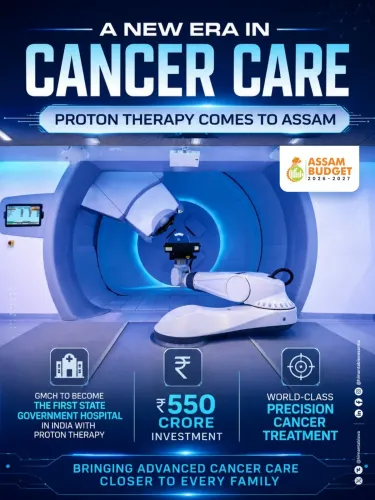
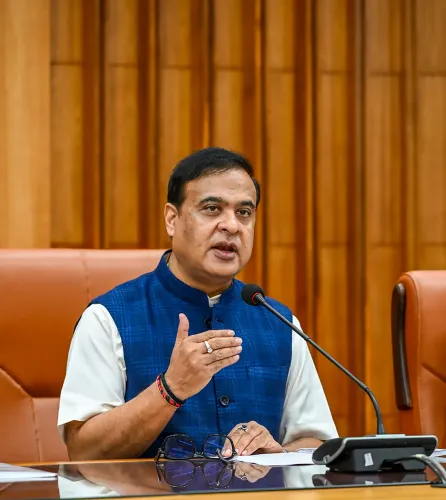
Assam Chief Minister Himanta Biswa Sarma announced on 31 October 2026 the signing of an agreement to establish a Proton Beam Therapy Centre in Guwahati — a precision cancer treatment facility that would be a first for Northeast India and reduce patient outflow to distant metros.
Key Takeaways
Assam CM Himanta Biswa Sarma announced the signing of an agreement to establish a Proton Beam Therapy Centre in Guwahati on 31 October 2026 .
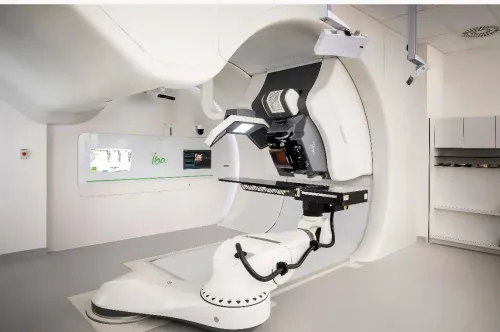
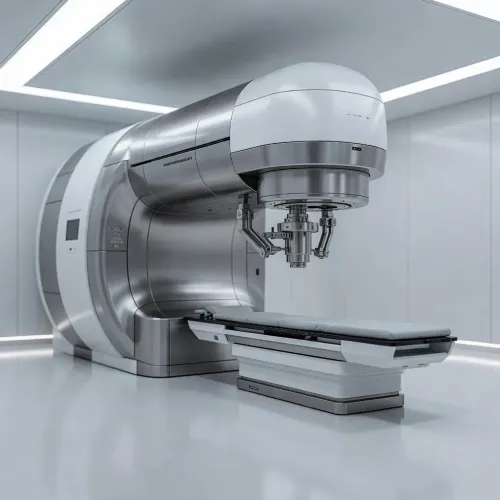
Proton beam therapy is a high-precision form of radiotherapy that minimises damage to healthy tissue surrounding a tumour.
Guwahati already hosts an AIIMS campus and multiple state-funded super-specialty blocks, cementing its role as the Northeast's medical hub.
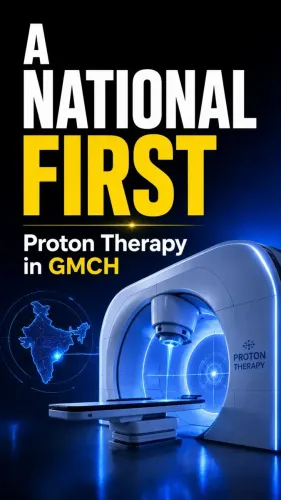
Existing proton therapy infrastructure in India has largely been limited to Maharashtra and Tamil Nadu ; this facility would extend access to the Northeast.
Key variables ahead include agreement partner details, funding structure, equipment procurement, and recruitment of trained radiation oncologists and medical physicists.
Cancer patients across Assam, Meghalaya, Nagaland, Manipur and other Northeast states stand to benefit from reduced need to travel for advanced care.
A new chapter in oncology care for India's Northeast opened on Saturday, 31 October 2026, when Assam Chief Minister Himanta Biswa Sarma announced the signing of an agreement to establish a Proton Beam Therapy Centre in Guwahati — a move that could fundamentally alter where cancer patients from the region go for treatment.
What proton therapy means for Northeast cancer patients
Proton beam therapy is among the most precise forms of radiation oncology available today. Unlike conventional radiotherapy, which deposits energy as beams pass through the body, proton therapy delivers the bulk of its dose directly at the tumour — sparing surrounding healthy tissue, reducing side effects, and making it especially valuable for paediatric cancers and tumours near critical structures like the brain or spine.
For decades, patients in Assam and neighbouring Northeast states requiring this level of care had little choice but to travel thousands of kilometres to cities like Chennai or Mumbai — a financial and logistical burden that often delayed or disrupted treatment. A facility anchored in Guwahati, the region's largest city, changes that calculus entirely.
Guwahati's growing role as a medical hub
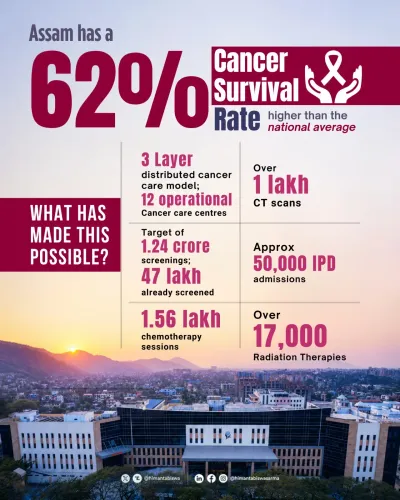
Guwahati has steadily emerged as the Northeast's premier destination for advanced medical care. The city already hosts an AIIMS campus, and the Assam government has, since 2016, pushed successive rounds of investment in new medical colleges and super-specialty blocks under state health missions — each intended to reduce the region's dependence on distant metros.
The proton therapy centre, if realised on schedule, would represent the single most technologically sophisticated addition to that infrastructure yet. Proton beam facilities demand not only capital-intensive cyclotron or synchrotron equipment but a rare cohort of trained medical physicists and radiation oncologists — making the recruitment and training pipeline a critical variable to watch alongside civil works and equipment procurement.
Where Assam fits in India's proton therapy map
India has moved cautiously on proton therapy infrastructure. Existing or planned centres have largely been concentrated in Maharashtra and Tamil Nadu — states with deeper private-sector healthcare ecosystems. The Guwahati agreement, if it proceeds, would mark a deliberate push to extend that frontier into a part of the country that has historically been underserved by super-specialty oncology.
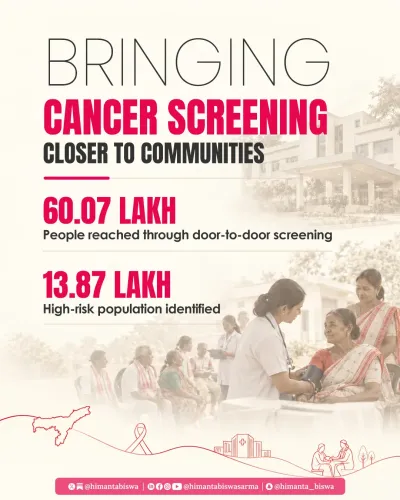
National cancer control programmes have increasingly flagged the Northeast as a priority zone, given the region's elevated incidence of certain cancers — particularly those linked to tobacco and dietary risk factors. State-level investment of this scale, paired with potential central support, could meaningfully reduce outward patient migration from Assam, Meghalaya, Nagaland, Manipur and beyond.
The details that matter most now — the agreement partners, funding architecture, equipment timelines, and when the first patient might walk through those doors — remain to be officially disclosed. But the direction is unmistakable. Guwahati is being built into a place where the Northeast's most complex cancer cases stay home.
Point of View
From education to healthcare, in a bid to reduce the region's chronic dependence on metros. For the BJP in the Northeast, tangible super-specialty infrastructure is both a governance deliverable and a political signal to a population that has long felt medically marginalised. The harder test will come at execution: proton therapy centres are among the most operationally demanding medical facilities to run, and the Northeast's shortage of trained oncology specialists means the agreement is only the opening move in a long game.
NationPress
31 Oct 2026
Frequently Asked Questions
What is a Proton Beam Therapy Centre and why is it significant?
A Proton Beam Therapy Centre delivers precision radiotherapy using protons rather than conventional X-rays, allowing the bulk of the radiation dose to be deposited directly at a tumour while sparing surrounding healthy tissue. It is particularly effective for paediatric cancers and tumours near sensitive structures. For the Northeast, which currently lacks such a facility, it represents a major upgrade in cancer care access.
Where will Assam's Proton Beam Therapy Centre be located?
The centre is planned for Guwahati , the largest city in Assam and the Northeast's primary medical hub, which already hosts an AIIMS campus and several state super-specialty hospitals.
When was the agreement for the Guwahati Proton Beam Therapy Centre signed?
Chief Minister Himanta Biswa Sarma announced the signing of the agreement on 31 October 2026 .
Which states in Northeast India will benefit from this proton therapy facility?
Cancer patients from across the Northeast — including Assam, Meghalaya, Manipur, Nagaland and other states in the region — currently travel to distant metros for advanced oncology care. A Guwahati-based facility would bring precision treatment closer to home for all of them.
Does India have other Proton Beam Therapy Centres?
India has seen proton therapy facilities established or planned primarily in Maharashtra and Tamil Nadu . The Guwahati centre, if completed, would mark the first such facility in the northeastern region.