CM Himanta Targets Power Surplus Future for Assam

Synopsis
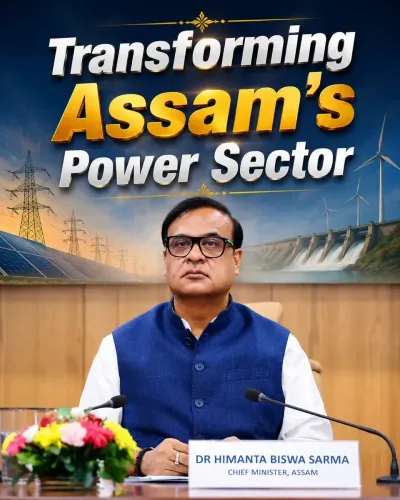
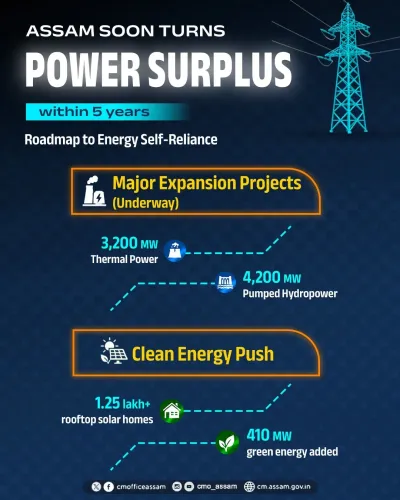
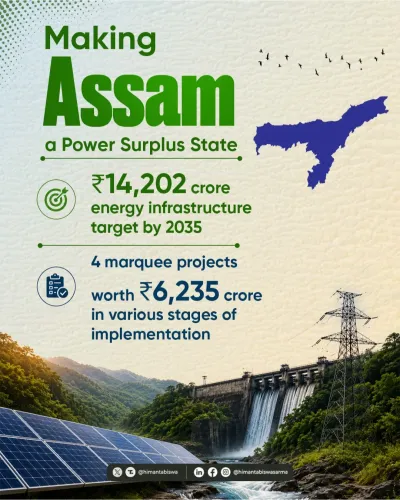
Assam Chief Minister Himanta Biswa Sarma has declared the state's commitment to achieving power-surplus status as peak electricity demand is projected to exceed 3,000 MW in 2026, with plans to expand generation, storage and diversified energy sources to fuel the state's next growth phase.
Key Takeaways
Assam's peak power demand is expected to exceed 3,000 MW in 2026 , according to CM Himanta Biswa Sarma's announcement on 1 July 2026 .
The state government has committed to building a power-surplus Assam by expanding generation and storage capacity.
The strategy involves harnessing diverse energy sources , including renewables, to reduce dependence on any single fuel type.
Assam's push aligns with India's national target of 500 GW of non-fossil fuel power capacity by 2030 .
Key beneficiaries include industrial units, urban households and renewable energy developers operating in the state.
Commissioning timelines for new projects and allocations in Assam's next state budget will be critical milestones to watch.
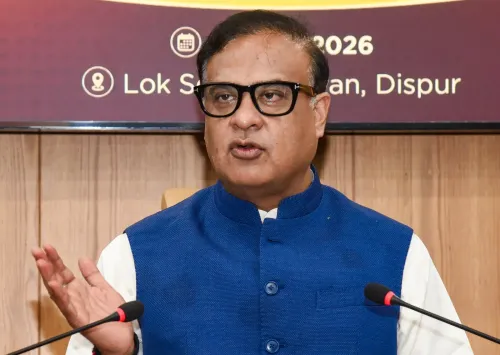
Assam Chief Minister Himanta Biswa Sarma on Wednesday, 1 July 2026, declared that the state is committed to becoming a power-surplus entity as peak electricity demand is expected to cross 3,000 MW this year. The announcement signals an accelerated push to expand generation, storage and diversified energy sources to sustain the state's next phase of economic growth.
Context
Assam has historically grappled with power deficits that have constrained industrial expansion and urban development in the northeastern region. Chief Minister Sarma's post, captioned 'Lights on, Assam,' frames the 3,000 MW demand milestone not as a burden but as a marker of growth — one the state intends to meet and surpass through supply-side investment.
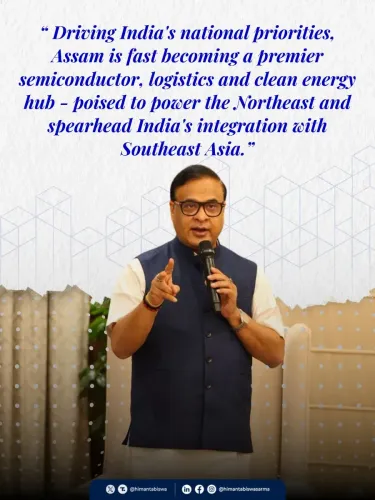
The Chief Minister stated that the government is 'expanding generation and storage capacity and harnessing diverse energy sources' to prepare Assam for its next phase of growth. The framing positions energy security as a prerequisite for attracting manufacturing investment and sustaining urbanisation.
Policy Backdrop
The push for power surplus in Assam sits within a longer arc of central-state coordination on northeastern energy infrastructure. Since 2014, the Northeast has received focused attention on hydro, gas and solar projects to address decades of structural under-capacity. The Ujwal DISCOM Assurance Yojana (UDAY), launched in 2015, aimed to restructure distribution companies in states including Assam, laying the financial groundwork for capacity addition.
At the national level, India has set a target of 500 GW of non-fossil fuel power capacity by 2030, and northeastern states are expected to contribute through hydro and renewable projects. Assam's stated ambition of a power-surplus status aligns directly with that national trajectory, combining conventional generation with battery and pumped-storage solutions.
Stakeholders and Impact
Industrial units across Assam stand to benefit most immediately from a reliable, surplus power supply, as uninterrupted electricity is a key determinant of investment decisions. Urban households, which have seen demand rise with rising incomes and appliance penetration, would see improved reliability and reduced outage hours.
Renewable energy developers are also key stakeholders: the state's intent to harness 'diverse energy sources' opens procurement opportunities in solar, small hydro and energy storage. The Ministry of Power in New Delhi is a critical enabler, as central scheme allocations and grid-interconnection approvals remain essential for northeastern states to move new capacity from planning to commissioning.
What's Next
The immediate focus will be on commissioning timelines for new generation and battery storage projects that the state government has indicated are in the pipeline. Any power-sector allocations in Assam's next state budget or revisions to central schemes for the Northeast will be closely watched as concrete indicators of follow-through.
If Assam achieves power-surplus status, it could position the state as a net exporter of electricity to neighbouring northeastern states — a development that would strengthen CM Sarma's role as convenor of the North-East Democratic Alliance (NEDA) and reinforce the region's collective energy security. The trajectory of demand growth past 3,000 MW will ultimately determine whether supply additions keep pace with Assam's broader economic ambitions.
Point of View
000 MW, the Chief Minister sets a measurable benchmark that will be scrutinised as project timelines unfold. The emphasis on storage and diverse sources reflects a broader national shift away from sole reliance on hydro in the Northeast, a diversification that reduces vulnerability to seasonal and climate disruptions. If delivered, a power-surplus Assam would materially strengthen the state's standing within NEDA and its appeal to manufacturers scouting locations beyond India's congested western industrial corridors.
NationPress
1 Jul 2026
Frequently Asked Questions
What is Assam's peak power demand in 2026?
Assam's peak power demand is expected to exceed 3,000 MW in 2026, according to Chief Minister Himanta Biswa Sarma's statement on 1 July 2026.
What is CM Himanta Biswa Sarma's plan for Assam's power sector?
CM Sarma has committed to making Assam a power-surplus state by expanding generation and storage capacity and harnessing diverse energy sources including renewables.
How does Assam's power plan fit India's national energy targets?
Assam's push for surplus power aligns with India's national goal of achieving 500 GW of non-fossil fuel capacity by 2030 , with the Northeast receiving coordinated central-state investment in hydro, gas and solar projects.
Who benefits from Assam becoming a power-surplus state?
Key beneficiaries include industrial units seeking reliable electricity for manufacturing, urban households facing outages, and renewable energy developers who can tap new procurement opportunities in the state.
What schemes support Assam's electricity infrastructure?
The Ujwal DISCOM Assurance Yojana (UDAY) , launched in 2015, helped restructure Assam's power distribution companies, providing a financial foundation for subsequent capacity addition efforts.