CM Rio urges Nagaland households to join Census 2026
Synopsis
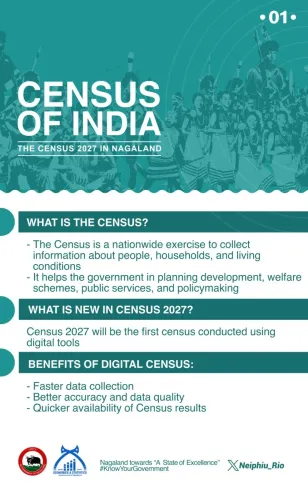
Nagaland Chief Minister Neiphiu Rio on 1 July 2026 publicly urged residents to participate in the Houselisting and Housing Census, the first phase of India's long-delayed decennial census. Accurate data, he said, is vital for planning and development decisions across the state.
Key Takeaways
Nagaland CM Neiphiu Rio issued a public appeal on 1 July 2026 urging all households to participate in the Houselisting and Housing Census .
The exercise is the first phase of India's decennial census, cataloguing housing conditions, amenities and household assets.
India's last completed census was in 2011 ; the 2021 Census was indefinitely postponed due to the COVID-19 pandemic .
The census is conducted by the Office of the Registrar General of India under the Ministry of Home Affairs .
Accurate enumeration in Nagaland is critical for central resource allocation, constituency delimitation and tribal welfare schemes under Article 371A .
The population enumeration phase is expected to follow once houselisting concludes.
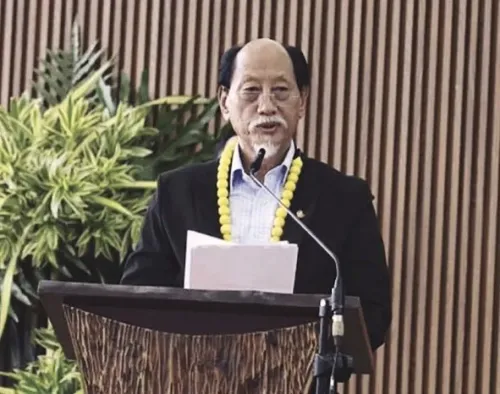
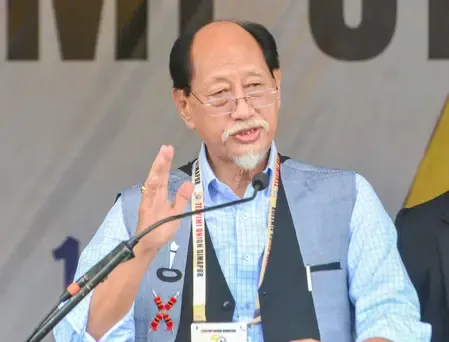
Nagaland Chief Minister Neiphiu Rio on Wednesday, 1 July 2026, called on every household in the state to participate in the Houselisting and Housing Census as the first phase of India's long-delayed decennial census got underway. Rio urged residents to furnish accurate information to census officials, stressing that the data would underpin future planning and development decisions.
Context
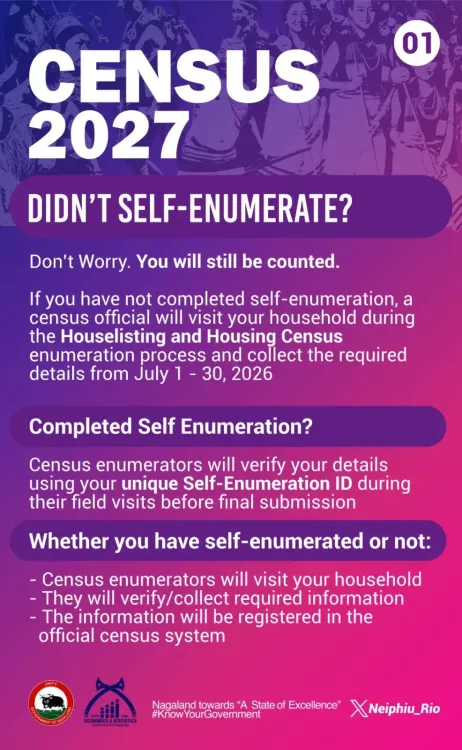
Posting on X with the hashtag #OurCensus, Rio wrote: 'I urge every household to participate in this exercise and provide accurate info. to the census officials. Your participation will help create reliable data for better planning, dev., and informed decisions for the future.' The appeal came as census officials began visiting homes across Nagaland to record housing stock, household amenities and assets — the preparatory phase that precedes the main population count.
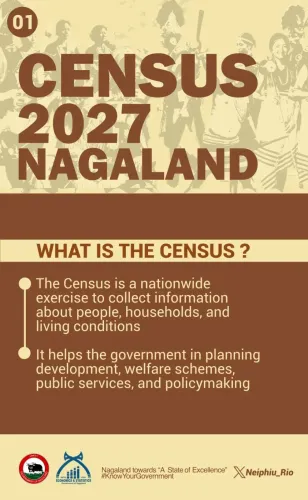
The Houselisting and Housing Census is the first of two phases in India's decennial census. It catalogues the physical condition of dwellings, access to basic amenities such as water and sanitation, and the assets held by households. The data gathered at this stage forms the foundation for the population enumeration phase that follows.
Policy Backdrop
India's last completed decennial census was conducted in 2011, with its houselisting phase carried out in 2010. The 2021 Census, notified by the Government of India in 2019, was indefinitely postponed due to the COVID-19 pandemic, creating a gap of well over a decade in the country's foundational demographic dataset. The exercise is conducted by the Office of the Registrar General of India under the Ministry of Home Affairs.
Census data carries particular weight in India's northeastern states. In Nagaland, which holds special constitutional status under Article 371A and has a predominantly tribal population, accurate enumeration is critical for determining resource allocation from the centre, delimitation of constituencies, and the design of targeted welfare schemes for tribal communities. Northeastern states have periodically raised concerns about enumeration methodology and the accuracy of demographic figures used for both political and developmental purposes.
Stakeholders and Impact
For Nagaland's state planning departments, reliable census data is essential to calibrate infrastructure investment, healthcare provisioning and educational outreach across its hilly, dispersed settlements. Inaccurate or incomplete data risks skewing central transfers and scheme coverage, with consequences felt most acutely in remote tribal villages.
Rio's public appeal is aimed at addressing a persistent challenge in census exercises across the Northeast: low participation and reluctance among some communities to engage with government enumeration. By framing participation as a civic act that directly benefits future development, the Chief Minister is seeking to build community trust in the process ahead of the more comprehensive population enumeration phase.
What's Next
Once the Houselisting and Housing Census phase concludes, the Office of the Registrar General of India is expected to announce the schedule for the main population enumeration. State governments, including Nagaland's, will be closely watched for any additional directives on data privacy, community outreach or special provisions for enumeration in remote and conflict-sensitive areas. The quality of data collected in this first phase will directly shape the reliability of the population count that follows — and, by extension, Nagaland's share of central resources for the decade ahead.
Point of View
Informed decisions — the Chief Minister is attempting to reframe enumeration as an entitlement, not an intrusion. The move also signals that the state government is aligning closely with the Centre's push to finally complete a census cycle that is nearly five years overdue. How effectively Nagaland's administration converts this appeal into ground-level compliance will be a test of the NDPP government's administrative reach in remote tribal areas.
NationPress
1 Jul 2026
Frequently Asked Questions
What is the Houselisting and Housing Census in India?
The Houselisting and Housing Census is the first phase of India's decennial census, in which officials visit homes to record the condition of dwellings, access to amenities like water and sanitation, and household assets. This data forms the basis for the subsequent population enumeration phase.
Why has India's census been delayed?
India's 2021 Census was notified in 2019 but was indefinitely postponed due to the COVID-19 pandemic. As a result, the country has been without updated decennial census data since the 2011 census, a gap of well over a decade.
Why is the census important for Nagaland?
Census data determines how central funds, welfare schemes and infrastructure investment are allocated to states. For Nagaland, which has a predominantly tribal population and special constitutional status under Article 371A, accurate enumeration is critical to ensuring the state receives its fair share of resources.
What did Nagaland CM Neiphiu Rio say about the census?
CM Neiphiu Rio urged every household in Nagaland to participate in the Houselisting and Housing Census and provide accurate information to census officials. He said participation would help create reliable data for better planning, development and informed decisions for the future.
What happens after the Houselisting and Housing Census?
Once the houselisting phase concludes, the Office of the Registrar General of India is expected to schedule the main population enumeration phase, during which the actual headcount and detailed demographic data collection takes place.