South Korea reviews OPCON transfer progress, eyes 2030 deadline
Synopsis
South Korea's defence ministry is pushing hard to reclaim wartime operational control from the US before 2030 — but a quiet gap has emerged with Washington over the pace. With FOC verification underway and four of six combined command components already restructured, the alliance's command architecture is shifting in real time, even as the two sides negotiate the road map.
Key Takeaways
South Korea's defence ministry reviewed OPCON transfer progress on 1 July 2025 , targeting completion before President Lee Jae Myung's term ends in 2030 .
Defence Minister Ahn Gyu-back committed to quarterly reviews and described restoring wartime control as a 'historic mission.' Seoul is currently in the second (FOC) phase of a three-stage assessment required for the transfer.
Four of six CFC component commands — including air, ground, and naval — have transitioned to permanent standing units.
A bilateral road map with Washington is being drafted, with Seoul aiming to finalise it before the Security Consultative Meeting in October .
South Korea has not held wartime OPCON since the 1950–53 Korean War ; peacetime control was reclaimed in 1994 .
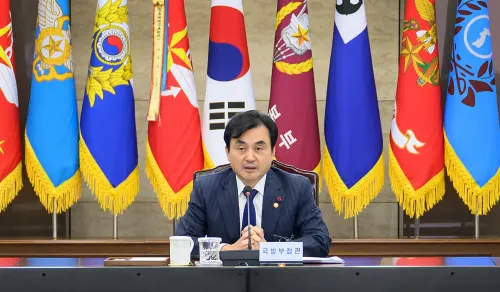
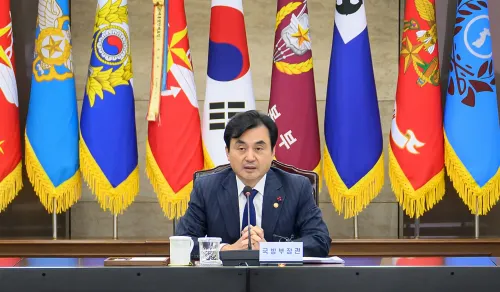
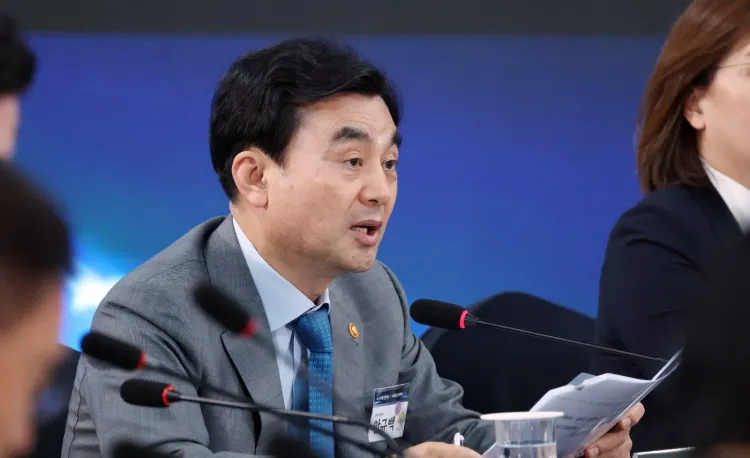
South Korea's defence ministry on Wednesday, 1 July convened a high-level review of Seoul's push to complete the verification of Full Operational Capability (FOC) within this year, accelerating its bid to reclaim wartime operational control (OPCON) from the United States. The meeting signals growing urgency in Seoul to close a decades-old chapter in the alliance's command structure before President Lee Jae Myung's five-year term expires in 2030.
What the Review Covered
The session, presided over by Defence Minister Ahn Gyu-back, assessed Seoul's standing in the second phase of a three-stage assessment programme required for the OPCON transition. FOC represents the second stage of that framework, evaluating South Korea's readiness to lead the allies' combined forces in a wartime scenario. Minister Ahn has committed to holding such quarterly reviews throughout this year as part of a structured push to meet the transition timeline.
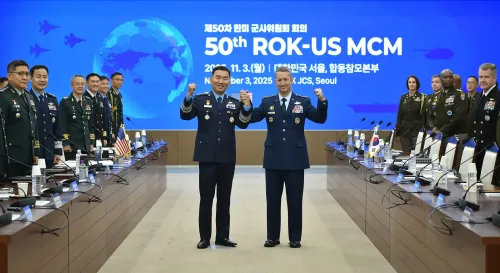
The meeting also took stock of progress on drafting a bilateral road map with Washington, which Seoul hopes to finalise before the defence chiefs of both countries convene at the annual Security Consultative Meeting (SCM) in October.
The Seoul-Washington Gap
The review comes amid what officials describe as a potential divergence between the two allies over timing. Seoul has sought to accelerate the transfer, while the US side has emphasised that all agreed conditions must be fully met before any handover. This tension — between political will in Seoul and procedural caution in Washington — is shaping the pace of the transition.
Notably, this is not the first time the timeline has been a point of friction. The OPCON transfer has been discussed, deferred, and renegotiated multiple times since the early 2000s, making Wednesday's review part of a longer pattern of incremental progress.
Combined Forces Command Restructuring
Wednesday's session also covered the military's progress in converting the special operations command of the South Korea-US Combined Forces Command (CFC) into a permanent standing unit — a structural change planned for completion within the year. Four of the six component commands, including air, ground, and naval components, have already completed their transition into standing units within the CFC structure.
The shift is significant: component commands previously activated only during contingency operations will now allow American troops to be regularly assigned to combined combat staff, enabling joint planning for operations and large-scale exercises on a continuous basis.
Historical Context
South Korea transferred operational control of its forces to the US-led UN Command during the 1950–53 Korean War. Control subsequently moved to the combined CFC when that command was established in 1978. Seoul recovered peacetime OPCON in 1994, but wartime operational control has remained with the United States ever since — a span of more than three decades.
What the Minister Said
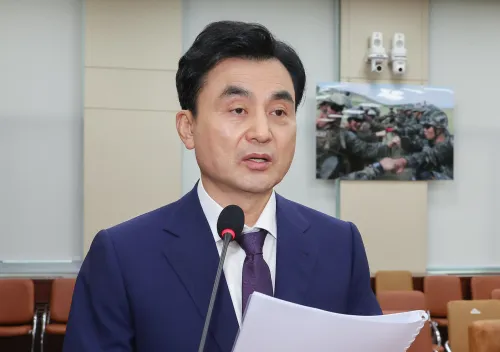
'Through the military's strenuous efforts over the past 20 years, the military and policy conditions, along with public support, are now in place to restore OPCON immediately,' Ahn said, calling on the military to work together to accomplish what he described as a 'historic mission.' The meeting also examined ways to strengthen the integrity of a South Korea-led joint defence posture once wartime control is repatriated.
Point of View
Deferred repeatedly, and renegotiated across multiple administrations — which means Seoul's current urgency must be read against a long record of missed timelines. The real variable is Washington: the US has consistently insisted on conditions being 'fully met,' a standard that can be raised or lowered depending on alliance politics and the security environment on the peninsula. With four of six CFC components restructured and FOC verification underway, the operational groundwork is closer to complete than at any prior point. But the road map itself remains unfinished, and the SCM in October is the next real test of whether the two allies are actually aligned or merely managing a visible gap with diplomatic language.
NationPress
29 Sept 2026
Frequently Asked Questions
What is OPCON and why does South Korea want it back?
OPCON, or wartime operational control, is the authority to command combined South Korean and US forces during a conflict. South Korea transferred this control to the US-led UN Command during the 1950–53 Korean War and has not held it since, making its return a long-standing national sovereignty goal.
What is Full Operational Capability (FOC) in this context?
FOC is the second of three assessment stages South Korea must pass to qualify for the OPCON transfer. It evaluates Seoul's ability to lead combined allied forces in a wartime scenario. South Korea is currently undergoing this second-phase verification.
Is there a disagreement between Seoul and Washington over the OPCON transfer?
Officials have flagged a potential gap between the two allies over timing. Seoul is pushing to accelerate the transfer within President Lee Jae Myung's term ending in 2030, while the US side has emphasised that all agreed conditions must be fully met before any handover.
What is the Security Consultative Meeting (SCM) and why does it matter here?
The SCM is the annual meeting of the defence ministers of South Korea and the United States. Seoul hopes to finalise its bilateral OPCON road map with Washington before the SCM in October 2025, making it a key near-term milestone for the transfer process.
How far along is the Combined Forces Command restructuring?
Four of the six CFC component commands — including air, ground, and naval components — have already transitioned into permanent standing units. The special operations command is expected to complete its own transition to a standing unit within the year.