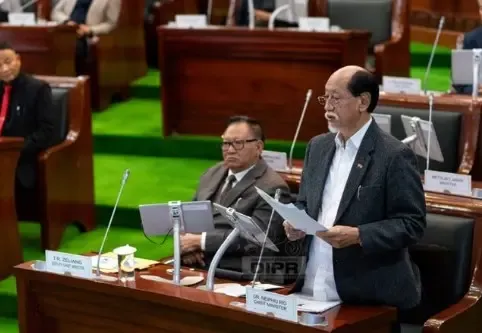
Nagaland CM Rio urges Naga unity, accurate Census 2027 ahead of enumeration
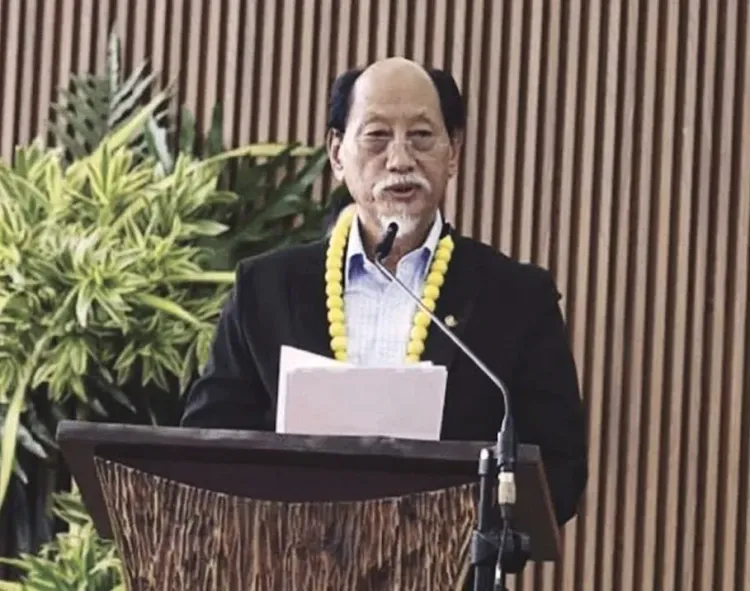
Synopsis
Nagaland CM Neiphiu Rio used the inauguration of Kohima Village's multipurpose hall to deliver a pointed political message: Census 2027 must not repeat the inflated figures that led Nagaland to reject the 2001 count. With indigenous identity, resource allocation, and welfare schemes all hanging on accurate enumeration, Rio is mobilising village councils, churches, and tribal bodies to treat the census as a matter of collective survival — not paperwork.
Key Takeaways
Nagaland CM Neiphiu Rio on 26 June called for Naga unity and accurate participation in Census 2027 at the inauguration of the Kohima Village Multipurpose Hall .
Nagaland rejected the 2001 Census over inflated population figures; the 2011 Census recorded a population decline.
Rio clarified that indigenous status under the RIIN is reserved for native Naga communities, with village councils as the certifying authority.
Nagaland is protected by Article 371(A) of the Constitution and is exempt from the 73rd Constitutional Amendment due to its traditional governance system.
The multipurpose hall was funded through the Ministry of Tribal Affairs with additional state government support.
Rio urged youth to access collateral-free loans, skill development, and entrepreneurship schemes to reduce dependence on migrant labour.
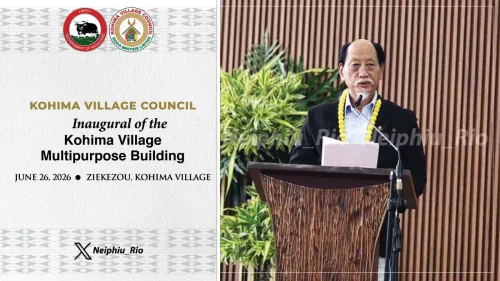
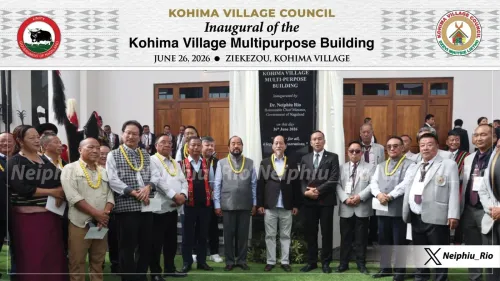
Nagaland Chief Minister Neiphiu Rio on Friday, 26 June called for solidarity among Naga communities, the protection of indigenous identity, and collective responsibility in ensuring an honest and credible Census 2027, warning that inaccurate data could harm the state's demographic and socio-economic interests for decades. He was speaking at the inauguration of the Kohima Village Multipurpose Hall at Ziekezou, Kohima Village.
A Landmark Hall for All Naga Communities
Rio described the newly inaugurated multipurpose hall as more than a village asset — he called it a shared platform for all Naga communities and organisations to foster unity, goodwill, and brotherhood. The project was funded through the Ministry of Tribal Affairs with additional support from the state government.
Congratulating the Kohima Village Council, Rio credited the project's successful completion to the village's collective spirit, dedication, and prudent use of government funds. He also shared a personal connection with Kohima, recalling that his family relocated to the town during the insurgency in the mid-1950s and that deep bonds — including friendships and intermarriage — had developed over the years.
He praised Kohima Village for its inclusive character, noting that its welcoming attitude towards people from diverse backgrounds had contributed to its recognition as what is regarded as the largest indigenous village in Asia.
Constitutional Safeguards and Traditional Governance
Rio highlighted Nagaland's unique constitutional protections, noting that the British administration had recognised the distinct identity, customs, and self-governance systems of the Nagas through the Bengal Eastern Frontier Regulation, 1873, which introduced the Inner Line Permit (ILP) system. These protections, he said, continue today under Article 371(A) of the Constitution of India.
The Chief Minister also underscored the importance of village councils, pointing out that Nagaland was exempted from the 73rd Constitutional Amendment owing to its traditional system of local governance. Village councils, he explained, function through consensus-based selection rather than electoral contests — a mechanism that preserves unity and prevents internal divisions.
Indigenous Identity and the RIIN Exercise
On the Registration of Indigenous Inhabitants of Nagaland (RIIN), Rio said the exercise was introduced to protect the rights of indigenous Nagas after instances in which indigenous certificates had allegedly been issued to non-Nagas. He clarified that while Indian citizens from other communities are free to reside and work in Nagaland, indigenous status is reserved exclusively for native Naga communities, with village councils remaining the competent authority to certify indigenous inhabitants.
Rio also stressed the need to regulate the influx of migrant workers while simultaneously equipping local youth with skills to access employment. He encouraged young people to utilise government-supported skill development programmes, entrepreneurship schemes, collateral-free loans, and interest subsidies.
Census 2027: Correcting a Troubled History
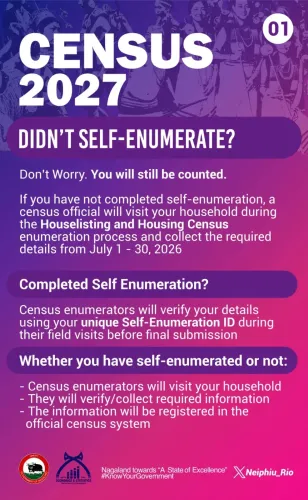
Turning to Census 2027, Rio urged all sections of society — including village councils, churches, tribal hohos, urban local bodies, civil society organisations, and community leaders — to ensure the upcoming enumeration is conducted honestly and accurately.
He recalled that Nagaland had rejected the 2001 Census due to abnormal population growth figures caused by inflated enumeration, while the 2011 Census recorded a population decline. Rio said inaccurate census data had adversely affected planning, resource allocation, education, and welfare schemes in the state.
'The data we provide today will determine the future of our children for decades to come,' Rio said, appealing for active public participation in the census process. With Census 2027 approaching, the Chief Minister's call signals that Nagaland's political and community leadership intends to treat accurate enumeration as a matter of state interest, not merely administrative routine.
Point of View
Including the rejected 2001 count and the anomalous 2011 decline, reflects deep anxieties about demographic manipulation in a state where population figures directly determine political representation and resource flows. The mobilisation of village councils, churches, and tribal hohos as census watchdogs is an attempt to institutionalise community accountability where state machinery has previously failed. What remains unaddressed is the structural tension between regulating migrant influx and the state's dependence on outside labour — a contradiction that accurate enumeration alone cannot resolve.
NationPress
25 Sept 2026
Frequently Asked Questions
Why is Census 2027 significant for Nagaland?
Census 2027 is critical for Nagaland because inaccurate population data has historically distorted resource allocation, welfare schemes, and educational planning in the state. Nagaland rejected the 2001 Census over inflated figures, and the 2011 Census recorded an unusual population decline — making accurate enumeration a longstanding political and administrative priority.
What is the Registration of Indigenous Inhabitants of Nagaland (RIIN)?
The RIIN is an exercise introduced to protect the rights of indigenous Nagas after indigenous certificates were allegedly issued to non-Nagas. Under the RIIN framework, village councils are the competent authority to certify indigenous status, which is reserved exclusively for native Naga communities.
What constitutional protections does Nagaland have for its indigenous identity?
Nagaland's indigenous identity is protected under Article 371(A) of the Constitution of India, which grants special provisions to the state. The Inner Line Permit system, rooted in the Bengal Eastern Frontier Regulation of 1873, also restricts outsider settlement, and Nagaland is exempt from the 73rd Constitutional Amendment due to its traditional village council governance.
What is the Kohima Village Multipurpose Hall and who funded it?
The Kohima Village Multipurpose Hall at Ziekezou, Kohima Village, was inaugurated on 26 June as a shared facility for all Naga communities and organisations. It was funded primarily through the Ministry of Tribal Affairs, with additional financial assistance from the Nagaland state government.
What did CM Rio say about migrant workers and local youth employment?
Rio stressed the need to regulate the influx of migrant workers into Nagaland while simultaneously equipping local youth with skills to fill employment gaps. He encouraged young people to utilise government-backed skill development programmes, entrepreneurship schemes, collateral-free loans, and interest subsidies.