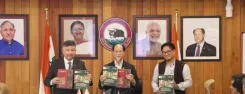
CM Rio Thanks Centre for Multipurpose Hall in Nagaland
Synopsis
Nagaland Chief Minister Neiphiu Rio publicly thanked the Ministry of Tribal Affairs for funding a Multipurpose Hall set to serve as a shared civic space for Naga communities, reinforcing unity and brotherhood across the state's diverse tribes.
Key Takeaways
CM Neiphiu Rio thanked the Ministry of Tribal Affairs on June 26, 2026 for supporting construction of a Multipurpose Hall in Nagaland.
The hall is described as a 'shared space for all' aimed at strengthening unity and brotherhood among Naga society .
The Ministry of Tribal Affairs , established in 1999 , funds community infrastructure for Scheduled Tribes across India under its core mandate.
Article 275(1) of the Constitution has underpinned central grants for tribal welfare infrastructure since 1951 .
The project reflects continued central government engagement with Nagaland 's development alongside the ongoing Naga peace process.
Exact location, cost, and completion timeline of the hall have not been officially disclosed.
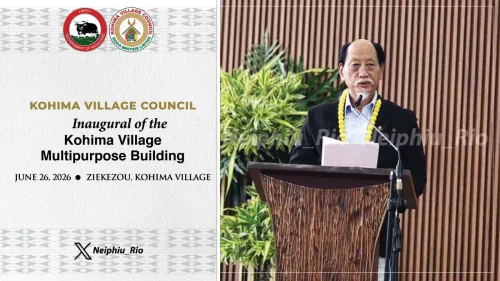
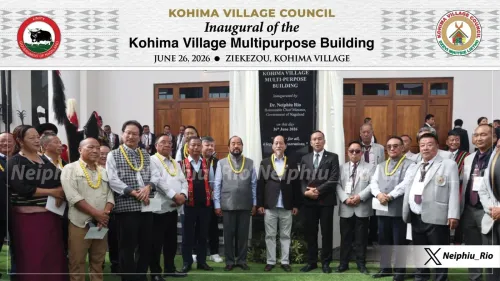
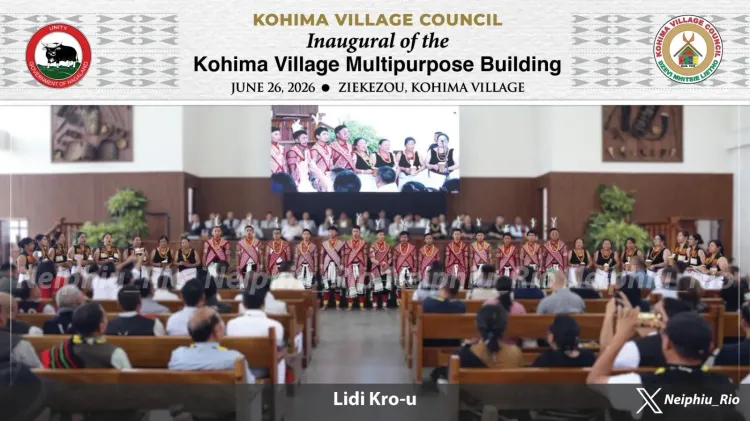
Nagaland Chief Minister Neiphiu Rio on Friday, June 26, 2026, publicly thanked the Ministry of Tribal Affairs for its support in constructing a Multipurpose Hall intended to serve as a shared community space for Naga society, reinforcing themes of unity and brotherhood among the state's diverse tribal communities.
Context
Replying to a post by AIR News Kohima, CM Rio stated: 'I thank the Ministry of Tribal Affairs for the support extended towards the construction of this Multipurpose Hall, which will serve as a shared space for all while strengthening the unity and brotherhood of our Naga society.' The remark signals formal acknowledgement of central funding for a community infrastructure project in the state.
Nagaland, a northeastern state established in 1963, is home to multiple Naga tribes whose social fabric has historically been shaped by both inter-tribal relations and a decades-long peace process with the central government. Community infrastructure of this nature carries significance beyond its physical utility.
Policy Backdrop
The Ministry of Tribal Affairs, established in 1999, oversees welfare, development, and rights of Scheduled Tribes across India. Its mandate includes funding community infrastructure in tribal-majority areas, balancing cultural preservation with integration and development.
Such projects draw on a long constitutional lineage: Article 275(1) of the Constitution has provided central grants since 1951 for tribal welfare infrastructure in states including Nagaland. Successive central governments have used this mechanism to support social cohesion in the Northeast alongside the broader Naga peace process.
Stakeholders and Impact
The primary beneficiaries are Naga communities across the tribal spectrum, including tribal youth who stand to gain a shared civic venue for cultural, educational, and social activities. A multipurpose hall functioning as a neutral, shared space holds particular value in a society where distinct tribal identities coexist.
The project also reflects the working relationship between the Nagaland state government under CM Rio's Nationalist Democratic Progressive Party and the central government, a partnership that has underpinned infrastructure delivery in the region in recent years.
What's Next
Attention will now turn to the state government's updates on the hall's completion timeline and whether additional projects are being advanced under the same Ministry of Tribal Affairs funding window. The acknowledgement by the Chief Minister on a public platform suggests the project is at an advanced or completed stage, though official details on location, cost, and timeline remain to be formally announced.
For Nagaland, community infrastructure backed by central tribal welfare funds continues to be a visible marker of the Centre's engagement with the Northeast — one that carries both developmental and political resonance as the state navigates its path forward.
Point of View
Framing a shared civic space around 'unity and brotherhood' is a carefully calibrated message. The move fits a broader pattern of the NDPP-led government using infrastructure milestones to signal political stability and inter-tribal cohesion. Observers will watch whether this signals a fresh tranche of tribal welfare spending in Nagaland ahead of any electoral or peace-process milestone.
NationPress
25 Sept 2026
Frequently Asked Questions
What is the Multipurpose Hall that Nagaland CM Rio mentioned?
It is a community facility funded with support from the Ministry of Tribal Affairs, intended to serve as a shared civic space for all Naga communities to promote unity and brotherhood. Specific details on its location and cost have not been officially disclosed.
Why did CM Neiphiu Rio thank the Ministry of Tribal Affairs?
CM Rio thanked the Ministry of Tribal Affairs for the financial and institutional support it extended towards the construction of the Multipurpose Hall in Nagaland, acknowledging the Centre's role in the project.
What is the Ministry of Tribal Affairs and what does it do?
The Ministry of Tribal Affairs, established in 1999, is the central ministry responsible for welfare, development, and rights of Scheduled Tribes across India. It funds community infrastructure, cultural preservation, and integration programmes in tribal-majority areas.
How does the Centre fund tribal infrastructure in Nagaland?
Central funding for tribal welfare infrastructure in states like Nagaland flows through mechanisms including Article 275(1) of the Constitution, which has provided grants for this purpose since 1951, as well as through the Ministry of Tribal Affairs' schemes.
What is the significance of a shared community hall for Naga society?
Nagaland is home to multiple distinct Naga tribes, and a neutral shared space carries social and political significance by providing a common venue for cultural, educational, and civic activities, supporting inter-tribal cohesion in a historically complex social landscape.