CM Rio calls for stronger project prep and community focus in Nagaland

Synopsis
Nagaland Chief Minister Neiphiu Rio on June 19, 2026, called for stronger project preparation, enhanced institutional capacity, and community-responsive governance as the state's path to sustainable development, replying to All India Radio Kohima on X.
Key Takeaways
CM Neiphiu Rio on June 19, 2026 emphasised strengthening project preparation and institutional capacity as the way forward for Nagaland .
The statement was made in reply to All India Radio Kohima (@airnews_kohima) on X.
Nagaland operates under Article 371A , making community consent a constitutional requirement in project execution.
The state has aligned with India's Act East Policy since 2014 , yet infrastructure projects continue to face execution delays.
The 2015 Naga Framework Agreement created space for peace-linked development, elevating sustainable outcomes as both a political and administrative priority.
Concrete follow-through may be assessed at upcoming North Eastern Council meetings and Nagaland state budget sessions.
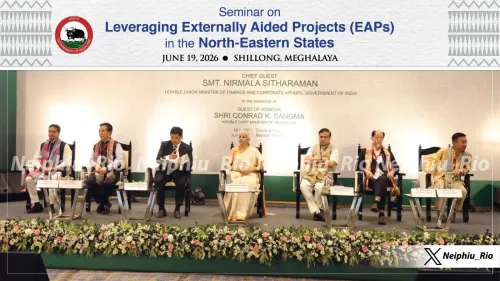
Nagaland Chief Minister Neiphiu Rio on Friday, June 19, 2026, underscored the need for robust project preparation, greater institutional capacity, and deeper stakeholder collaboration as the state's path to sustainable development, responding to a post by All India Radio Kohima on X.
Context
Rio replied to @airnews_kohima, stating: 'The way forward lies in strengthening project preparation, enhancing institutional capacity, deepening collaboration among stakeholders, while being responsive to community needs and focused on sustainable outcomes.' The remark, though brief, encapsulates a governance philosophy that Nagaland has been grappling with for years — translating central funding into on-ground results.
The statement arrives amid sustained discourse on why infrastructure and development projects in the Northeast frequently face execution delays despite increased budgetary allocations from the Centre. Terrain, limited administrative bandwidth, and the imperative of community consent are recurring friction points.
Policy Backdrop
Nagaland operates under Article 371A of the Constitution, which protects tribal customary laws and land rights, making community responsiveness not merely a best practice but a constitutional necessity for any development project. This legal reality shapes how the state government must approach infrastructure rollout.
Since 2014, Nagaland has aligned its development agenda with India's Act East Policy, which prioritises connectivity and economic integration of the Northeast with Southeast Asia. The 2015 Naga Framework Agreement further opened space for peace-linked development, making sustainable project outcomes a political as well as administrative priority. Rio's Nationalist Democratic Progressive Party, in alliance with the BJP at the state level, has positioned governance efficiency as a central plank.
Northeastern states have collectively received significant central infrastructure funds in recent years, yet project completion rates and utilisation figures have consistently lagged behind other regions, a pattern that has drawn attention from the North Eastern Council and central ministries alike.
Stakeholders and Impact
The constituencies most directly affected by Rio's call are Nagaland's local tribal communities, who bear the consequences of delayed or poorly designed projects — whether in roads, water supply, health infrastructure, or connectivity. Their consent and participation are legally protected and practically indispensable.
State officials and implementing agencies are the institutional targets of the capacity-building message. For central ministries channelling funds to the state, the Chief Minister's framing signals an acknowledgment of systemic gaps and a commitment to address them from the preparation stage itself, rather than at the point of failure.
All India Radio Kohima, as the regional public broadcaster to which Rio was responding, plays a role in amplifying development discourse across a state where digital connectivity remains uneven and radio remains a trusted medium in remote districts.
What's Next
Observers will watch whether Rio's statement translates into concrete measures — such as revised project preparation guidelines, dedicated capacity-building funds in the state budget, or new coordination protocols between tribal bodies and implementing agencies. North Eastern Council meetings and upcoming state budget sessions are natural forums where such commitments could be formalised.
If Nagaland moves to institutionalise community-responsive and sustainability-focused project norms, it could serve as a model for other northeastern states facing similar execution challenges — linking constitutional protections for tribal communities with modern governance frameworks.
Point of View
Rather than an official press release, reflects a deliberate use of social media to signal governance priorities in a low-key but on-record manner. The emphasis on 'project preparation' is telling — it locates the problem upstream, at the design and planning stage, rather than at implementation, which is a more politically comfortable framing that deflects blame from executing agencies. Connecting this to Nagaland's constitutional uniqueness under Article 371A, the statement also implicitly acknowledges that community consent cannot be retrofitted into projects; it must be built in from the start. For a Chief Minister navigating coalition governance and central-state relations, this kind of principled, process-focused articulation helps maintain credibility with both tribal stakeholders and New Delhi.
NationPress
19 Sept 2026
Frequently Asked Questions
What did Nagaland CM Neiphiu Rio say about development projects?
CM Rio stated that the way forward lies in strengthening project preparation, enhancing institutional capacity, deepening stakeholder collaboration, and remaining responsive to community needs and focused on sustainable outcomes.
Why do development projects in Nagaland face delays?
Projects in Nagaland frequently face delays due to difficult terrain, limited institutional capacity, and the constitutional requirement under Article 371A to obtain community consent before implementation.
What is Article 371A and how does it affect Nagaland's development?
Article 371A of the Indian Constitution protects Nagaland's tribal customary laws and land rights, meaning development projects must secure community agreement, which adds a necessary but time-consuming layer to project execution.
What is India's Act East Policy and Nagaland's role in it?
India's Act East Policy , active since 2014 , aims to improve connectivity and economic ties between the Northeast and Southeast Asia; Nagaland is a key part of this framework given its border location and infrastructure needs.
What is the Nationalist Democratic Progressive Party?
The Nationalist Democratic Progressive Party (NDPP) is a Nagaland -based party founded by Neiphiu Rio in 2017 , currently governing the state in alliance with the BJP .