CM Rio Urges Nagaland to Join Census 2027 Self-Enumeration
Synopsis
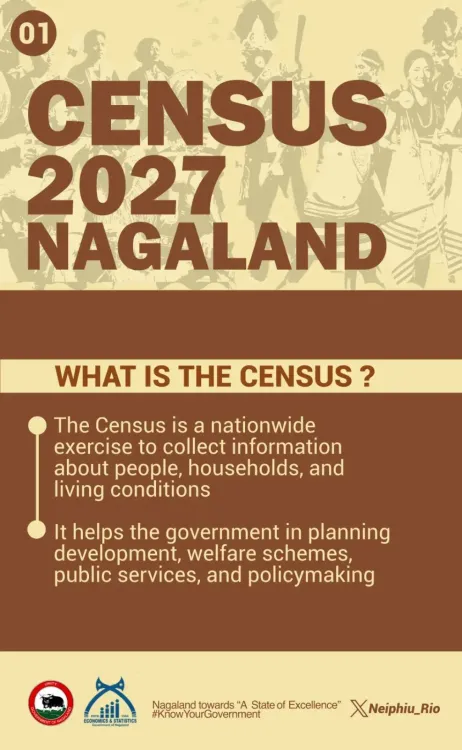
Nagaland Chief Minister Neiphiu Rio on 16 June 2026 publicly urged residents to participate in the self-enumeration phase of Census India 2027, calling accurate demographic data essential for effective governance, informed planning, and better policy outcomes for future generations.
Key Takeaways
Nagaland Chief Minister Neiphiu Rio on 16 June 2026 urged all residents to register for the self-enumeration phase of Census India 2027 .
India's last completed census was in 2011 ; the 2021 Census was postponed due to the COVID-19 pandemic , creating a gap of over a decade in national demographic data.
Self-enumeration is a digital-first approach designed to address logistical challenges in remote and tribal areas of states like Nagaland .
Accurate census data directly affects Nagaland's central fund allocations, constituency delimitation, and welfare scheme targeting under Article 371(A) provisions.
The Directorate of Census Operations Nagaland , a state-level unit under the Office of the Registrar General of India , is overseeing the state rollout.
Rio framed participation as a civic duty with long-term consequences for 'future generations,' signalling the state administration's intent to prioritise the exercise.
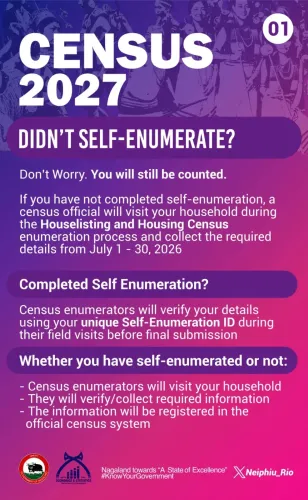
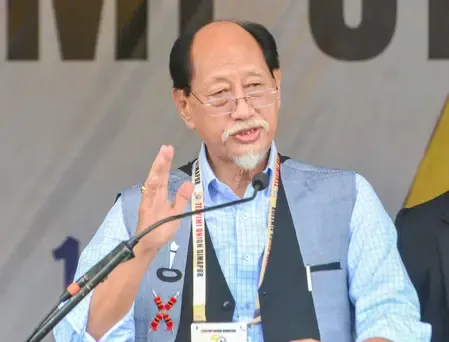
Nagaland Chief Minister Neiphiu Rio on Tuesday, 16 June 2026 called on residents of the state to participate in the self-enumeration phase of Census India 2027, marking the formal launch of the citizen-facing registration process. Rio posted the appeal on X, tagging the Directorate of Census Operations Nagaland and urging people to register, participate, and encourage others to do the same.
Context
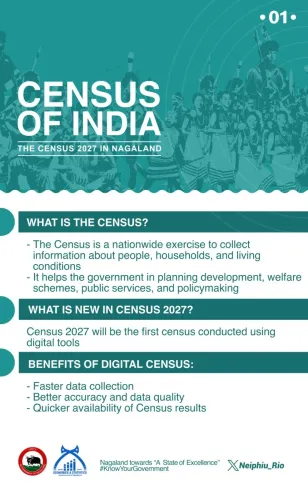
The Chief Minister's post comes as India's long-delayed national headcount moves into a new, digitally enabled phase. India's last completed census was conducted in 2011, making it the country's 15th decennial exercise. The 2021 Census was indefinitely postponed following the COVID-19 pandemic, leaving a gap of over a decade in the country's foundational demographic data.
Self-enumeration — where citizens register their own household details through a digital portal — is a significant operational shift from the traditional door-to-door enumeration model. The approach is seen as particularly relevant for states like Nagaland, where remote terrain and dispersed tribal settlements have historically posed logistical challenges for census field staff.
Policy Backdrop
India's decennial census is the primary source of data for delimitation of parliamentary and assembly constituencies, allocation of central funds, and targeting of welfare schemes. The prolonged absence of fresh census data since 2011 has created planning uncertainties across ministries, with population estimates for scheme eligibility and resource distribution relying on projections rather than enumerated figures.
Nagaland, which has special constitutional provisions under Article 371(A), has historically used census figures to calibrate the functioning of its Autonomous District Councils and to determine development priorities for its diverse tribal communities. Accurate data is therefore not merely an administrative formality for the state — it has direct bearing on political representation and the flow of central resources.
Rio's post specifically cited 'informed planning, effective governance and better policy outcomes for future generations' as the rationale for participation, framing the census as a civic responsibility with long-term developmental consequences.
Stakeholders and Impact
The primary stakeholders in Nagaland's census participation are its estimated over 20 lakh residents, spread across 16 districts including remote areas of the Mon, Tuensang and Longleng districts. Accurate enumeration directly affects the state's share in central devolution, the delimitation of local body wards, and the targeting of schemes under flagship national programmes.
State planners and the Directorate of Census Operations Nagaland — the state-level arm of the Office of the Registrar General of India — are responsible for overseeing the rollout. A high participation rate in the self-enumeration phase is expected to reduce the burden on field enumerators during the subsequent house-listing and population enumeration stages.
What's Next
The self-enumeration window is the first citizen-facing milestone in the Census India 2027 cycle. Subsequent stages are expected to include house-listing operations and the main population enumeration, with provisional data releases likely to follow before the full 2027 reference year. Parliamentary and cabinet decisions on the release of provisional census data — which would unlock its use for scheme planning — will be closely watched by state governments across India.
For Nagaland, the pace and completeness of participation in this initial self-enumeration phase will set the tone for the state's overall census readiness, and Chief Minister Rio's early, public endorsement signals that the state administration intends to treat this exercise as a governance priority.
Point of View
Public endorsement of the Census 2027 self-enumeration phase is a calculated governance signal — it positions the state administration as a proactive partner in a nationally significant exercise that has been stalled for over five years. For a state like Nagaland, where demographic data underpins not just welfare delivery but also the functioning of constitutionally protected tribal institutions, the stakes of undercounting are unusually high. Rio's framing of census participation as a matter of 'future generations' subtly raises the political cost of non-participation among communities that are already sensitive to questions of representation and resource allocation. The appeal also reflects a broader national push to use digital self-enumeration to overcome the field-level bottlenecks that have historically depressed count accuracy in India's northeastern states.
NationPress
15 Sept 2026
Frequently Asked Questions
What is Census India 2027 self-enumeration?
Census India 2027 self-enumeration is a digital process where citizens register and submit their own household details online, replacing the traditional method of waiting for a government enumerator to visit the home. It is the first citizen-facing phase of the upcoming national census.
Why was the 2021 Census not conducted?
The 2021 Census was postponed due to the COVID-19 pandemic, which made large-scale field operations unsafe and logistically unfeasible. India has therefore been without fresh enumerated census data since the 2011 census.
Why is the census important for Nagaland specifically?
Nagaland has special constitutional protections under Article 371(A), and census data directly determines the state's share of central funds, the delimitation of constituencies, and the calibration of Autonomous District Councils. Accurate enumeration is therefore linked to political representation and resource allocation for the state's tribal communities.
What did Nagaland CM Neiphiu Rio say about the census?
On 16 June 2026, CM Rio posted on X urging everyone to 'register, participate and encourage others to do the same,' stating that 'accurate census data is essential to informed planning, effective governance and better policy outcomes for future generations.'
Who is overseeing the Census 2027 rollout in Nagaland?
The Directorate of Census Operations Nagaland, a state-level unit under the Office of the Registrar General of India, is responsible for managing and overseeing the census operations across the state's 16 districts.