CM Rio calls for ecosystem protection on World Environment Day
Synopsis
Nagaland Chief Minister Neiphiu Rio marked World Environment Day on 5 June 2026 by calling for the protection of ecosystems and biodiversity. His message aligns with India's national climate framework and echoes the concerns of the state's forest-dependent indigenous communities.
Key Takeaways
Nagaland Chief Minister Neiphiu Rio posted a World Environment Day message on 5 June 2026 reaffirming commitment to ecosystem protection.
Rio called for conserving natural resources and biodiversity to build a sustainable and resilient future for coming generations.
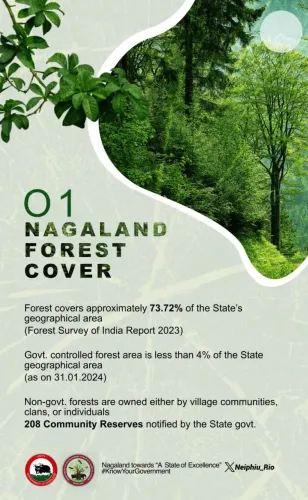
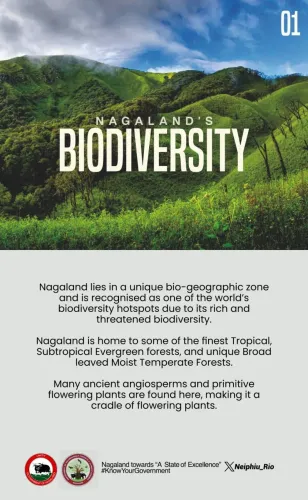
Nagaland is one of India's most biodiverse states, with large forest cover and indigenous communities dependent on forest economies.
The message aligns with India's National Action Plan on Climate Change (2008) and its eight national missions on sustainable development.
Nagaland's updated State Action Plan on Climate Change and new biodiversity notifications in the 2026-27 budget cycle are being watched by policy observers.
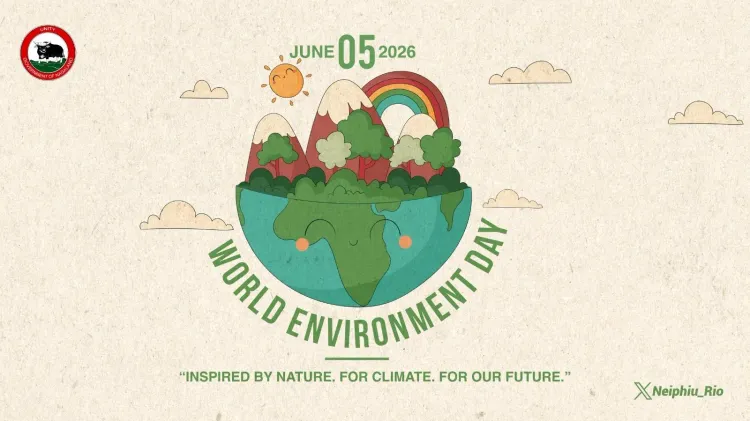
Nagaland Chief Minister Neiphiu Rio on Friday, 5 June 2026, marked World Environment Day by calling on citizens and policymakers to reaffirm their shared responsibility toward protecting ecosystems that sustain both life and livelihoods. The Chief Minister emphasised conserving natural resources and biodiversity as the foundation for a sustainable and resilient future for generations to come.
Context
World Environment Day, observed annually on 5 June under the auspices of the United Nations Environment Programme, is the principal global platform for raising awareness and driving action on pressing environmental challenges. This year's observance comes as nations review progress on commitments made under the UN Framework Convention on Climate Change (UNFCCC) and the Convention on Biological Diversity (CBD).
Nagaland is among India's most ecologically significant states, characterised by high forest cover and exceptional biodiversity. The state is home to numerous indigenous tribal communities whose livelihoods are deeply intertwined with forest ecosystems, making conservation a matter of both ecological and economic urgency.
Policy Backdrop
India's environmental governance framework has its roots in the National Action Plan on Climate Change (NAPCC), launched in 2008, which outlined eight national missions covering sustainable development, energy efficiency, and climate adaptation. Northeast states, including Nagaland, are expected to align their State Action Plans on Climate Change with this overarching national framework.
Chief Minister Rio's message fits a well-established pattern of sub-national governments in ecologically sensitive hill regions publicly aligning with national green missions on symbolic occasions. Nagaland's statements on such days have historically linked biodiversity conservation to the livelihood security of communities practising jhum (shifting cultivation) and forest-based economies.
Stakeholders and Impact
The communities most directly affected by Nagaland's environmental policies are its indigenous tribal households, who depend on forests for food, water, medicine, and income. Any shift in conservation strategy — whether through protected-area expansion, community forest rights, or climate-adaptation funding — has immediate consequences for these populations.
Beyond local communities, Nagaland's forest cover contributes to the broader ecological services that benefit the wider Northeast Indian region, including watershed protection and carbon sequestration. Rio's call to protect ecosystems therefore carries implications that extend well beyond state boundaries.
What's Next
Observers will watch for the release of Nagaland's updated State Action Plan on Climate Change and any new forest or biodiversity notifications in the 2026-27 budget cycle. Whether the Chief Minister's World Environment Day message translates into concrete legislative or budgetary commitments will determine its policy weight.
As India's international climate obligations grow more demanding, statements from ecologically rich states like Nagaland carry increasing significance in demonstrating sub-national resolve — and in shaping the expectations of forest-dependent communities awaiting tangible policy support.
Point of View
He signals awareness of the stakes for Nagaland's tribal communities — a constituency that is both ecologically dependent and politically significant. The message also positions the state within India's broader sub-national green alignment ahead of what could be a consequential year for climate policy reviews. Whether it precedes concrete action — a revised State Action Plan, new forest notifications, or dedicated budget allocations — will be the real test of its weight.
NationPress
21 Oct 2026
Frequently Asked Questions
Why did Nagaland CM Neiphiu Rio post about World Environment Day?
Chief Minister Neiphiu Rio posted on World Environment Day, observed on 5 June each year, to reaffirm Nagaland's commitment to protecting ecosystems and biodiversity that sustain the livelihoods of the state's communities.
What is World Environment Day and when is it observed?
World Environment Day is a UN-designated annual observance held on 5 June each year, serving as the principal global platform for raising environmental awareness and encouraging action on issues such as biodiversity loss and climate change.
What is Nagaland's significance for biodiversity in India?
Nagaland is among India's most biodiverse states, with high forest cover and a rich variety of flora and fauna. Its indigenous tribal communities rely heavily on forest ecosystems for food, water, and livelihoods.
What is India's National Action Plan on Climate Change?
India launched the National Action Plan on Climate Change in 2008, outlining eight national missions focused on sustainable development, energy efficiency, and climate adaptation. State governments, including Nagaland, are expected to align their own plans with this framework.
What should we watch for next from Nagaland on environment policy?
Policy observers are watching for the release of Nagaland's updated State Action Plan on Climate Change and any new forest or biodiversity notifications expected in the 2026-27 budget cycle.