CM Himanta Pays Tribute to Matak King Sarbananda Singha
Synopsis
Assam Chief Minister Himanta Biswa Sarma marked the Punyatithi of Swargadeo Sarbananda Singha, the 18th-century founder of the Matak kingdom, calling him 'a beacon of courage' and drawing inspiration from his legacy for the state's present-day development.
Key Takeaways
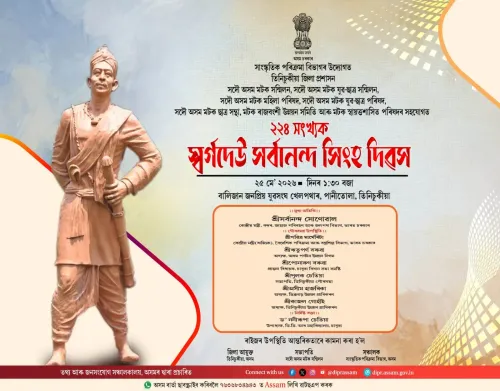
CM Himanta Biswa Sarma paid tribute to Swargadeo Sarbananda Singha on his Punyatithi on 25 May 2026 .
Sarbananda Singha founded the Matak kingdom in upper Assam following the Moamoria rebellion against Ahom rule in the 18th century.
CM Sarma described him as 'a beacon of courage and the architect of the Matak kingdom.' Assam governments have commemorated Moamoria-era leaders since at least the early 2000s as part of the state's official historical memory.
The tribute is part of a broader pattern of the BJP -led government invoking pre-colonial, community-rooted histories to reinforce Assam's state identity.
The Matak community of upper Assam regards Sarbananda Singha as a central symbol of resistance and self-determination.
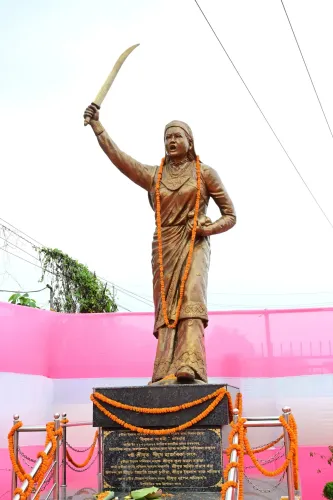
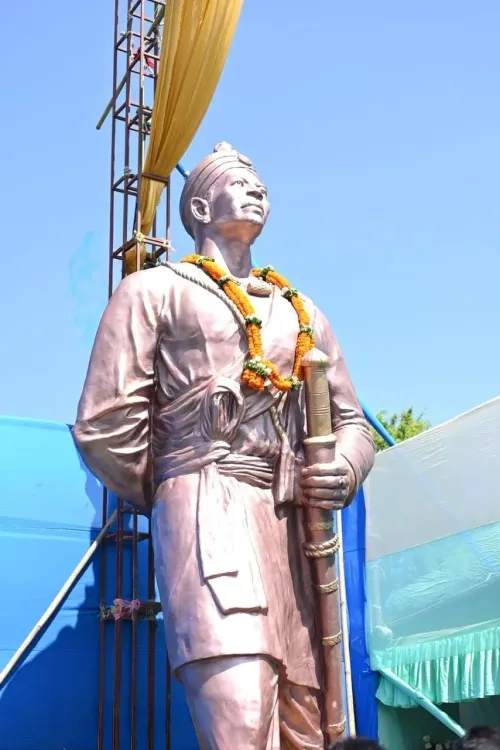
Assam Chief Minister Himanta Biswa Sarma on Sunday, 25 May 2026 paid tribute to Swargadeo Sarbananda Singha, the 18th-century founder of the Matak kingdom in upper Assam, marking the leader's Punyatithi with a post on X that honoured his legacy as a warrior and state-builder.
Context
In his message, CM Sarma described Sarbananda Singha as 'a beacon of courage and the architect of the Matak kingdom,' adding that 'his tales of bravery continue to inspire generations across Assam.' The tribute was offered on the leader's Punyatithi — the death anniversary observed in the Hindu tradition.
Swargadeo Sarbananda Singha rose to prominence during the Moamoria rebellion, a prolonged and bloody uprising by the Matak community against Ahom rule in the Brahmaputra valley in the late 18th century. He subsequently established the Matak kingdom, a short-lived but historically significant polity that asserted the community's identity and autonomy in what is today upper Assam.
Policy Backdrop
Assam governments have formally commemorated leaders from the Moamoria era since at least the early 2000s, weaving indigenous resistance narratives into the state's official historical memory. These observances have grown more prominent in recent years as successive administrations have sought to highlight pre-colonial, community-rooted histories.
The BJP-led government under CM Sarma has been particularly active in this regard, issuing public tributes to a range of Ahom and post-Ahom figures. The pattern reflects a broader political and cultural effort to anchor Assam's contemporary state identity in its diverse martial and administrative heritage.
Stakeholders and Impact
The tribute carries direct significance for the Matak community, one of the indigenous groups of upper Assam, for whom Sarbananda Singha remains a symbol of resistance and self-determination. Community organisations and history groups in the region regularly observe the Punyatithi at the local level.
For the broader electorate, such commemorations reinforce the state government's positioning as a custodian of Assam's plural heritage. CM Sarma, who also serves as convenor of the North-East Democratic Alliance (NEDA), has consistently used cultural and historical outreach as a tool for consolidating support across the region's diverse communities.
What's Next
Observers of Assam politics will watch for any state-level commemorative events, heritage-site development, or cultural programmes linked to Matak history that may follow from this public acknowledgement. The government's willingness to invest resources in such initiatives — beyond social media tributes — will signal how central the Matak legacy is to its broader cultural policy agenda.
As Assam continues to balance its complex, multi-ethnic historical narratives, the frequency and depth of such tributes are likely to shape community relations and historical discourse in the state for years to come.
Point of View
' the CM draws a rhetorical line between historical resistance and present governance. This kind of symbolic politics has become a consistent feature of the NEDA framework, which relies on cultural solidarity across the North-East's many communities. Whether such tributes translate into tangible heritage investment will be the measure of their long-term credibility.
NationPress
7 Oct 2026
Frequently Asked Questions
Who was Swargadeo Sarbananda Singha?
Swargadeo Sarbananda Singha was an 18th-century leader of the Matak community in upper Assam who founded the Matak kingdom after the Moamoria rebellion against Ahom rule in the Brahmaputra valley.
What is the Matak kingdom?
The Matak kingdom was a short-lived but historically significant polity established in the late 18th century in upper Assam by the Matak community, led by Sarbananda Singha, following their uprising against Ahom authority.
Why did CM Himanta Biswa Sarma pay tribute to Sarbananda Singha?
CM Sarma paid tribute on Sarbananda Singha's Punyatithi — his death anniversary — honouring him as a visionary and warrior whose legacy continues to inspire Assam.
What was the Moamoria rebellion?
The Moamoria rebellion was a prolonged uprising by the Matak community against the Ahom kingdom in the Brahmaputra valley during the late 18th century, out of which the Matak kingdom emerged.
Does the Assam government regularly commemorate Moamoria-era leaders?
Yes, Assam governments have formally marked the anniversaries of Moamoria-era leaders since at least the early 2000s, as part of the state's effort to preserve and highlight indigenous resistance narratives.