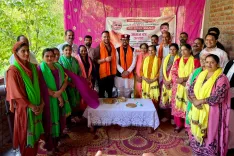
CM Himanta pays tribute to Vikram Sarabhai on his birth anniversary
Synopsis
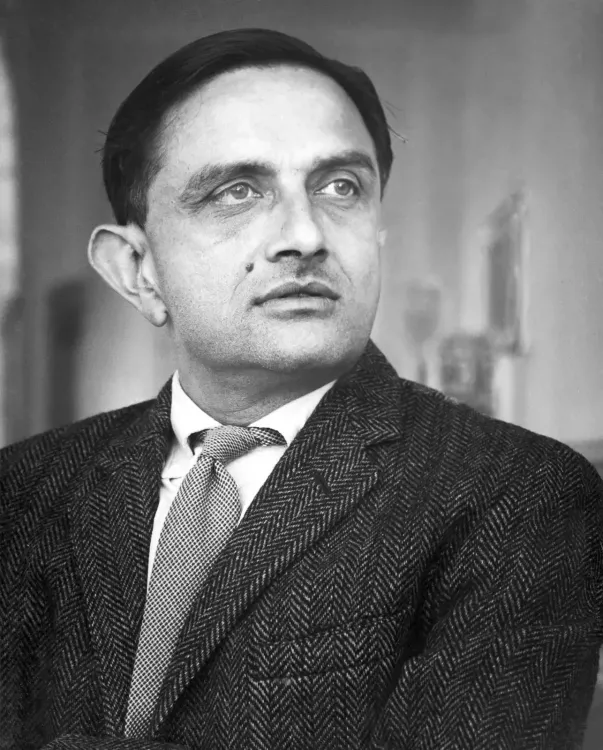
Assam Chief Minister Himanta Biswa Sarma marked the birth anniversary of Dr. Vikram Sarabhai on 12 August 2026, honouring the physicist who founded the Physical Research Laboratory and laid the groundwork for ISRO in 1969. Sarabhai's Jayanti is observed annually across India's scientific and political communities.
Key Takeaways
Assam CM Himanta Biswa Sarma posted a tribute to Dr.
Vikram Sarabhai on his Jayanti, 12 August 2026 .
Vikram Sarabhai (1919–1971) is recognised as the father of India's space programme.
Sarabhai founded the Physical Research Laboratory in 1947 and chaired INCOSPAR from 1962 .
ISRO was formally established in 1969 , building directly on the foundations Sarabhai laid.
Tributes to Sarabhai on his birth anniversary are a cross-party, national tradition in India's political and scientific communities.
The man who pointed India toward the stars was born on this day. Assam Chief Minister Himanta Biswa Sarma on Wednesday, 12 August 2026, paid tribute to Dr. Vikram Sarabhai on his Jayanti, honouring the physicist widely regarded as the father of India's space programme.
Sarma called Sarabhai 'a visionary physicist and innovator' whose 'foundational work gave birth to ISRO and put India firmly on the global space map.' The tribute, posted on X, reflects a long-standing national tradition of acknowledging the scientists who built India's space ambitions from scratch.
From a Ahmedabad laboratory to the cosmos
Dr. Vikram Sarabhai was born on 12 August 1919 in Ahmedabad. A physicist and astronomer by training, he founded the Physical Research Laboratory (PRL) in 1947 — the same year India gained independence — establishing the country's first serious foothold in space science. His conviction was simple but radical for the era: a newly independent nation had as much right to reach for space as any superpower. In 1962, Sarabhai chaired the Indian National Committee for Space Research (INCOSPAR), the body that would lay the organisational groundwork for a dedicated national space agency. Seven years later, in 1969, that vision was formalised as the Indian Space Research Organisation (ISRO) — the institution that today launches satellites, lands on the Moon, and plans crewed missions.A legacy ISRO keeps building on
Sarabhai did not live to see the full arc of what he set in motion — he passed away in December 1971. But every mission ISRO flies is, in a direct institutional sense, a continuation of the infrastructure, the culture, and the ambition he seeded. India's scientific community marks his Jayanti each year as a reminder that big programmes begin with one person willing to argue for them. Political leaders across party lines and state boundaries routinely issue tributes on this date, a sign of how thoroughly Sarabhai's legacy has been woven into India's national identity — not merely its scientific one. The stars Sarabhai asked India to dream beyond are now destinations ISRO actively navigates toward. That is the measure of a founder.Point of View
Not imported technology, built India's space capability. For a BJP leader, the framing also carries a broader civilisational undertone: that India's post-independence scientific institutions were world-class from their founding. As ISRO's mission cadence accelerates — lunar landings, Gaganyaan, deep-space plans — Sarabhai's Jayanti is becoming less a historical footnote and more an active political touchstone for parties seeking to claim ownership of India's space narrative.
NationPress
26 Sept 2026
Frequently Asked Questions
Who is Vikram Sarabhai and why is he called the father of India's space programme?
Dr. Vikram Sarabhai (1919–1971) was a physicist and astronomer who founded the Physical Research Laboratory in 1947 and chaired INCOSPAR in 1962, directly establishing the institutional path that led to the creation of ISRO in 1969. His foundational role in building India's space infrastructure from scratch earned him the title 'father of India's space programme.'
When is Vikram Sarabhai's birth anniversary or Jayanti?
Vikram Sarabhai's Jayanti falls on 12 August each year. He was born on 12 August 1919 in Ahmedabad.
What is INCOSPAR and what was Sarabhai's role in it?
The Indian National Committee for Space Research (INCOSPAR) was established in 1962 as India's first formal space body. Dr. Vikram Sarabhai served as its chairman and used it to lay the organisational groundwork that eventually became ISRO in 1969.
What did Himanta Biswa Sarma say about Vikram Sarabhai?
Assam Chief Minister Himanta Biswa Sarma described Dr. Sarabhai as 'a visionary physicist and innovator' whose foundational work 'gave birth to ISRO and put India firmly on the global space map,' adding that his legacy continues to inspire millions.
When was ISRO founded and what is its connection to Vikram Sarabhai?
ISRO was formally established in 1969 . It grew directly from INCOSPAR, the body Sarabhai chaired from 1962, making him the primary architect of the institutional structure that became India's national space agency.