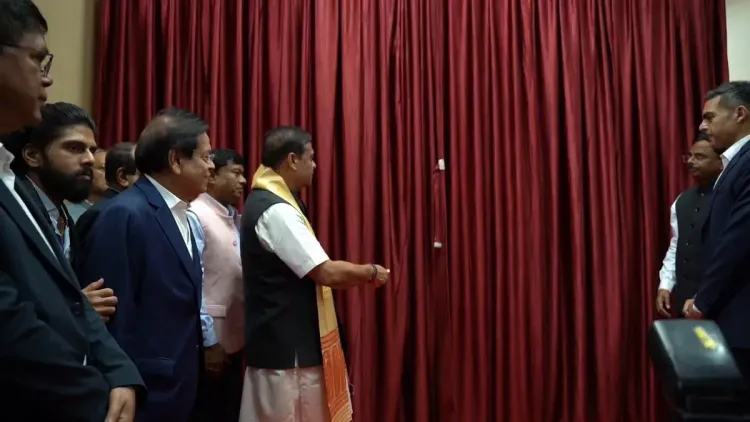
CM Himanta unveils Maniram Dewan bust at Gauhati Tea Auction Centre
Synopsis
Assam CM Himanta Biswa Sarma unveiled a bust of Maniram Dewan — India's first indigenous tea planter and 1857 martyr — at the Gauhati Tea Auction Centre, honouring 200 years of Assam Tea under the state's 'Vikas and Virasat' heritage framework.
Key Takeaways
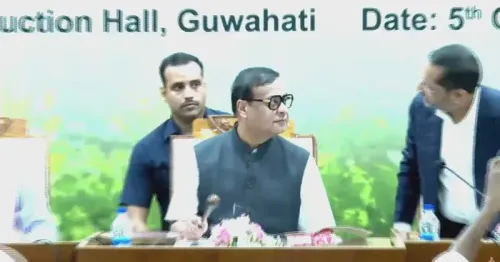
Assam Chief Minister Himanta Biswa Sarma unveiled a bust of Maniram Dewan at the Gauhati Tea Auction Centre on October 5, 2026 .
The event marks 200 years of Assam Tea , commemorating two centuries of commercial tea cultivation in the Brahmaputra valley.
Maniram Dewan is recognised as India's first indigenous tea planter, who broke the British colonial monopoly on tea cultivation in Assam.
Dewan was also a freedom fighter executed by the British on February 26, 1858 for his role in the 1857 uprising .
CM Sarma invoked the 'Vikas and Virasat' (development and heritage) framework, a recurring BJP cultural-political theme, to frame the tribute.
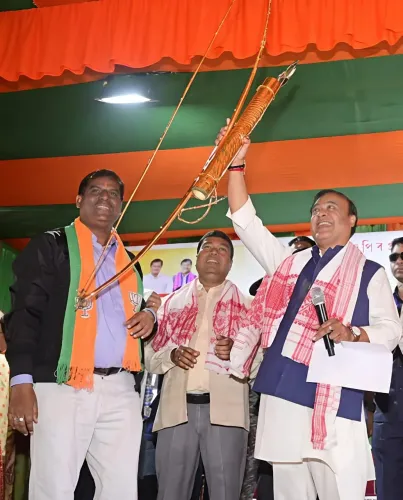
Two centuries of Assam Tea, and one name above all deserved a permanent place in stone. Assam Chief Minister Himanta Biswa Sarma on Monday, October 5, 2026, unveiled a bust of Maniram Dewan — celebrated as India's first indigenous tea planter and a freedom fighter — at the Gauhati Tea Auction Centre, marking the milestone of 200 years of Assam Tea.
Who was Maniram Dewan — and why does he matter to Assam Tea?
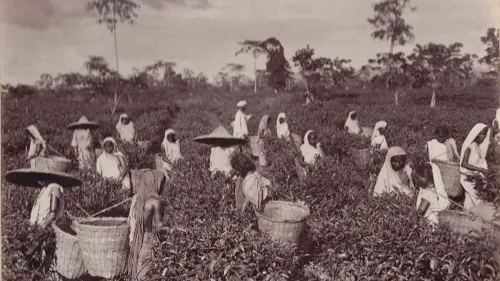
Maniram Dewan, born Maniram Dutta Baruah, was a pioneering Assamese nobleman who broke the colonial British monopoly on tea cultivation by becoming the first Indian to establish his own tea gardens in Assam. He was hanged by the British on February 26, 1858, for his role in the 1857 uprising — making him both a commercial trailblazer and a martyr of the independence movement. For Assam, he is not merely a historical figure; he is the original proof that the land's most iconic export once had an Indian hand at the root.
Assam Tea at 200: a milestone worth marking in stone
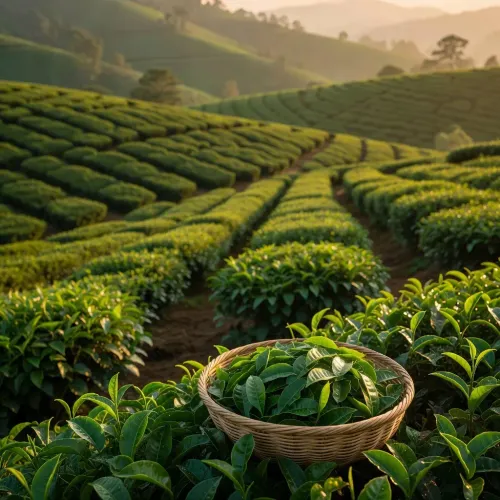
The 200th anniversary of Assam Tea marks roughly two centuries since commercial tea cultivation took root in the region, transforming the Brahmaputra valley into one of the world's most productive tea-growing belts. The Gauhati Tea Auction Centre — a nerve centre of the modern Assam tea trade — was chosen as the site for the tribute, linking Maniram Dewan's pioneering spirit directly to the industry he helped seed. Chief Minister Sarma described the unveiling as a tribute to Dewan's 'lasting legacy.'
'Vikas and Virasat' — the BJP's twin-pillar brand in Assam
The Chief Minister closed his post with a phrase that carries deliberate political weight: 'In Assam, we continue to honour Vikas and Virasat' — development and heritage. The formulation echoes a broader BJP cultural-political framework that seeks to pair infrastructure and economic growth with the restoration of indigenous historical memory. By honouring an Assamese freedom fighter who predates the national mainstream independence narrative, the government signals that Assam's own heroes belong at the centre of the state's identity — not on its margins.
Point of View
But in Assam it carries additional charge because Dewan's story pre-dates, and in some ways complicates, the standard 1857-centred freedom-struggle canon. Elevating such regional martyrs also serves a strategic federalist message: that Assam's identity is deep, distinct, and worthy of prime symbolic real estate.
NationPress
5 Oct 2026
Frequently Asked Questions
Who was Maniram Dewan?
Maniram Dewan, born Maniram Dutta Baruah, was an Assamese nobleman recognised as India's first indigenous tea planter. He established his own tea gardens in Assam, breaking the British colonial monopoly, and was hanged on February 26, 1858 for participating in the 1857 uprising against British rule.
Why is Assam celebrating 200 years of Assam Tea?
2026 marks roughly two centuries since commercial tea cultivation was established in Assam's Brahmaputra valley, transforming the region into one of the world's largest tea-producing belts. The bicentenary is being commemorated with events including the tribute to Maniram Dewan.
Where was the Maniram Dewan bust unveiled?
Assam Chief Minister Himanta Biswa Sarma unveiled the bust at the Gauhati Tea Auction Centre in Guwahati, Assam, on October 5, 2026.
What does 'Vikas and Virasat' mean in the context of Assam?
'Vikas and Virasat' translates to 'development and heritage.' It is a phrase used by the BJP-led Assam government to describe its dual focus on economic progress and the preservation and celebration of Assam's indigenous cultural and historical identity.
Why is Maniram Dewan significant to the Assam tea industry?
Maniram Dewan is celebrated as the first Indian — as opposed to British colonial planters — to cultivate tea commercially in Assam. His initiative represented indigenous enterprise in an industry that was otherwise entirely under British colonial control, making him a foundational figure in the history of Assam Tea.