CM Himanta Visits Golaghat Flood Camp, Vows Full Relief
Synopsis
Assam Chief Minister Himanta Biswa Sarma visited a flood relief camp in Golaghat on 23 July 2026, meeting displaced families and pledging continuous state relief to all communities hit by cloudburst-triggered flooding across Assam.
Key Takeaways
CM Himanta Biswa Sarma personally visited a relief camp in Golaghat district on 23 July 2026 to meet flood-affected families.
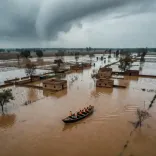
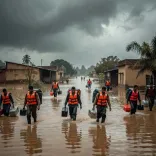
Cloudbursts have triggered widespread flooding across multiple regions of Assam , displacing families and causing extensive damage.
The state government has pledged to deliver 'every possible relief and assistance' to each family affected by #AssamFloods .
Relief operations are conducted under the Disaster Management Act, 2005 framework through the State Disaster Management Authority .
Golaghat lies within the Brahmaputra river basin, making it structurally prone to annual monsoon inundation worsened by upstream cloudbursts.
Further flooding risk persists as Assam's monsoon season extends through August and September .
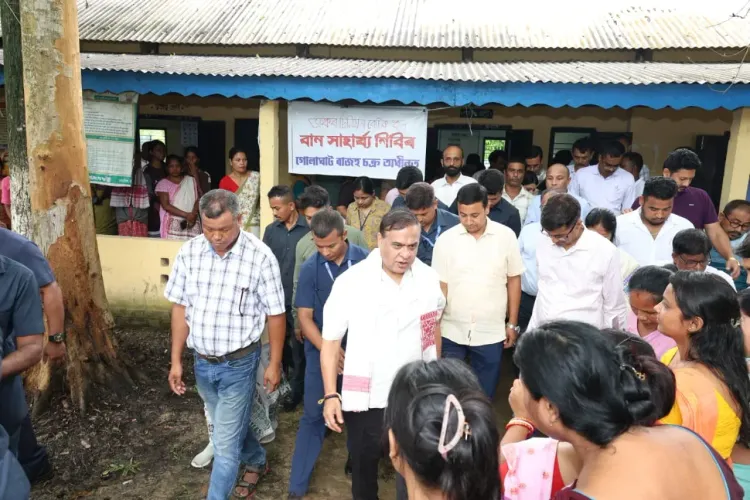
Assam Chief Minister Himanta Biswa Sarma visited a relief camp in Golaghat district on Thursday, 23 July 2026, meeting flood-affected families to hear their grievances firsthand and assess the damage caused by cloudbursts that have inundated large parts of the state.
Context
Posting on X, CM Sarma wrote: 'गोलाघाट के एक राहत शिविर में बाढ़ प्रभावित परिवारों से मिलकर उनकी पीड़ा को करीब से समझा' ('I met flood-affected families at a relief camp in Golaghat and closely understood their suffering'). He noted that cloudbursts — Cloud Burst — have caused widespread damage across multiple regions of Assam, and reaffirmed that his government is 'continuously working to deliver every possible relief and assistance to every family affected by #AssamFloods.'
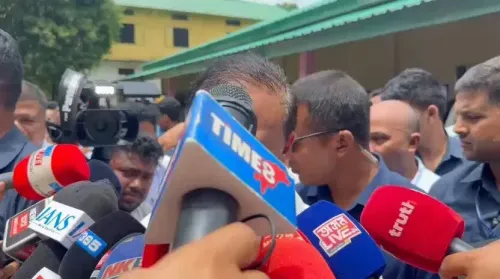
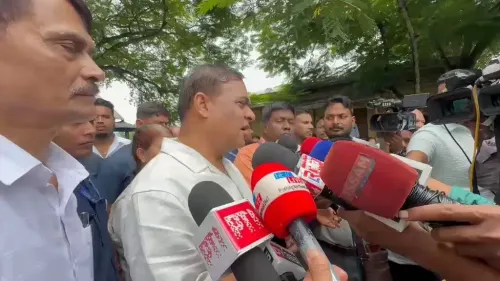
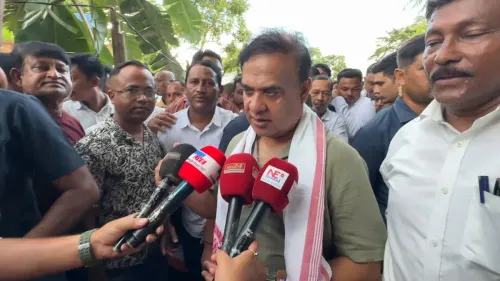
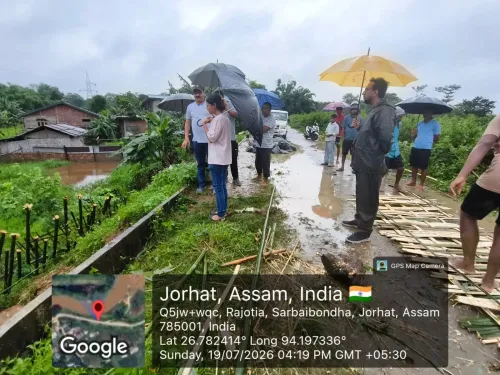
The Chief Minister shared four images from the camp visit, depicting his direct engagement with displaced residents — an approach that signals the administration's intent to project on-ground accountability during a major monsoon emergency.
Policy Backdrop
Golaghat is a district in central Assam that sits within the broader Brahmaputra river basin, a geography that makes it structurally vulnerable to annual monsoon flooding. Upstream cloudbursts in the hills accelerate water discharge into the plains, often overwhelming embankments and inundating agricultural land, homes, and infrastructure.
State-level flood relief in Assam operates under the framework of the Disaster Management Act, 2005, which mandates the State Disaster Management Authority (SDMA) to coordinate immediate response, relief camps, and rehabilitation packages. Assam governments have run annual flood relief operations under this framework for over two decades, distributing food, medicine, and compensation to affected households.
The Sarma administration has consistently emphasised rapid aid delivery as a visible governance priority during monsoon seasons, combining relief distribution with longer-term embankment repair and river management discussions.
Stakeholders and Impact
The most immediate stakeholders are the flood-displaced families housed in relief camps across Golaghat and other affected districts, who depend on state-run camps for food, shelter, and medical care during inundation. Farmers face crop and livestock losses, while district administrations are tasked with coordinating logistics under pressure.
Broader stakeholders include the National Disaster Response Force (NDRF), which typically deploys teams in Assam during major flood events, and the central government, from which states can draw funds through the National Disaster Response Fund (NDRF) and State Disaster Response Fund (SDRF) mechanisms. Inter-state coordination for upstream catchment management — involving states and territories in the hill regions — also becomes relevant when cloudbursts are identified as a trigger.
What's Next
Attention will now focus on the state government's formal damage assessment, the scale of compensation packages announced for affected families, and the pace of relief distribution across all impacted districts. Progress on embankment repair works and any request to the central government for additional disaster relief funds will be closely watched.
As Assam's monsoon season typically extends through August and September, the risk of further flooding remains. The administration's ability to sustain relief operations and accelerate rehabilitation will be a key measure of its disaster governance capacity in the months ahead.
Point of View
Field appearances by the chief minister serve both an administrative and a public-confidence function. The post's emphasis on 'understanding suffering closely' ('पीड़ा को करीब से समझा') signals a deliberate communication strategy that positions the administration as empathetic and responsive. This fits a broader pattern in which the Sarma government has sought to distinguish itself from predecessors on disaster response speed and outreach. The deeper structural challenge — managing the Brahmaputra basin's annual flood cycle through embankment investment and upstream coordination — remains the long-term test of governance ambition beyond seasonal relief optics.
NationPress
23 Jul 2026
Frequently Asked Questions
Why is Assam flooded in July 2026?
Cloudbursts triggered the current round of flooding across multiple districts of Assam, including Golaghat, inundating homes and agricultural land. Assam faces annual monsoon flooding due to its location in the Brahmaputra river basin, and upstream cloudbursts accelerate water discharge into the plains.
What is CM Himanta Biswa Sarma doing about the Assam floods?
Chief Minister Himanta Biswa Sarma visited a flood relief camp in Golaghat on 23 July 2026 to meet displaced families and stated that the state government is continuously working to deliver every possible relief and assistance to all flood-affected families.
What relief is available for Assam flood victims?
Flood-affected families in Assam are supported through state-run relief camps providing food, shelter, and medical care, with compensation distributed under the State Disaster Response Fund framework established by the Disaster Management Act, 2005.
Which districts in Assam are affected by floods in 2026?
CM Sarma's post states that widespread damage has occurred across several regions of Assam due to cloudbursts, with Golaghat specifically mentioned as a district where a relief camp was operational as of 23 July 2026.
What is the State Disaster Management Authority in Assam?
The Assam State Disaster Management Authority (SDMA) is the nodal body that coordinates flood relief, rescue, and rehabilitation operations in the state under the Disaster Management Act, 2005, working alongside district administrations and central agencies like the NDRF.