CM Himanta's Assam bets on knowledge economy for Viksit Bharat 2047
Synopsis
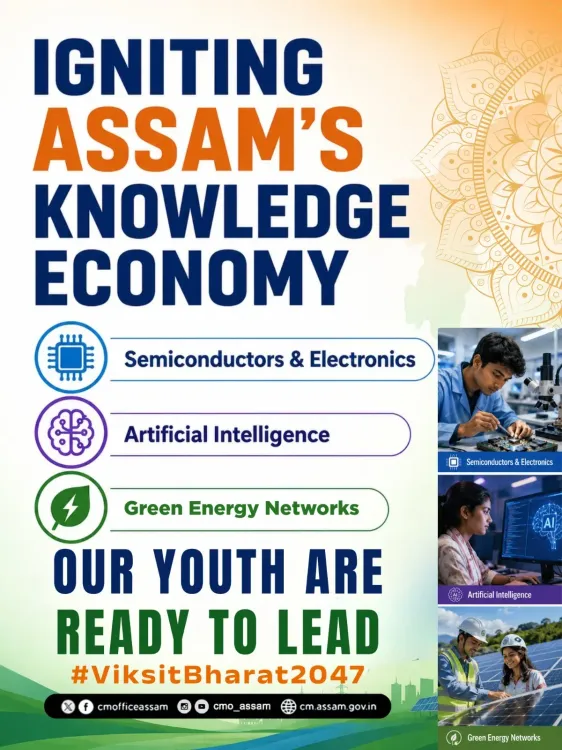
The Chief Minister's Office of Assam announced on 25 June 2026 that CM Himanta Biswa Sarma is building a knowledge economy in the state, with Assam's youth positioned as key contributors to India's Viksit Bharat 2047 developed-nation vision.
Key Takeaways
The Chief Minister's Office of Assam declared on 25 June 2026 that Assam is building a 'robust knowledge economy' under CM Dr.
Himanta Biswa Sarma .
The state's push is explicitly linked to the national Viksit Bharat 2047 goal of achieving developed-economy status by India's centenary of independence.
The Government of India launched the Viksit Bharat Sankalp Yatra in 2023 to anchor state-level initiatives within the 2047 framework.
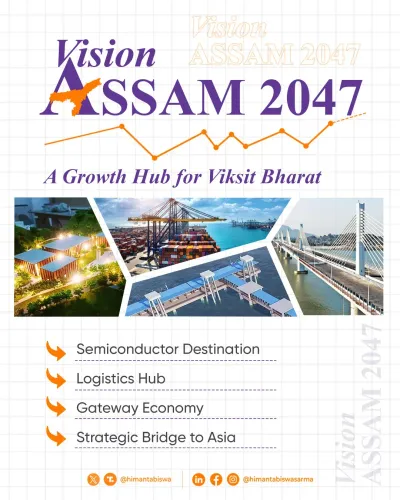
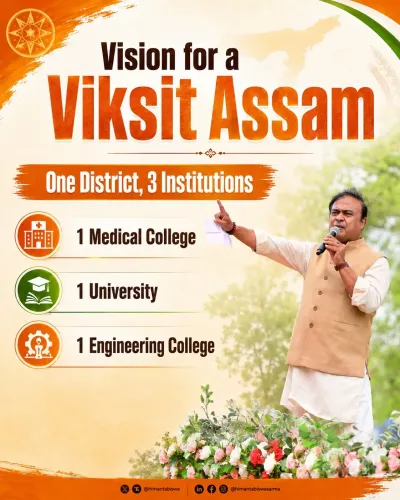
Assam has pursued higher-education reforms and IT incubation measures since 2021 , diversifying beyond traditional agrarian and tea-sector dependence.
The state's knowledge-economy strategy aligns with the Centre's Act East Policy and its emphasis on human-capital formation in North-East India .
Future state budget allocations for skill universities and new ed-tech partnerships will be the key indicators of policy follow-through.
The Chief Minister's Office of Assam declared on Thursday, 25 June 2026 that the state is building a 'robust knowledge economy' under the leadership of Chief Minister Dr. Himanta Biswa Sarma, positioning Assam's youth as ready to contribute to the national Viksit Bharat 2047 vision.
Context
The official CMO post stated that Assam's youth are 'fully equipped and ready to lead the charge toward #ViksitBharat2047.' The assertion aligns the state's ongoing education and skill-development push with the Government of India's overarching goal of achieving developed-economy status by the centenary of independence in 2047.
Dr. Himanta Biswa Sarma has helmed Assam since May 2021, consistently foregrounding education, skill formation, and IT-incubation as pillars of the state's economic diversification away from its traditional agrarian and tea-sector base.
Policy Backdrop
The Viksit Bharat 2047 framework was articulated by the Government of India as a long-horizon national vision. In 2023, the Centre launched the Viksit Bharat Sankalp Yatra to publicise welfare and development schemes that feed into the 2047 developed-nation goal, giving state governments a formal platform to anchor their own initiatives within the larger narrative.
Assam's approach since 2021 has mirrored the national emphasis on human-capital formation in the North-East, dovetailing with both the Act East Policy and the Viksit Bharat framework. Higher-education reforms, IT incubation centres, and skill universities have been the primary instruments the state has deployed to build what it now describes as a 'knowledge economy.'
Stakeholders and Impact
The primary beneficiaries cited in the post are Assam's youth, who are positioned both as the products of the state's investment in education and as future drivers of economic growth. A knowledge-economy orientation implies a shift toward services, technology, and innovation-led sectors — a significant pivot for a state historically dependent on agriculture and natural resources.
Broader stakeholders include central government agencies co-funding North-East development, private ed-tech and technology firms that could partner with the state, and communities in Assam that stand to benefit from expanded employment pathways beyond traditional sectors.
What's Next
Observers will watch Assam's forthcoming state budget allocations for skill universities and any new memoranda of understanding with national or global education-technology firms as concrete indicators of how the knowledge-economy ambition translates into policy spending. The state's ability to retain educated youth within Assam rather than lose them to metro centres will be a key metric of success. Progress on these fronts will determine whether the 2047 alignment remains rhetorical or is backed by measurable institutional investment.
Point of View
Who has built his political identity around administrative assertiveness and development optics, the education-and-skills pivot also serves as a counterpoint to Assam's historical image as an insurgency-affected, resource-dependent economy. The real test will lie in measurable outcomes: graduate retention rates, IT-sector job creation, and skill-university enrolment figures that can substantiate the 'fully equipped' claim. Until such data is independently verified, the announcement sits at the intersection of genuine policy intent and electoral narrative-building ahead of future state cycles.
NationPress
25 Jun 2026
Frequently Asked Questions
What is the Viksit Bharat 2047 vision?
Viksit Bharat 2047 is the Government of India's national goal to make India a fully developed economy by 2047, the centenary of independence. The Centre launched the Viksit Bharat Sankalp Yatra in 2023 to publicise schemes supporting this target.
What is Assam's knowledge economy plan?
Under CM Himanta Biswa Sarma, Assam has pursued higher-education reforms, IT incubation centres, and skill-development initiatives since 2021 to diversify the state's economy beyond agriculture and the tea sector, positioning youth as the primary drivers of growth.
Who is Himanta Biswa Sarma?
Dr. Himanta Biswa Sarma is the Chief Minister of Assam, in office since May 2021. A former Congress leader who joined the BJP in 2015, he has made education, skill development, and economic diversification central to his administration.
How does Assam's development connect to the Act East Policy?
Assam's education and IT investments align with the Centre's Act East Policy, which emphasises human-capital formation and economic integration in North-East India as a gateway to South-East Asian markets and partnerships.
What should we watch next in Assam's knowledge economy push?
Key indicators to watch include Assam's budget allocations for skill universities, new MoUs with national or global ed-tech firms, and data on whether educated youth are staying in the state rather than migrating to larger metro centres.