CM Himanta outlines youth-led district institution vision for Assam
Synopsis
Assam Chief Minister Himanta Biswa Sarma has declared a youth-led development vision for the state's next phase, calling for three key institutions in every district. The move aligns with the national Viksit Bharat framework and builds on Assam's shift toward district-centric human-capital models since 2021.
Key Takeaways
CM Himanta Biswa Sarma announced on 26 May 2026 that Assam's next development phase will be led by youth.
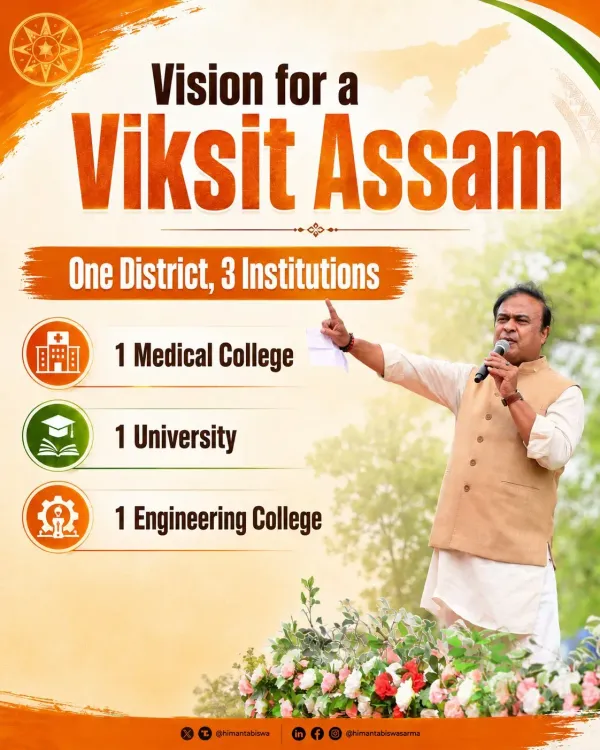
He called for three key institutions in each of Assam's districts to support youth growth, though the specific institutions were not named in the post.
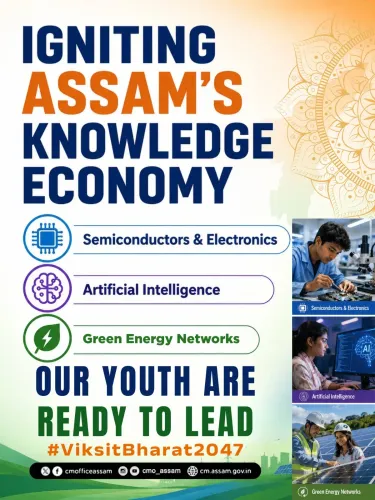
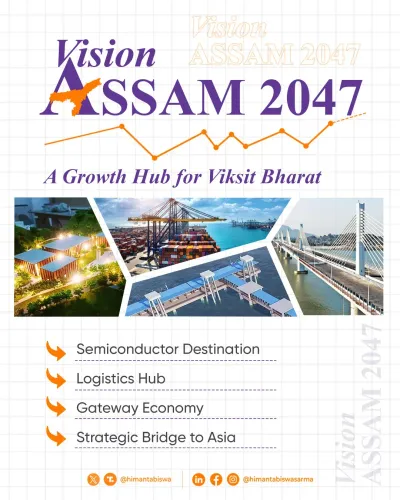
The vision is branded under #ViksitAssam , aligning with the national Viksit Bharat@2047 framework.
The announcement builds on the Assam Skill Development Mission (2017) and the National Education Policy 2020 , both of which support district-level institution expansion.
As NEDA convenor, CM Sarma's governance model could influence development frameworks across northeastern states.
Formal details — budget allocations, cabinet decisions, and scheme integration — are the key next steps to watch.
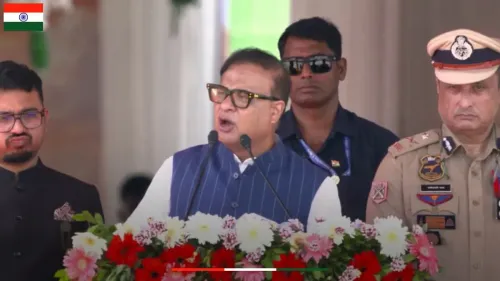
Assam Chief Minister Himanta Biswa Sarma on Tuesday, 26 May 2026, articulated a clear development vision for the state's next phase, declaring that youth will lead Assam's growth and that every district must be equipped with three key institutions to support that ambition. The statement, shared on his official X account, was accompanied by the hashtag #ViksitAssam and signals a sharpening of the government's human-capital agenda ahead of what is expected to be a period of intensified policy delivery.
Context
In his post, CM Sarma stated: 'My vision for the next phase of Assam's development is CLEAR. It will be led by our youth and each district must have three key institutions to cater to their growth.' While the specific identity of the three institutions was not named in the post, the emphasis on district-level infrastructure for youth mirrors a governance model the BJP-led state government has been building since 2021. The post's capitalised 'CLEAR' underscores the chief minister's intent to project decisiveness on the development agenda.
Policy Backdrop
The announcement aligns with the national Viksit Bharat@2047 framework championed by Prime Minister Narendra Modi, which calls on states to anchor development in youth empowerment and decentralised delivery. Assam has progressively moved from welfare-heavy schemes toward human-capital and district-centric models since CM Sarma assumed office in May 2021. This trajectory is reinforced by existing state infrastructure: the Assam Skill Development Mission, established in 2017, already created district-level training facilities, and the National Education Policy 2020 mandated expansion of higher education and skilling institutions at the district level across the country.
The #ViksitAssam hashtag is a deliberate echo of the central government's Viksit Bharat Sankalp Yatra, rolled out in 2023 to publicise flagship schemes for youth and human development in states. Assam's alignment with this vocabulary signals continued coordination between the state and the Centre on development messaging and, likely, scheme integration.
Stakeholders and Impact
Assam's 35 districts and their youth populations stand to be the most direct beneficiaries if the three-institution framework is operationalised. District administrations will bear the implementation responsibility, requiring coordinated planning across education, skilling, and potentially entrepreneurship verticals. As convenor of the North-East Democratic Alliance (NEDA), CM Sarma also carries an implicit mandate to model governance approaches that other northeastern states may replicate, amplifying the potential regional significance of this framework.
Civil society groups focused on youth unemployment and higher education access in the northeast have long advocated for district-level institution building, making this announcement one that is likely to be closely tracked by student organisations, educators, and industry bodies operating in the region.
What's Next
The immediate watch point is whether the state budget, a forthcoming cabinet decision, or a dedicated policy document will name and define the three institutions envisaged for each district. Integration with central programmes such as Skill India and PM Gati Shakti could determine the pace and funding architecture of the rollout. If the framework is formalised, it would represent one of the most structured district-level youth-institution mandates in the northeastern region, setting a potential benchmark for other NEDA-aligned states.
Point of View
Reinforcing the BJP's strategy of using district-level institution building as a visible, measurable governance metric. The emphasis on youth leadership is politically astute in a state where a significant share of the population is under 35 and where employment and education access remain live electoral concerns. By keeping the 'three institutions' undefined for now, the chief minister retains flexibility to shape the policy details while generating anticipation — a common pre-budget or pre-announcement communication pattern. The broader significance lies in whether this framework is formalised and whether it becomes a replicable model for other NEDA-governed states in the northeast.
NationPress
10 Oct 2026
Frequently Asked Questions
What is CM Himanta Biswa Sarma's vision for Assam's development?
CM Himanta Biswa Sarma has stated that Assam's next development phase will be youth-led, with every district required to have three key institutions to support youth growth. He shared this vision on X on 26 May 2026 under the hashtag #ViksitAssam.
What are the three institutions CM Sarma wants in every Assam district?
CM Sarma did not specify the exact identity of the three institutions in his post. The details are expected to be clarified through a forthcoming budget announcement, cabinet decision, or dedicated policy document.
What is Viksit Assam and how does it relate to Viksit Bharat?
Viksit Assam is the state-level development branding used by the Assam government, directly echoing Prime Minister Modi's national Viksit Bharat@2047 vision of a developed India by 2047. It signals alignment between state and central development priorities.
What is the Assam Skill Development Mission?
The Assam Skill Development Mission was established in 2017 to create district-level vocational training infrastructure for youth in the state. It forms part of the policy foundation on which CM Sarma's district-institution framework builds.
What is NEDA and what role does CM Himanta play in it?
The North-East Democratic Alliance (NEDA) is a BJP-led political platform coordinating governments across eight northeastern states, formed in 2016. CM Himanta Biswa Sarma serves as its convenor, giving his governance decisions potential regional influence beyond Assam.