CM Himanta Launches August Welfare Push for Assam
Synopsis
Assam CM Himanta Biswa Sarma on 1 August 2026 resumed the Orunodoi cash transfer scheme for over 37 lakh women, announced NijutMoina and NijutBabu form distribution from 6 August for 5 lakh youth, restored subsidised dal and sugar for 70 lakh families, and scheduled the next Jiban Anuprerana cycle for students.
Key Takeaways
Orunodoi cash transfer scheme resumed on 1 August 2026 , benefiting over 37 lakh women in Assam.
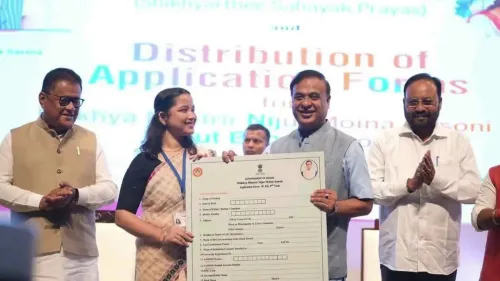
Application forms for NijutMoina and NijutBabu will be distributed from 6 August , covering more than 5 lakh daughters and sons.
Both schemes are explicitly linked to eliminating remaining scope of child marriage in Assam.
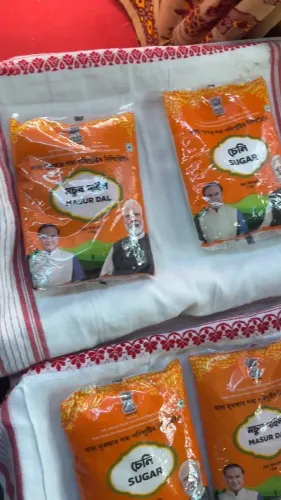
Subsidised Masur Dal and Sugar will be made available to over 70 lakh beneficiaries this month alongside existing free rice.
The next cycle of Jiban Anuprerana , supporting Assam's scholars, will follow later in August.
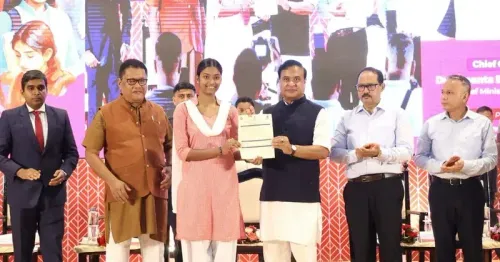
August arrives in Assam not as a calendar flip but as a delivery window — and Assam Chief Minister Himanta Biswa Sarma has thrown it open. On Saturday, 1 August 2026, the Chief Minister announced the resumption and launch of multiple welfare schemes targeting poor and middle-class families across the state, framing the month as a concentrated burst of promise-keeping.
Orunodoi resumes, reaching over 37 lakh women
The first salvo is the resumption of #Orunodoi, the state's flagship direct benefit transfer programme for women, launched originally in 2020. The scheme channels monthly cash assistance to economically weaker households — and this cycle, Sarma says, will reach over 37 lakh mothers and sisters in Assam. For families where a woman's financial independence is the difference between stability and crisis, the timing matters.
NijutMoina and NijutBabu: forms from 6 August
From 6 August, the government will begin distributing application forms for #NijutMoina and #NijutBabu — schemes extending financial support to more than 5 lakh daughters and sons. Sarma explicitly linked these programmes to eliminating 'any remaining scope of child marriage', positioning education-linked financial incentives as a social reform tool, not just a welfare cheque. Keep girls financially supported and in school long enough, the logic goes, and early marriage loses its economic rationale.
Subsidised dal, sugar, and free rice for 70 lakh households
Running parallel to the cash transfers is a nutritional support push. Subsidised Masur Dal and Sugar will be made available again to over 70 lakh beneficiaries this month, complementing the existing free rice programme. Together, Sarma said, these measures will provide 'comprehensive nutritional and financial support to poor and middle-class families' — a bundled safety net rather than isolated handouts.
Jiban Anuprerana cycle to follow for students
Rounding out the August calendar, the government will open the next cycle of Jiban Anuprerana, an initiative aimed at encouraging and supporting Assam's scholars. The sequencing is deliberate: stabilise the household first with cash and food, then invest in the next generation's education. Sarma closed with a pointed commitment — 'We remain committed to honouring every promise we have made to the people of Assam, one initiative at a time.'
For a state where welfare delivery has historically been patchy, the compression of multiple scheme cycles into a single month is either a logistical feat or a political signal — most likely both. The real test will come in the enrolment numbers when form distribution for NijutMoina and NijutBabu closes.
Point of View
NijutMoina, NijutBabu, food subsidies, and Jiban Anuprerana into a single month reflects a calculated political rhythm — welfare cycles timed to maintain visibility and voter recall between elections. Sarma's explicit framing of youth financial support as a child-marriage deterrent is significant: it repositions social reform as an economic intervention, a narrative that plays well in both policy circles and on the ground. Assam's multi-pronged model — cash transfers for women, conditional support for youth, and food subsidies running simultaneously — mirrors a broader BJP-governed state template of bundled welfare delivery. The August rollout will be watched closely as a test of whether administrative capacity can match the ambition of the announcements.
NationPress
16 Sept 2026
Frequently Asked Questions
What is the Orunodoi scheme in Assam?
Orunodoi is an Assam government direct benefit transfer programme launched in 2020 that provides monthly cash assistance to economically weaker women for financial empowerment. CM Himanta Biswa Sarma announced its resumption on 1 August 2026 for over 37 lakh beneficiaries.
What are NijutMoina and NijutBabu schemes?
NijutMoina and NijutBabu are Assam government schemes that provide financial support to daughters and sons respectively. Application forms for both will be distributed from 6 August 2026, with the government targeting more than 5 lakh beneficiaries and linking the schemes to eliminating child marriage.
Who will benefit from Assam's August 2026 welfare push?
Over 37 lakh women will benefit from Orunodoi, more than 5 lakh young people from NijutMoina and NijutBabu, and over 70 lakh households from subsidised Masur Dal and Sugar. Students will also benefit from the upcoming Jiban Anuprerana cycle.
How does Assam plan to reduce child marriage through welfare schemes?
CM Himanta Biswa Sarma has linked NijutMoina and NijutBabu — which provide financial support to daughters and sons — to eliminating remaining scope of child marriage in Assam, using economic incentives to keep young people financially supported and in education.
What is Jiban Anuprerana in Assam?
Jiban Anuprerana is an Assam government initiative designed to encourage and support scholars in the state. CM Sarma announced that the next cycle will open later in August 2026, following the rollout of other welfare schemes.