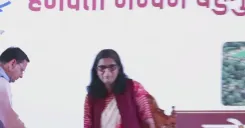
CM Himanta's NijutBabuMoina reaches 5.42 lakh girl students
Synopsis
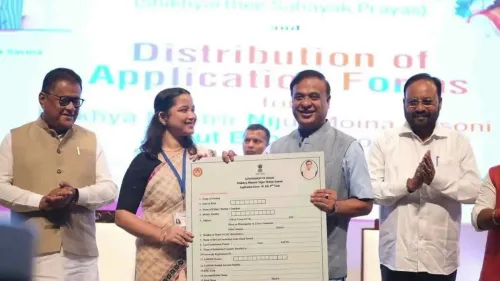
Assam Chief Minister Himanta Biswa Sarma announced on 19 October 2026 that the state's NijutBabuMoina scheme is now backing 5.42 lakh girl students, framing the initiative as a step toward female independence and education across the Northeast.
Key Takeaways
5.42 lakh girl students in Assam are currently being supported under the NijutBabuMoina scheme, according to CM Himanta Biswa Sarma.
The scheme is designed to promote self-reliance and educational continuity among girls in Assam.
It forms part of a broader state welfare architecture that includes the Orunodoi scheme (launched 2020), which provides monthly assistance to economically weaker women's households.
Assam's approach mirrors the national Beti Bachao Beti Padhao framework, adapted for the Northeast's specific demographic context.
CM Sarma invoked the concept of 'Shakti' in framing the initiative, linking welfare delivery to cultural messaging around feminine empowerment.
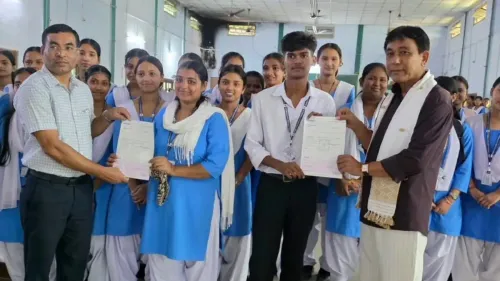
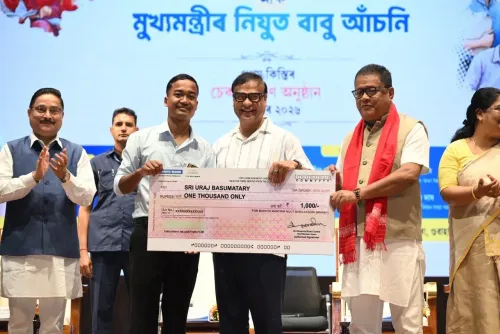
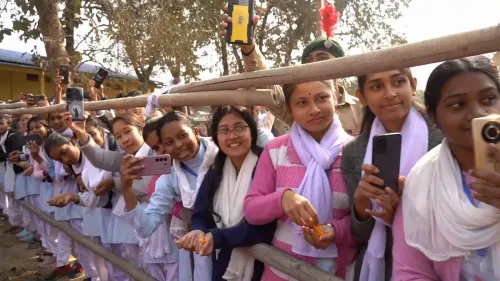
Over five lakh daughters of Assam are now drawing on state support to stay in school and reach for bigger futures — and Assam Chief Minister Himanta Biswa Sarma wants that number, and that ambition, to keep growing. On Monday, 19 October 2026, the Chief Minister took to X to spotlight #NijutBabuMoina, the state's flagship girl-student welfare scheme, declaring that 5.42 lakh students are currently being supported as they 'move towards independence and bigger dreams.'
What NijutBabuMoina promises Assam's girls
The scheme's name — loosely translated, 'my own little one' — carries a deliberate warmth, but its intent is structural: reduce dropout rates, ease financial pressure on families, and push female enrolment deeper into Assam's rural and semi-urban districts. Assam has historically grappled with uneven female literacy across its districts, and the current BJP-led administration has anchored much of its social-sector pitch on direct-benefit schemes targeting women and girls.
NijutBabuMoina sits in a lineage of such programmes. The state's Orunodoi scheme, launched in 2020, channelled monthly financial assistance directly to economically weaker women's households — a template the government has since adapted for education-focused interventions. Together, these initiatives form a layered safety net aimed at improving female workforce participation and literacy metrics across the Northeast.
5.42 lakh: the scale behind the milestone
The 5.42 lakh beneficiary figure cited by CM Sarma signals the scheme's reach across Assam's school and higher-education ecosystem. That is over half a million young women receiving state-backed support — a number that, if sustained, carries real weight for the state's gender-development indicators. Assam's welfare architecture increasingly mirrors the Centre's Beti Bachao Beti Padhao framework, but with state-specific delivery mechanisms designed for the Northeast's unique demographic and geographic terrain.
CM Sarma framed the initiative in the language of 'Shakti' — feminine power — underscoring the political messaging that welfare delivery in Assam is increasingly paired with cultural resonance, not just administrative roll-out.
Point of View
' the administration blends development optics with ideological vocabulary — a formula the BJP has refined nationally and is now deploying with Northeast-specific tailoring. The 5.42 lakh beneficiary figure, if verified by official data, would represent a meaningful expansion of the state's social safety net for girls. The broader test remains whether enrolment gains translate into completion rates and workforce entry — the metrics that will ultimately define whether this scheme outlasts its political moment.
NationPress
19 Oct 2026
Frequently Asked Questions
What is the NijutBabuMoina scheme in Assam?
NijutBabuMoina is an Assam government welfare scheme aimed at supporting girl students financially and socially to promote education, self-reliance, and independence. Chief Minister Himanta Biswa Sarma has cited 5.42 lakh students as current beneficiaries.
How many students benefit from NijutBabuMoina?
According to CM Himanta Biswa Sarma's post on 19 October 2026, the scheme currently supports 5.42 lakh girl students across Assam.
What other welfare schemes has Assam launched for women?
Assam launched the Orunodoi scheme in 2020, which provides monthly direct financial assistance to economically weaker women's households. NijutBabuMoina extends this approach specifically to girl students in education.
Who is Himanta Biswa Sarma?
Himanta Biswa Sarma is the Chief Minister of Assam since 2021, a senior BJP leader, and the convenor of the North-East Democratic Alliance (NEDA), a coalition of ruling parties in northeastern Indian states.
How does NijutBabuMoina relate to Beti Bachao Beti Padhao?
NijutBabuMoina aligns with the spirit of the central government's Beti Bachao Beti Padhao initiative but operates as a state-level scheme with delivery mechanisms tailored to Assam and the broader Northeast's demographic and geographic context.