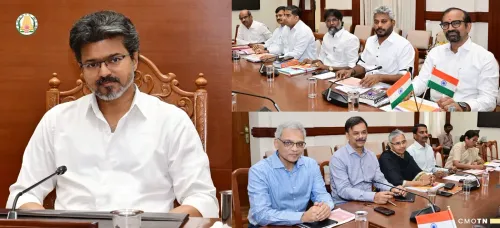
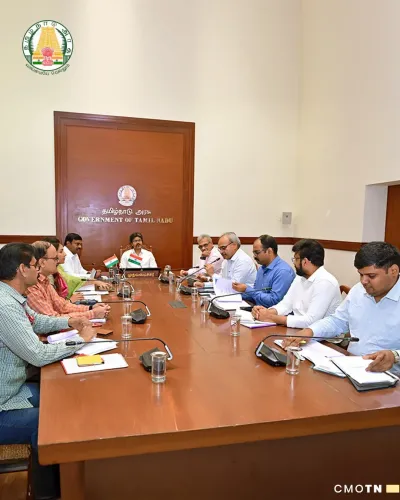
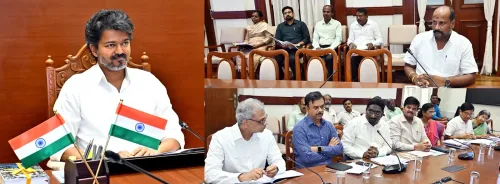
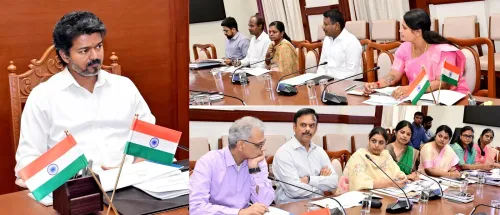
CM Joseph Vijay Chairs School Education Review at Secretariat
Synopsis
Chief Minister Joseph Vijay chaired a review meeting on School Education Department plans and operations at the Tamil Nadu Secretariat on 13 July 2026, signalling direct oversight of the state's school education schemes and their implementation.
Key Takeaways
CM Joseph Vijay personally chaired the School Education Department review meeting on 13 July 2026 .
The meeting was held at the Tamil Nadu Secretariat in Chennai.
The review covered the plans and operations of the School Education Department, focusing on scheme implementation and progress.
The School Education Department administers primary and secondary schooling for millions of students across Tamil Nadu.
Possible outcomes include announcements on education budget allocations or modifications to existing school welfare schemes.
The meeting reflects a standard administrative practice of Chief Minister-level oversight over key sectoral departments in Indian states.
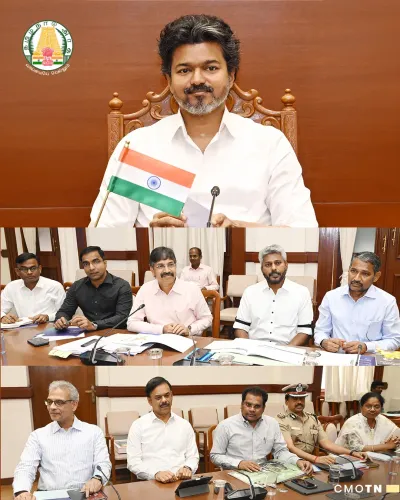
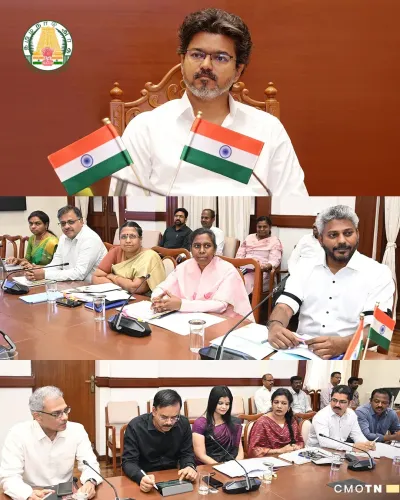
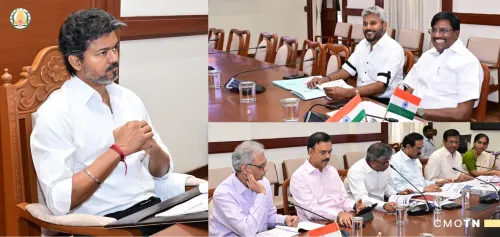
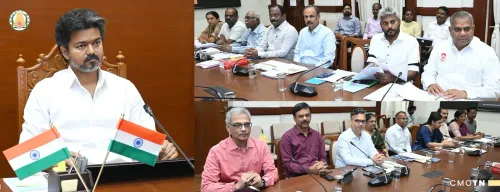
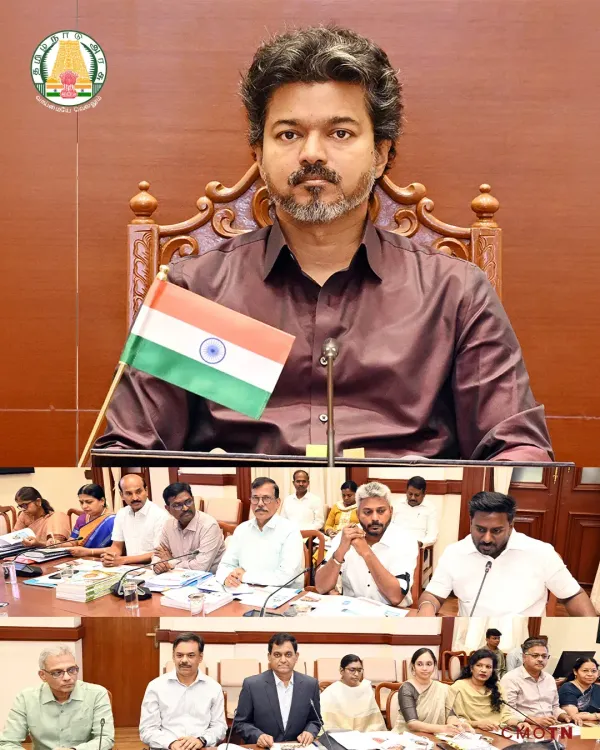
The Chief Minister's Office of Tamil Nadu announced on Monday, 13 July 2026 that Chief Minister Joseph Vijay chaired a high-level review meeting on the plans and operations of the School Education Department at the Tamil Nadu Secretariat in Chennai. The meeting focused on assessing the implementation and progress of ongoing school education schemes across the state.
The official post, shared in Tamil, stated: 'மாண்புமிகு தமிழ்நாடு முதலமைச்சர் திரு.ச.ஜோசப் விஜய் அவர்கள் தலைமையில் இன்று (13.7.2026) தலைமைச் செயலகத்தில், பள்ளிக்கல்வித் துறையின் திட்டங்கள் மற்றும் செயல்பாடுகள் குறித்த ஆய்வுக்கூட்டம் நடைபெற்றது.' — ('Under the chairmanship of the Honourable Chief Minister of Tamil Nadu, Mr. Joseph Vijay, a review meeting on the plans and operations of the School Education Department was held today at the Secretariat.')
Context
The School Education Department of Tamil Nadu is the principal state body responsible for administering primary and secondary schooling, curriculum design, teacher management, and the delivery of student welfare programmes across the state. Tamil Nadu has historically maintained one of India's more robust public schooling infrastructures, with schemes spanning mid-day meals, free textbooks, uniforms, and digital classrooms. Secretariat-level review meetings of this kind are a standard mechanism through which the Chief Minister's Office exercises direct oversight over departmental performance.
Policy Backdrop
Tamil Nadu governments have periodically convened such high-level review sessions to monitor the implementation of education schemes and course-correct where targets are lagging. These meetings typically bring together senior officials from the School Education Department, district-level administrators, and finance officials to present scheme-wise progress reports. The exercise is part of a broader administrative tradition in Indian states of using structured internal reviews to bridge the gap between policy design and ground-level delivery.
The school education sector in Tamil Nadu encompasses millions of students enrolled in government and government-aided schools, with a large teacher workforce and a significant annual budgetary outlay. Reviews at the Chief Minister's level signal political prioritisation of the sector and can precede announcements on budget reallocations, new scheme launches, or modifications to existing programmes.
Stakeholders and Impact
The primary stakeholders in this review are school students and teachers across Tamil Nadu's government school network. For students, particularly those from economically weaker sections who depend entirely on state-run institutions, the outcomes of such reviews can directly influence the quality and continuity of welfare schemes. For teachers, administrative decisions emerging from such meetings may affect deployment policies, training programmes, or infrastructure support at the school level.
District education officials and school administrators also stand to be affected, as review meetings at the Secretariat level often result in directives that cascade down to the district and block levels. Civil society organisations working in the education space in Tamil Nadu will closely watch for any follow-up announcements.
What's Next
Following a Chief Minister-chaired review of this nature, the government may issue formal orders, revised guidelines, or public announcements on specific education schemes in the days ahead. Budget reallocations or the launch of new initiatives targeting school infrastructure, digital learning, or teacher welfare are possible outcomes to watch. The Chief Minister's Office is expected to share further details on decisions taken at the meeting as they are formalised.
Point of View
School education, which has long been a high-visibility arena for Tamil Nadu governments. The choice to hold this review at the Secretariat, rather than delegating it to the minister or department secretary, suggests the Chief Minister's Office intends to keep education outcomes under close watch. This fits a broader pattern seen across Indian states where new administrations use structured reviews to audit inherited schemes before announcing their own programmatic stamp. Subsequent announcements on school welfare or infrastructure spending will be the real indicator of the meeting's policy weight.
NationPress
13 Jul 2026
Frequently Asked Questions
What was the education review meeting chaired by CM Joseph Vijay about?
CM Joseph Vijay chaired a review meeting on the plans and operations of the Tamil Nadu School Education Department at the Secretariat on 13 July 2026, aimed at assessing the implementation of ongoing school education schemes.
Where was the Tamil Nadu school education review meeting held?
The meeting was held at the Tamil Nadu Secretariat in Chennai on 13 July 2026.
What is the Tamil Nadu School Education Department responsible for?
The School Education Department is the state body responsible for administering primary and secondary schooling, curriculum, teacher management, and student welfare programmes such as mid-day meals, free textbooks, and uniforms across Tamil Nadu.
What decisions could come out of the CM Vijay education review?
Following such reviews, the government may issue revised guidelines, announce budget reallocations, launch new schemes, or modify existing school welfare programmes. Formal orders are typically issued in the days following the meeting.
Why do Chief Ministers in India chair departmental review meetings?
Chief Minister-level reviews are a standard administrative oversight tool in Indian states, used to monitor scheme implementation, identify gaps in delivery, and signal political prioritisation of a sector to the bureaucracy and the public.